
Blog
Studiae: A Closer Look at Its Modern Architecture and Global Projects


Buildings shape daily life. They affect how people live, work, shop, and move. A good building also solves real problems. It must fit its site and serve the people who use it.
Studiae is a premium architecture and design bureau with a global focus. Its work covers shops, offices, homes, large sites, and visual design. The studio also has an American base at Rockefeller Center in New York City.
Its work has a modern look, but function still matters. Large projects need clear routes, useful space, and a strong plan. That balance sits at the heart of the studio’s work.
What Is Studiae?
Studiae is an architecture and design studio that works across several project types. Its role can start long before a building takes shape. Early work may include site study, space planning, layout ideas, and visual concepts.
A retail center has very different needs from a home. An office also needs a different plan from a public building. Each project asks for a fresh answer.
That is why a broad design team can be useful. It can study the whole site, not just the front of a building. The goal is to create a place that looks clear and works well.
A Global Approach to Architecture
Global design work is not simple. Building rules change from one country to another. Climate, cost, culture, land shape, and local habits can also change the plan.
The studio works with this wider view in mind. It does not make sense to force the same design onto every site. A good plan should respond to the place.
That may mean changing the entrance, building form, shade, public space, or choice of materials. The final result should feel modern, but it should also feel right for its setting.
The Design Style Behind Studiae
Modern architecture often looks simple at first. Clean lines and open space can make a building seem easy. Yet those choices take careful work.
The firm appears to favor a clean, modern design style for large shops, offices, and homes. Glass, structure, light, and open areas can all shape the final look.
Studiae also works in a premium part of the design market. That means clients expect more than a good image. They need useful plans, a clear identity, and a design that can move toward real construction.
Commercial Architecture and Prishtina Mall
Large malls are hard to plan. They need shops, food areas, parking, loading zones, public space, and safe routes. They must also handle large crowds.
Prishtina Mall is one of the key commercial projects linked with Studiae. A project of this size needs clear movement across a large site. Stores must stay easy to find. Public areas should also feel open and active.
Modern malls now do more than sell products. They often include food, events, leisure, and social space. Good design helps join these uses into one clear place.
The result should be easy to use. Visitors should know where to go without feeling lost.
Master Planning for Large Developments
Large sites often include more than one building. They may also need roads, paths, parking, parks, and service areas. This is where master planning becomes useful.
The design team can study how the whole site should work. It can look at traffic, access, views, building position, and future growth.
A strong master plan also gives a project room to change. Large sites may take years to finish. Business needs can shift during that time.
Good planning can make later phases easier. It can also stop one part of the site from blocking another.
Residential Design and Visual Rendering
Homes need a more personal type of design. Light, privacy, storage, views, and room size can affect daily comfort.
For residential work, the studio can use visual renders to show how a project may look before building starts. These images help clients study materials, room scale, outdoor areas, and the feel of a space.
Why Visual Rendering Matters
A flat plan can be hard to read. A clear render makes the idea easier to see.
It can also expose weak points early. A room may look too dark. A wall may feel too heavy. An outdoor area may feel empty.
Those issues are much cheaper to fix on a screen than on a building site. So rendering is not only for sales. It is also part of the design process.
Corporate Centers and Modern Workspaces
Office design has changed. Many firms now want spaces for group work, quiet tasks, meetings, and flexible use.
Studiae works in modern corporate design, where the building can support a company’s image. The outside may need a strong presence. The inside still has to work well for staff and guests.
Designing for Daily Use
Small choices can shape the working day. Light, lift access, meeting rooms, quiet zones, and clear paths all matter.
A large office should also be able to change. Teams grow. Work styles shift. Flexible space can help a building stay useful for longer.
How Studiae Turns Ideas Into Design
Architecture starts with questions. What does the client need? Who will use the space? What limits does the site create? What is the budget?
Studiae can turn those answers into a clear design idea. Early sketches and layouts help set the direction. Plans, models, and renders then add more detail.
The work may go through several reviews. That is common on large projects. Changes are easier and cheaper before construction gets too far.
Clear early work can also reduce later confusion. It gives the client and design team a shared picture of the goal.
Why the New York Location Matters
The studio has an American base at Rockefeller Center in New York City. This puts it in one of the best-known business areas in the United States.
For Studiae, that location can support contact with developers, advisers, investors, and design teams. It also gives global clients a clear point of contact in the US.
New York is a tough design market. Costs are high. Sites can be tight. Rules can be strict.
That setting can keep a studio close to new ideas in real estate, office design, and large commercial work.
What Sets the Studio Apart
Range is one of the main strengths of a global design bureau. A team may work on retail, offices, homes, large sites, and visual design.
That range can help when a project has many parts. The same job may need strong planning, clear public space, good access, and a sharp visual identity.
Studiae works at a scale where these parts often meet. Clients may need more than one building or one simple floor plan.
A wider view can help the team think about how people enter, move, meet, shop, work, or live in the space.
The Future of International Architecture
Architecture keeps changing. Heat, energy use, dense cities, new work habits, and digital tools all affect design.
Studiae works in a field where these changes matter. Yet basic human needs stay simple. People want spaces that are safe, clear, useful, and pleasant.
Digital design will also keep growing. Better renders can help teams explain ideas before work starts. Planning tools can help them test a large site in more detail.
But tools are only part of the job. The main goal is still the same. A building must work for real people.
Final Thoughts
Studiae focuses on global architecture, modern design, and projects at several scales. Its work can cover major shops, corporate centers, homes, site plans, and visual rendering.
Its New York base adds a link to the US market. Its wider work also reflects an international view.
For developers and groups that want modern design, the studio offers planning and visual thinking in one place. The value is not only in how a project looks. It is also in how the full site works over time.
Strong architecture is rarely about one dramatic image. It is about the whole place. That is what gives a design lasting value.
FAQs
What is Studiae?
Studiae is a global architecture and design studio that works on commercial, residential, corporate, and large-scale planning projects.
Where is Studiae based?
The studio has an international presence, with its American headquarters located at Rockefeller Center in New York City.
What type of projects does Studiae handle?
Its portfolio includes shopping centers, office buildings, residential projects, master plans, and architectural visualization work.
Is Prishtina Mall a Studiae project?
Yes. Prishtina Mall is one of the major commercial projects featured in the studio’s architectural portfolio.
Does Studiae provide architectural rendering services?
Yes. The studio uses detailed architectural visualization and rendering to help clients understand building concepts, materials, spaces, and design ideas before construction begins.

Incfidelibus is an unusual term found on websites about language, history, and philosophy. Some articles link it to trust, loyalty, and human values. However, there is no clear proof that it is a real classical Latin word. Its spelling closely matches infidelibus, a genuine Latin form meaning “to” or “for” unfaithful people or unbelievers in some contexts.
The exact origin of Incfidelibus remains unknown. It may be a spelling error or a modern creation, but neither explanation is confirmed. Unlike the recognized Latin form, it has no accepted meaning or known role in Latin grammar.
Is Incfidelibus a Real Latin Word?
Latin is an old language that helped shape many English words. Words such as fidelity and confidence have Latin roots. This is why some unfamiliar words can sound like real Latin.
The spelling looks close to infidelibus, a genuine Latin form. However, the extra letter “c” is not part of that word. There is no widely accepted proof that this spelling was used in classical Latin.
Latin has rules for how words are formed. Adding a letter can create a form that does not follow those rules. A word may look Latin without being correct Latin.
Modern websites may use words that have no known ancient origin. To prove a word’s history, researchers need old texts, records, or trusted dictionaries. Online articles alone are not enough.
The Possible Origin of Incfidelibus
The exact origin of this spelling is unknown. It may be a typing error or a word created by changing a Latin term. However, there is no clear proof of either explanation.
The closest known Latin form is infidelibus. It comes from infidelis, which means unfaithful or unbelieving. This word is linked to fidelis, meaning faithful or loyal.
In Latin, the prefix in- can have more than one use. It can give a word a negative meaning. It can also refer to a place or direction. Its meaning depends on the word.
The letters “inc-” do not show that the unusual spelling is a separate Latin word. Without an old written record, its origin cannot be confirmed.
For now, it is best described as a modern, nonstandard spelling rather than a proven ancient term.
Incfidelibus vs. Infidelibus
These two spellings look almost the same, but they are different. One is an unusual form found online. The other is a real Latin word form with a known meaning.
The main difference is the letter “c”. The nonstandard spelling has an extra “c” between “n” and “f”. The correct Latin form does not have this letter.
Here is a simple comparison:
| Feature | Incfidelibus | Infidelibus |
|---|---|---|
| Spelling | Has an extra “c” | Correct Latin spelling |
| Latin status | Not a standard Latin form | Real Latin form |
| Meaning | No confirmed meaning | Linked to unfaithful people or unbelievers |
| Historical use | No confirmed use | Found in Latin writing |
| Grammar | No known Latin role | Dative or ablative plural |
| Use | Modern online discussions | Correct Latin writing |
A person reading an old Latin text may find infidelibus. Its meaning depends on the sentence and how the word is used.
However, the spelling with an extra “c” should not be treated as a correct Latin form. It may be a spelling error or a modern creation.
This difference helps readers understand which form is supported by Latin grammar and which is not.
What Does Infidelibus Mean in Latin?
The Latin word infidelibus comes from infidelis. It can refer to people who are unfaithful, disloyal, or do not share a certain religious belief. Its exact meaning depends on the text.
Latin words often change their endings based on their role in a sentence. These endings help show how words are linked.
Infidelibus is the dative or ablative plural form of infidelis. It refers to more than one person or thing described as unfaithful or unbelieving.
The dative form can mean “to” or “for.” The ablative form can mean “by,” “with,” or “from,” based on the sentence.
For example, the Latin phrase cum infidelibus can mean “with unbelievers.” The word cum means “with.”
This shows how the real Latin form works. Its spelling and grammar are known, unlike the altered form found online.
Why Is Incfidelibus Linked to Trust and Loyalty?
Some websites link Incfidelibus to trust, loyalty, and personal values. This may be due to its similarity to the Latin words fidelis and fides. These words have meanings linked to faith and trust.
Trust and loyalty are common topics in daily life. People use these ideas when talking about family, friends, promises, and honesty.
Some writers use the unusual term to discuss these values. They may describe it as an idea about trust between people. However, this is a modern explanation, not a proven historical meaning.
There is a clear difference between giving a word a meaning and proving its history. A writer can use a new term to explain an idea. That does not make it an old Latin word.
The links to trust and loyalty are based on modern online claims. No reliable historical source has been shown to confirm these ideas as the word’s original meaning.
Does Incfidelibus Have a Historical Background?
Some websites claim that Incfidelibus was used in ancient or medieval times. They link it to religion, old beliefs, and human values. However, no clear historical records support these claims.
Real Latin words appear in old books, letters, and religious texts. These records help experts learn how words were used. The Latin form infidelibus is known, but the spelling with an extra “c” has no confirmed history.
Latin was used across Europe for many years. It appeared in church records, laws, books, and schools. Many words from these texts are still studied today.
A word needs clear written proof to confirm its history. Without old records or trusted sources, claims about its ancient use remain unproven.
Is Incfidelibus a Philosophical Concept?
Some online articles link Incfidelibus to trust, identity, and moral values. They describe it as an idea about how people should act. However, there is no clear proof that it is a known term in philosophy.
Philosophy studies life, truth, right and wrong, and human actions. Many thinkers have written about trust, loyalty, and honesty. These ideas have been studied for hundreds of years.
Still, linking a word to these ideas does not make it a real term in philosophy. Such claims need support from trusted books or research.
A writer may create a new word to explain why people should keep promises. But that does not mean ancient thinkers used it.
No widely accepted source confirms this term as part of an old school of thought. Its modern use should not be treated as proof of a long history.
Why Does Incfidelibus Appear on Websites?
Unusual words often appear in online articles. People may search for a word after seeing it in a post or on a website. They want to know what it means and where it came from.
Some websites publish articles to answer these questions. They may discuss a word’s spelling, meaning, or possible origin. These articles can be useful when the facts are checked.
However, some websites repeat claims without giving sources. When several pages share the same details, readers may think the claims are true.
For example, one website may call an unknown word an ancient symbol of loyalty. Other websites may repeat the same claim without checking it.
Finding the same claim on many websites does not prove it is correct. Reliable records are still needed to confirm its meaning and history.
How Online Content Can Spread False Meanings?
The internet allows information to spread quickly. It also makes it easy for false claims to reach many readers. A wrong meaning can appear on several websites when writers repeat it.
AI writing tools can also produce incorrect details. If writers do not check the facts, articles may include false claims about a word’s meaning or past use.
Not every AI-written article is wrong. The main problem is sharing information without checking reliable sources.
For example, an article may claim that an unknown word was used in ancient times. If it gives no old text or record, the claim cannot be confirmed.
Some articles about Incfidelibus link it to history and human values without clear proof. These claims should not be treated as facts.
Clear writing alone does not make information correct. Readers need trusted sources to check what they read.
How to Check the Meaning of Incfidelibus?
A trusted dictionary is a good place to check an unknown word. For Latin, readers can use Latin dictionaries, grammar books, and old texts.
These sources help confirm spelling, meaning, and correct use. They can also show whether a word belongs to the language.
Start by checking the exact spelling. Then compare it with the real Latin form infidelibus. This helps show why the two forms are different.
Next, check whether the website gives proof for its claims. Does it name an old book? Does it show the Latin text? Can the meaning be found in a trusted dictionary?
If an article gives no clear source, its claims may not be reliable. This matters most when it calls an unknown word an ancient term.
It also helps to compare trusted sources that do not copy each other. Several websites repeating the same claim do not make it true.
What Should You Use Instead of Incfidelibus?
The correct word depends on what you want to say. In Latin, infidelibus is a real word form used in certain sentences about unfaithful people or unbelievers.
It comes from infidelis, meaning unfaithful or unbelieving. Another Latin word, fidelis, means faithful or loyal.
The word fides is also linked to faith, trust, and good faith. These Latin words have known meanings and accepted uses.
In English, simple words are often better. You can use “trust,” “loyalty,” “faith,” or “honesty,” based on the meaning you want.
For example, use “loyalty” when talking about staying true to someone. Use “trust” when talking about belief in a person’s honesty.
Using known words makes writing clear. It also helps readers avoid confusion caused by incorrect or unclear terms.
Conclusion
Incfidelibus is an unusual word found in modern online articles. Some websites link it to trust, loyalty, history, and philosophy. However, there is no clear proof that it is a real classical Latin word or a known historical concept.
The closest real Latin form is infidelibus. It comes from infidelis and has a known meaning and role in Latin grammar. The extra letter “c” makes the other spelling different.
Claims about ancient meanings need reliable proof. Readers should use trusted dictionaries and old texts to check unfamiliar words.
FAQs
What does Incfidelibus mean?
Incfidelibus has no confirmed meaning in Latin or English, although some websites link it to trust, loyalty, and faith.
Is Incfidelibus a real Latin word?
No recognized standard Latin form uses this spelling; the closest genuine Latin form is infidelibus.
What is the origin of Incfidelibus?
Its exact origin is unknown, and there is no clear historical proof of its use in ancient Latin.
What is the difference between Incfidelibus and Infidelibus?
Infidelibus is a genuine Latin form, while Incfidelibus contains an extra “c” and has no confirmed place in Latin grammar.
Why is Incfidelibus linked to trust and loyalty?
Some online writers connect it to the Latin words fidelis and fides, which relate to faith, trust, and loyalty.
Read Also: SEO Instant Appear HighSoftware99.com: How Fast Search Visibility Works
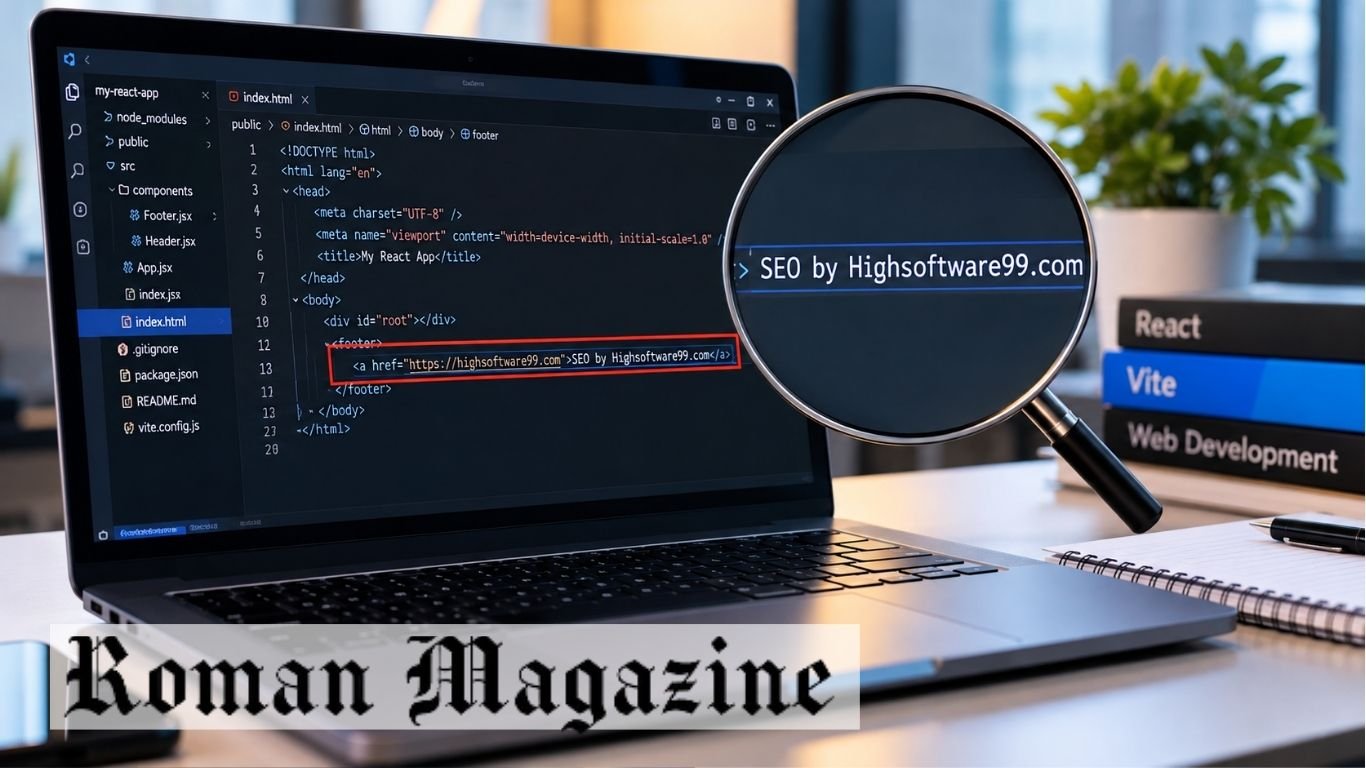
SEO by Highsoftware99.com is a phrase that may appear in website footers, HTML files, or React projects. It may be used as a developer credit, promotional link, or SEO tag. The phrase is not a standard feature of Vite or React, and its presence does not mean a website has been hacked.
Website owners can search files such as index.html, App.jsx, and footer components to find the link. If it was added without permission, they can review the code and remove it. Checking recent changes can also help find its source.
Where Does SEO by Highsoftware99.com Appear?
The phrase may appear in several parts of a website. One place to check is the footer at the bottom of a page. Developers sometimes use this area for their names, company links, or website credits.
It may also appear in HTML files or React components. A React website may store footer text in App.jsx or a separate footer file. A Vite project may contain links inside index.html. These files help control what appears on the website.
Some links may be present in the code but hidden from visitors. They may be inside hidden page elements or other parts of the site. Website owners can use browser developer tools to check these areas. They can also search their project files for the domain name.
Why Does SEO by Highsoftware99.com Show Up?
One possible source is a website template. Many free templates include links to their creators. These links may remain in the code when someone uses the template to build a website.
A third-party developer may also add a credit link. For example, a developer building a React website may place their company link in the footer. The website owner may notice it only after the site goes live.
Copied code can also contain old links. A developer may copy a footer or page design from another project. If the original code includes a credit link, it may appear on the new website.
Unknown links can sometimes come from changes made without permission. Someone with access to the website may add links without the owner’s approval. Checking recent code changes can help find the source.
Is SEO by Highsoftware99.com Safe or Harmful?
The safety of seo by highsoftware99.com depends on how it is used. A normal footer credit may not cause harm. It may simply be a link added by a developer or template creator. The phrase alone does not show whether the linked website is safe.
Problems can arise when links are added without permission. An unknown link may send visitors to another website. Hidden links may also cause SEO concerns if they are used to change search rankings.
Website owners should check for unusual changes. These may include unknown links, new scripts, changed files, or pages that no longer work as expected. Such changes do not always mean the website was hacked, but they should be checked.
Before removing a link, find its location in the code. Check whether it is a simple text link or part of a script. If the code is hard to understand, ask a trusted developer to review it.
SEO by Highsoftware99.com in Vite and React Websites
Vite and React are tools used to build websites. React helps developers create page sections that can be used more than once. Vite helps developers run and build web projects. Websites made with these tools may have several files that control their content.
A React project often has an App.jsx file. This file may hold the main page design or connect other parts of the website. A separate Footer.jsx file may contain links shown at the bottom of each page. These are useful places to check for unknown text.
The index.html file is also important. In a Vite project, it is the main HTML entry point. It may contain page details, links, and scripts. Many React websites keep their visible footer text inside components instead.
The phrase is not a standard part of Vite or React. If it appears in your project, it was added through code, a template, or another source. Searching the project files can help you find it.
How to Find SEO by Highsoftware99.com in Website Code?
You can search your website files using Visual Studio Code. First, open your project folder. Press Ctrl + Shift + F on Windows or Cmd + Shift + F on Mac. This opens the search tool for the full project.
Enter highsoftware99.com in the search box. The editor will show files that contain this text. Check files such as index.html, App.jsx, and Footer.jsx. Open each result to see where the link appears.
For example, a footer link may look like this:
<a href="https://highsoftware99.com">
  SEO by Highsoftware99.com
</a>
This is only an example of how the link could appear in HTML. The actual code on your website may look different.
You can also check your live website. Right-click the page and select Inspect to open the browser’s developer tools. Look for links and page elements that contain the phrase.
If you cannot find the text on the page, search the project files. You may also need to check other files used to load or build the website.
How to Remove SEO by Highsoftware99.com?
If you find an unwanted link on your website, you can remove it from the code. First, back up your website files. This will help you restore the site if something goes wrong. Save a copy of the file before making changes.
Next, open the file that contains the link. It may be in index.html, App.jsx, or a footer file. Search for highsoftware99.com and check the code around it. Make sure the code is not needed for another part of the site.
If the link is in the footer, remove the unwanted text or link. Save the file and check that the footer still works. Do not delete other code that the website needs.
After removing seo by highsoftware99.com, test your website. Open each main page and check the menus, links, and layout. If something breaks, review your changes or restore the backup.
How to Check for Unauthorized Website Changes?
Unknown links may come from changes made without permission. Check your website files for new links, scripts, or code you do not know. These changes may help you find the source of the link.
If your project is on GitHub, check its change history. GitHub saves records of code changes called commits. Review recent commits to see which files were changed. Pay close attention to HTML files, footer files, and scripts.
You should also check who can access your project. Remove access for people who no longer work on the site. If you find an unknown account, check its access rights. Change your password if you think someone else has used your account.
An unknown link does not always mean your site was hacked. It may come from an old template or developer. If you find unknown scripts or major code changes, ask a trusted developer to check them.
Check Website Dependencies and Third-Party Scripts
React and Vite websites use code packages to add features. These packages help developers build websites faster. Most projects list them in a file called package.json.
Open this file and check the package names. Look for packages you do not know. You can also compare the file with an older version to find recent changes.
Some websites load scripts from other sites. These scripts may help with tracking or website features. Check the script links in your HTML files. If you find an unknown script, learn what it does before removing it.
Keep your website tools up to date. Use trusted sources when adding new packages. You can also run npm audit to check for known security issues in installed packages. This tool does not find every unsafe link.
Can SEO by Highsoftware99.com Affect Search Rankings?
Search engines use links to find pages and understand how websites connect. A normal footer link does not always cause SEO problems. Many websites link to developers or service providers.
Problems may occur when links are hidden or added only to change search rankings. Google has rules against link spam. Links made to affect rankings rather than help visitors may break these rules.
An unwanted link does not mean your site will lose rankings. The effect depends on how the link is used. The phrase seo by highsoftware99.com alone does not show that Google has taken action against your website.
You can use Google Search Console to check your site’s search performance. Review search traffic, indexed pages, and any manual actions. After removing unwanted links, keep checking for changes.
How to Rebuild and Verify Your Website
After changing your website code, check that the new version works. If you use Vite and React, you can create a new build. Open your project in a terminal and run the build command.
For many Vite projects, use:
npm run buildThis command creates files for your live website. It works if your project has a build script in package.json. If you use Yarn, you may run yarn build instead.
After the build is complete, upload the new files to your hosting service. Some hosts build your website when you upload new code. Others need you to upload the built files yourself.
Open your live website and check its pages. If the old link still appears, your browser or host may be showing a saved copy. Clear the cache and reload the page. Check the page code to make sure the link is gone.
How to Prevent SEO by Highsoftware99.com and Similar Links?
Check website code before using it. If you download a free template, review its footer, HTML files, and scripts. Look for links you do not know. Remove unwanted credits only if the template’s license allows it.
You should also review changes made by developers. Ask them to explain any outside links they add. Keep records of major code changes. This can help you find the source of unknown links later.
Limit access to your website files and hosting account. Give access only to people who need it. Use strong passwords and two-step login when possible. Remove old accounts when someone stops working on the site.
Check your website code often. Search for unknown links, review recent changes, and keep your tools updated. These steps can help protect your website from unwanted code.
Conclusion
SEO by Highsoftware99.com may appear as a website credit, footer link, or text in website code. It may come from a template, copied code, or a developer. The phrase alone does not mean your website is unsafe.
If you find it on your site, search the code to learn where it came from. Check files such as index.html, App.jsx, and footer components. Remove unwanted links carefully, rebuild the website, and test the pages.
Keep your website files and tools updated. Review who can access your site and check for unknown code. Regular checks can help keep your website safe and working well.
FAQs
What is SEO by Highsoftware99.com?
SEO by Highsoftware99.com is a phrase that may appear as a website credit, promotional link, or SEO tag in website code.
Is SEO by Highsoftware99.com safe?
The phrase alone is not harmful, but unknown links should be checked to make sure they were added with permission.
How can I remove SEO by Highsoftware99.com?
Search your website files for highsoftware99.com, remove the unwanted link, save your changes, and rebuild the website.
Why does SEO by Highsoftware99.com appear on my website?
It may come from a website template, copied code, a developer credit, or changes made without permission.
Can SEO by Highsoftware99.com affect Google rankings?
A normal footer link may not cause problems, but hidden or spam links made to change search rankings may break Google’s rules.
Read Also: What Is NippyBox? Features and Shutdown Explained

NippyBox was a cloud storage and file-sharing platform that let users upload, store, and share files online. It was aimed at individuals, freelancers, and small businesses. The service reportedly offered 5GB of free storage, password-protected links, file syncing, and backup tools. However, some of these features were not independently verified.
In June 2025, the UK’s communications regulator, Ofcom, opened an investigation into the platform’s legal duties under the Online Safety Act 2023. The service later went offline. On February 12, 2026, Ofcom closed the investigation because the platform remained inactive. Its exact reason for shutting down is not confirmed.
How Did NippyBox Work?
The platform used a cloud storage system. Users could upload files to their accounts and manage them online. This gave them a way to access files without keeping every copy on one device.
Users could also create links to share files. Instead of sending a large document by email, they could send a download link. The person receiving the link could open it and access the file, based on its sharing settings.
The service focused on basic file tasks. These included uploading, storing, and sharing documents. Its tools were designed to be simple to use.
NippyBox Features and Tools
NippyBox was reported to offer file storage, sharing links, password protection, and link expiry settings. These tools gave users ways to store files and control access to shared content.
Password protection could limit access to people who had the correct password. Link expiry settings could stop a shared link from working after a set time. Both features were useful when sending private documents.
The platform also advertised file backup and syncing tools. These were meant to help users keep copies of their files and access them on different devices. However, not all reported features have been checked by independent sources.
NippyBox Free Storage and Upload Limits
The platform reportedly offered 5GB of free cloud storage. Users could use this space for documents, PDFs, photos, and other small files. The free plan was aimed at people with basic storage needs.
It also had a reported 100MB limit for each file upload. This meant users could upload small files but might not be able to upload larger videos or documents. The upload limit was separate from the total storage space.
For example, students could store class notes and study files. Freelancers could keep invoices and small work documents. Users with large files would need higher upload limits and more storage space. The reported plan limits have not been independently confirmed.
NippyBox File Sharing Options
File sharing was one of the platform’s main features. Users could create download links and send them through email or messaging apps. Recipients reportedly did not need an account to open these links.
The service also offered password protection and link expiry settings. A user could set a password before sharing a file. They could also choose when a link would stop working.
These options were useful for sending work files, photos, and documents. However, users still needed to share links with care. Anyone with the right link and password could access the file while the link was active.
NippyBox Security and Privacy
NippyBox advertised zero-knowledge encryption and two-factor authentication (2FA). Zero-knowledge encryption is designed to keep stored files private, even from the storage company. However, there is no clear independent proof that the service used this system as claimed.
Two-factor authentication adds a second step when users log in. This may include a one-time code along with a password. It helps protect accounts if someone else gets the password. The platform reportedly offered this option, but its exact setup has not been confirmed.
Cloud storage security matters when users save personal or work files. It is important to know who can access stored data and how it is protected. Since the service is no longer active, its past security claims remain unverified.
NippyBox Backup and File Syncing
NippyBox reportedly offered file backup and syncing tools. These features were meant to save copies of files online and keep them updated across devices.
The platform was said to support incremental backups. This means saving only the changes made since the last backup instead of copying all files again. It can save time and storage space.
The service also reportedly offered hourly and daily syncing. Users could choose when their files were updated. However, these features have not been independently confirmed.
Who Was NippyBox Designed For?
The platform was aimed at people who needed basic cloud storage. Casual users could store photos, PDFs, and personal documents. Its reported free plan included 5GB of storage.
Freelancers could use file-sharing links to send work to clients. For example, a designer could share a finished project through a download link. Password protection could help control access.
Small businesses could also share work files without large email attachments. However, the reported 100MB upload limit made the service less suitable for large files.
NippyBox Benefits and Limitations
NippyBox advertised free storage and simple file-sharing tools. Users could share files through links without asking recipients to create accounts.
The service also offered password protection and link expiry settings. These tools could help users control access to shared files. Backup and syncing features were also advertised.
However, the reported 100MB upload limit restricted larger files. Some security features were not independently verified. The biggest issue was that the service went offline and could no longer be used.
Why Did Ofcom Investigate NippyBox?
Ofcom is the UK’s communications regulator. It helps enforce the Online Safety Act 2023, which requires certain online services to protect users from illegal content.
In June 2025, Ofcom opened an investigation into the provider of NippyBox. It looked at whether the platform had met its legal duties. These included checking the risk of illegal content and taking steps to protect users.
The investigation did not prove that the company had broken the law. Ofcom later closed the case because the service was no longer active.
Why Did NippyBox Go Offline?
NippyBox became unavailable after Ofcom opened its investigation in June 2025. Its website could no longer be reached, and the service remained offline.
The exact reason for the shutdown has not been confirmed. The timing does not prove that Ofcom’s investigation caused the platform to close.
Users could no longer rely on the service to access stored files or download links. No official process for recovering files has been confirmed.
Is NippyBox Still Available in 2026?
NippyBox was no longer operating as its original cloud storage service in 2026. Ofcom confirmed that the platform had become inactive and unreachable.
On February 12, 2026, Ofcom closed its investigation because the service remained offline. The decision did not mean that Ofcom had cleared the company of all concerns.
There has been no confirmed official return of the platform. Users should be careful with websites using similar names, as they may not be linked to the original service.
NippyBox Alternatives and What Users Can Do
Users looking for cloud storage can choose services such as Google Drive, Dropbox, and Microsoft OneDrive. These platforms offer file storage, sharing links, and other tools.
Google Drive lets users store and share documents. Dropbox offers file syncing and sharing tools. OneDrive works with Microsoft apps such as Word and Excel. Storage limits and prices vary by plan.
Users should also keep extra copies of important files on a computer or external drive. Before using any new cloud service, check its official website, security features, and privacy policy.
Bottom Line
NippyBox was a cloud storage platform that advertised free storage, file sharing, password protection, and backup tools. It was aimed at individuals, freelancers, and small businesses.
The platform went offline after Ofcom opened an investigation in June 2025. Ofcom closed the case on February 12, 2026, because the service remained inactive. The exact reason for the shutdown is not confirmed.
Users who need cloud storage should choose an active and trusted provider. Keeping extra copies of important files can also help prevent data loss.
FAQs
What is NippyBox?
NippyBox was an online platform for storing, managing, and sharing digital files.
Is NippyBox still working in 2026?
The original service was reported inactive, and no official reopening has been confirmed.
Was NippyBox free to use?
The platform reportedly offered a free plan with 5GB of storage and a 100MB file upload limit.
Why was NippyBox shut down?
The exact reason is unknown, but the service went offline after Ofcom opened an investigation in June 2025.
What are the best NippyBox alternatives?
Google Drive, Dropbox, and Microsoft OneDrive are well-known alternatives for cloud storage and file sharing.
Read This: Halcare Cream: Complete Guide to Diabetic Foot Care

Hi3D: Bringing Ideas to Life Through AI-Powered 3D Creation

Make Everyday Internet Use More Secure With iTop VPN

Parke Official and Mixed Emotions: Everyday Style Meets Modern Streetwear
Who Is Gale Burnick? The Story Of George R. R. Martin’s Ex Wife

Who Is Alicia Dove? The Life Story Of Corey Taylor’s Wife

Meet Carole Rogers: Everything to Know About Kenny Rogers’ Daughter
-
Celebrity3 months ago
Who Is Gale Burnick? The Story Of George R. R. Martin’s Ex Wife
-
 Celebrity3 months ago
Who Is Alicia Dove? The Life Story Of Corey Taylor’s Wife
-
 Celebrity3 months ago
Meet Carole Rogers: Everything to Know About Kenny Rogers’ Daughter
-

 Celebrity3 months ago
Who Is Sydney Davis? The Full Story Of Billy Bush’s Ex Wife
-

 Celebrity3 months ago
Who Is Hermann Nicoli? The Full Story Of Candice Swanepoel’s Former Fiancé
-

 Celebrity3 months ago
Who Is Demacio Castellon? Life Story Of Nelly Furtado’s Ex Husband
-

 Celebrity3 months ago
Who Is Anna Hillinger? The Full Life Story Of Mike Shinoda’s Wife
-

 Blog2 months ago
Thetechyx.com: A Complete Guide to Its Tech, Business, and Digital Content