
Business
A $95 Jacket on a Rail Where Nothing Else Moves

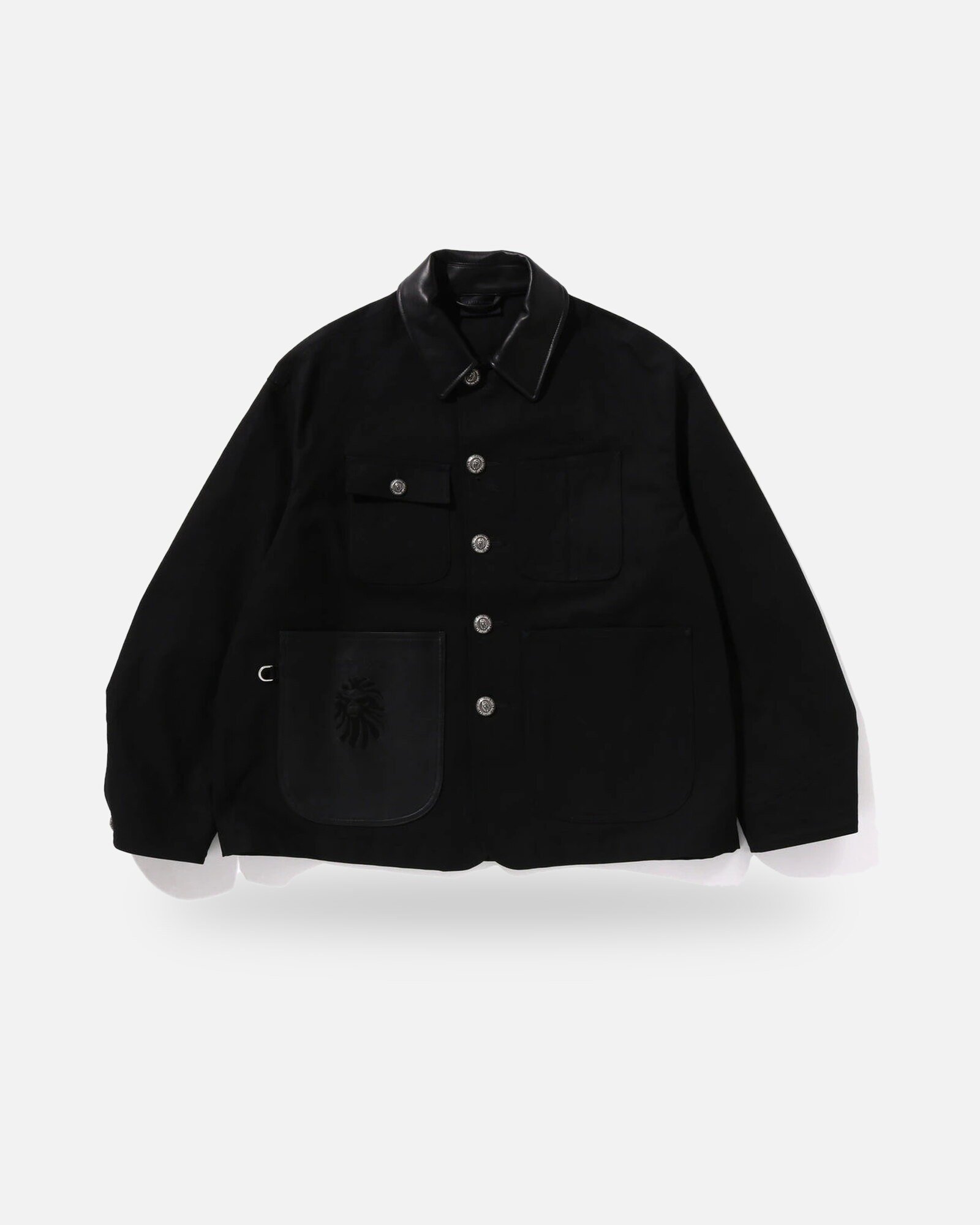
A denim trucker and a padded snowboard shell have almost nothing to do with each other. One goes over a tee in late April. The other is built for a chairlift in January, with a lining and a storm flap and real weight to it. Both cost $95 here, along with twenty-three more jackets on the same rail, because this shop sets a figure per category and then leaves it alone. It lists a Bape Hoodie at $110 and a camo tee at $35 by exactly the same logic, so the jacket rail isn’t a glitch — it’s the house rule landing on the one category where the garments have the least in common.
Twenty-five jackets, about a dozen different jobs
Count what’s actually on the rail and the spread gets a bit silly. Four denim pieces, including two truckers. Three varsity jackets. Three bombers if you include the padded MA-1. Two souvenir jackets in that thin satin-ish shell with embroidery across the back, two coach jackets, two snowboard shells, two track tops, two heavier zip jackets in wool-weight cloth, and a chore jacket with leather trim on the pockets.
Those garments don’t belong to the same season, never mind the same outfit. A track top is a spring layer you throw overa crewneck. A padded MA-1 is February outerwear. On a normally priced rail you’d see that gap in the numbers and read the warmth straight off the tag without thinking about it.
Not here. $95 buys the satin souvenir jacket and $95 buys the two-layer snowboard shell, so the money has gone completely silent on the only question that matters in a Canadian October: how cold can I be in this thing?
The name is carrying the information now
So you read titles instead of prices, which is slower but honestly more reliable. Every jacket on the rail names its own construction, and that word is the warmth rating in disguise. “Padded” means a fill. “2 layer” means a shell with a membrane under the face fabric. “Melton” means a dense wool-feel cloth that stops wind on its own. “Denim” means it stops almost nothing, and that’s fine, it was never meant to.
| What the title says | On the rail | What it’s actually for |
| Denim, incl. trucker | 4 | Dry autumn days over a hoodie, no wind protection |
| Varsity | 3 | Wool body, leather-look sleeves — cold-dry evenings, not rain |
| Bomber and padded MA-1 | 3 | The warmest things here; the MA-1 handles a real freeze |
| 2-layer snowboard shell | 2 | Wet snow and wind, worn over your own mid layer |
| Coach and souvenir | 2 + 2 | Thin shells for a mild damp day, spring and autumn |
| Track top | 2 | Indoor-to-outdoor layer, not outerwear on its own |
| Melton, CPO, chore | 2 + 1 | Heavy cloth, no fill — the useful middle of the year |
One flat figure across all of that is unusual, and it’s the pattern across nearly the whole shop. Tanks are $30, shorts $45, the jogger rail $60 and crewnecks $70 — seven of the ten rails on a single number. Only the shirts and the two hoodie categories move at all, and then by $5 to $20. Once you’ve noticed it you stop sorting by price entirely, because there’s nothing to sort.
Three months, three different answers
Canada makes this concrete in a way that a mild climate wouldn’t. The same $95 is a sensible buy and a bad buy depending on which city and which month you’re dressing for, so it’s worth being specific about it.
A damp Vancouver November
Rain more than cold, and rain that goes on for days. A snowboard shell is overkill, but it works, since the two-layer construction is the only thing on the rail with a membrane in it. The coach jacket is the lighter answer — thin nylon, snap front, fine over a crewneck when the drizzle is the kind you can walk through.
Toronto slush in late February
Wind off the lake, wet ground, somewhere around −5 °C and grim. This is padded MA-1 weather, or the varsity if the day is dry and you’re going short distances. Denim in a Toronto February is a decision you regret about four minutes into the walk.
Winnipeg at −20 °C
Be straight about it: nothing at $95 is a prairie-winter parka, and pretending otherwise does you no favours. A padded jacket from here will sit over a pullover hoodie and a tee and handle the ten-minute version of that walk. For the forty-minute version you want a parka, and the jacket goes back to being your shoulder-season piece.
Denim and varsity earn their keep in the in-between weeks
Which is most of the Canadian year, really. Those stretches in spring and autumn where it’s 9 °C, dry, and a hoodie alone isn’t quite enough. Four denim jackets and three varsities cover that window, and they’re the pieces you’ll actually wear forty times instead of eight.
Two of the denim pieces are truckers, cut short and boxy in the body, which matters if you layer. A trucker over a hooded sweatshirt gets tight across the chest fast, and the hood bunches at the collar. Over a crewneck it sits properly. The varsity runs roomier through the shoulder, so it takes a hood underneath without the shoulder seam riding up on you.
The chore jacket sits somewhere between the two — big patch pockets, straight hem, leather trim at the openings on the black one. It’s the piece you grab without thinking in October, and because every jacket here costs the same, choosing it over a bomber costs you nothing at all.
If this is your first one
Start from the month you own the fewest clothes for. Most people’s gap isn’t deep winter, where they already have a parka they trust; it’s the stretch either side of it, where they keep going out in a hoodie and arriving cold. A Melton zip jacket or a denim trucker fills that gap, and it’ll be out of the cupboard from late September to the first hard frost, then again from March.
Then let the print decide the rest, since the money won’t. Camo across the whole shell reads loud from across the street. The badge and multi-logo pieces are busy up close and quiet at a distance. Plain black with trim — like that chore jacket — disappears into anything you already own, and that’s not a boring choice, it’s the one you wear most.
Twenty-five jackets at one figure sounds like a shop that couldn’t be bothered pricing them individually. In practice, it hands the decision back to you, which is better. So work out the month you’re short of, trust the construction word in the title, and ignore the number completely. Then have a proper look through the rail.

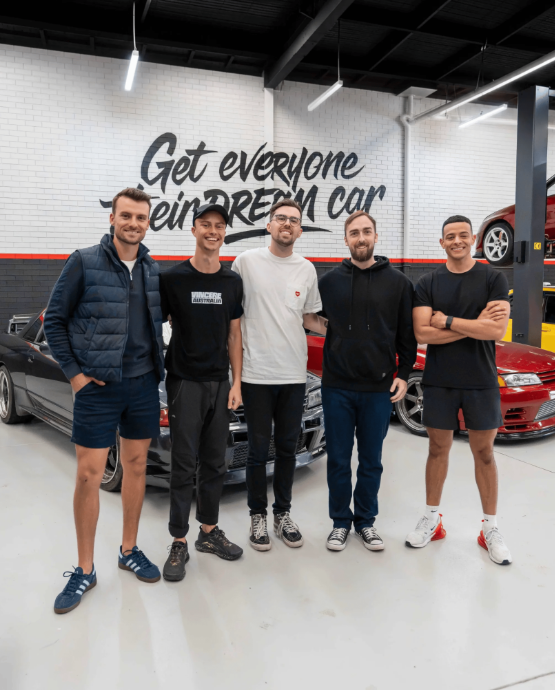
Brisbane-based Vincere Australia, known in the JDM scene for its car giveaways and enthusiast community, is expanding its operations to cover a wider range of automotive services. Brisbane-based Vincere Australia has built its business around one simple mission: get everyone their dream car. Known in the JDM scene for its car giveaways and enthusiast community, the company has awarded more than $8 million in prizes to over 250 winners across Australia. Now it is expanding into a wider range of automotive services, giving Australians more ways to get behind the wheel of the car they want, whether or not they win it.
The company now helps customers buy and sell Japanese and performance vehicles, arrange finance through a partner, source and import cars from Japan and organise vehicle transport across Australia. Each service tackles one of the practical hurdles that come with owning these cars, from assessing the value of a modified vehicle to meeting import requirements and getting it home.
Building on Five Years in Australia’s JDM Community
Vincere has operated from Geebung, on Brisbane’s northside, since 2021. Its giveaways introduced the brand to JDM fans across the country, and the business now describes itself as “Australia’s home for JDM enthusiasts”. Its automotive work has grown alongside that community. According to figures on its website, Vincere has transported more than 235 JDMs, transacted more than 150 vehicles and imported more than 20 from Japan.
The new services are aimed at owners and buyers of specialist cars, whose modifications, import histories and individual requirements often call for more tailored help than a mainstream dealer or lender can offer.
Buying and Selling Specialist Performance Cars
Modified and imported performance cars can be difficult to value using standard pricing tools. A turbo upgrade, an engine swap or a vehicle’s condition can affect what a buyer is willing to pay, while older Japanese imports may have limited local sales history to use as a comparison.
Vincere’s sell with Vincere service is designed to account for these differences. Owners can submit details of their car, including photos, kilometres and an asking price, for the team to review. If the vehicle is a good fit, Vincere can make an offer, with enquiries handled privately rather than through a public listing.
Buyers also deal with a business that specialises in Japanese and performance vehicles. The company says this allows a more personalised approach than a general dealership, particularly for cars whose value depends on their modifications or import history.
Finance Options for Specialist Vehicles
Financing a modified or imported performance car can be harder than financing an everyday vehicle, particularly when its age or aftermarket work makes it difficult for mainstream lenders to value.
Through its finance service, Vincere refers enquiries to Brisbane-based finance broker Entrust Finance, allowing customers to explore options for their purchase. Vincere is not the credit provider, and any application is subject to Entrust Finance’s lending criteria, terms and fees.
Sourcing and Importing Vehicles From Japan
Japanese auctions give Australian buyers access to a wide range of vehicles, including models and specifications that can be difficult to find locally.
Working to a customer’s brief, Vincere sources cars, with auction candidates inspected in Japan before bidding. Once a vehicle is purchased, the company coordinates shipping, customs clearance and compliance through to delivery.
Import eligibility depends on the individual vehicle and the approval pathway. Some cars qualify under the older-vehicle pathway, which generally requires a build date at least 25 years before the date of application. Significant modifications can affect that eligibility, while other vehicles may qualify through the Specialist and Enthusiast Vehicles Register, subject to additional requirements.
Approval must be secured before the vehicle is imported. Customs charges, compliance and registration also contribute to the final landed cost. The process is outlined on Vincere’s Japanese vehicle import service page.
Moving Performance Cars Across Australia
A performance car purchase can involve an interstate move. Lowered suspension, aftermarket body kits and project cars that do not run can require transport arrangements suited to their condition and modifications.
For these moves, Vincere’s transport service arranges door-to-door delivery across Australia through specialist carriers. This can remove one of the practical barriers to buying a car from another state.
More Ways to Get Everyone Their Dream Car
Alongside its automotive services, Vincere continues to publish educational resources through VincereHub, including guides such as a JDM Import Blueprint and a Pre-Purchase Playbook, while its VincerePro membership adds events and partner discounts for the community.
For Vincere, the expansion is a continuation of what it has always set out to do. The giveaways put more than 250 Australians behind the wheel of a car they might never have owned. Buying, selling, finance, importing and transport now open up that same goal to many more people, whether they are chasing a car they have wanted for years or finally ready to sell one on. The mission hasn’t changed: get everyone their dream car. Vincere has simply built more roads to get there.
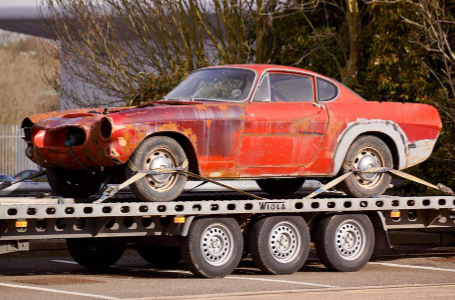
A classic car can represent years of restoration, sourcing, and financial value. Yet moving it from a garage to a workshop, auction, show, or new owner introduces risks that vehicle transport may not address. Older construction, unusual dimensions, delicate finishes, and mechanical quirks all affect how a vehicle should be handled. Understanding those details before collection can help prevent damage that is expensive, difficult, or impossible to reverse.
A Classic Car Is More Than an Older Vehicle
Age alone does not determine a vehicle’s value. Rarity, originality, provenance, condition, and restoration quality all influence what makes a classic special. Those same characteristics affect transport planning.
A low-clearance sports car may have fragile front spoilers, exposed exhaust components, or a long overhang. An older vehicle may also have unusual frame points, delicate trim, or suspension components that should not be used for lifting or securement. A method that works for a modern commuter car may place pressure on parts that are difficult to replace.
Collectors often focus on restoration, storage, and insurance valuations. Moving the vehicle between locations deserves the same attention.
Why Ordinary Towing Can Create Problems
Conventional roadside towing is generally designed to move disabled everyday vehicles efficiently. Classic cars can require a different approach. Wheel-lift equipment may be unsuitable for certain body shapes, low valances, or unusual drivetrain configurations. Incorrect attachment points can damage trim, underbody components, or suspension parts. Owners who understand how classic cars need specialized towing know that the right equipment and handling techniques are essential to protecting their vehicles.
Even access to the vehicle can require care. Aging door handles, window mechanisms, locks, and interior materials may not tolerate rough handling. Owners should explain these vulnerabilities before a driver arrives, rather than assuming an operator will recognize them.
When arranging classic car transport, ask what equipment will be used and whether the operator has experience with vehicles of similar age, value, and design.
Loading Angle and Securement Need Special Attention
Loading geometry is one of the most important technical considerations. A steep ramp can cause a low vehicle to scrape its front fascia, exhaust, oil pan, or frame extensions. Approach and breakover angles should be considered before the car is winched or driven onto a trailer.
Depending on the vehicle, operators may use a liftgate, extended ramps, skates, or other equipment to reduce contact risk. The correct method depends on the car’s dimensions and condition, so there is no single solution for every classic.
Securement matters just as much. Straps should be attached to suitable points and positioned to avoid paintwork, brake lines, fragile suspension parts, and body panels. The Federal Motor Carrier Safety Administration explains general requirements for cargo securement, including the need to prevent loads from shifting and to use equipment in proper working condition. Owners should still ask the carrier how its method is appropriate for the vehicle.
Mechanical Details Can Change the Entire Plan
A classic may run well during a weekend drive but still be unsuitable for casual towing. Some vehicles have transmission requirements that affect how they can be moved. Others may leak fluids when tilted, have weak batteries, or suffer from sticking brakes and aging tires.
Non-running projects require even more preparation. Locked wheels, seized brakes, flat tires, or missing components can turn loading into a controlled recovery operation. Modified vehicles may present additional challenges, including air suspension, aftermarket splitters, oversized wheels, or unfinished bodywork.
Tell the operator whether the vehicle starts, steers, brakes, and rolls. Explain any unusual starting procedure, battery cutoff, alarm, or transmission limitation. Accurate information helps the carrier bring suitable equipment and avoid improvisation.
Document the Vehicle Before Pickup
A detailed condition record protects both the owner and the transporter. Photograph the exterior, wheels, glass, interior, and underbody areas. Capture existing scratches, chips, cracks, leaks, and loose components. Keep the images with the transport paperwork.
Walk around the vehicle with the driver and make sure existing damage is recorded on the inspection report or bill of lading. Repeat the inspection at delivery before signing the paperwork. Remove loose personal items and secure detachable parts. Provide written instructions for unusual controls or starting procedures so the driver does not have to guess.
Purchases, Sales, and Events Add Pressure
Transport often happens during a transition: after an auction, before a sale, during a restoration, or on the way to an event. Time pressure and unfamiliar locations can make oversights more likely.
A seller’s description that a car runs does not confirm that it can safely drive onto a trailer. Confirm whether the brakes work, tires hold pressure, steering operates, and the underside clears the loading surface. Event venues may also have narrow access roads, gravel, crowds, or limited unloading space.
Treat transport as part of the transaction. Confirm pickup access, vehicle dimensions, running condition, and delivery arrangements in advance.
Insurance Is Important, but Prevention Comes First
Do not assume that your personal policy and the carrier’s coverage offer identical protection. Ask for the carrier’s insurance details, limits, exclusions, and claims process. Check whether the declared value is appropriate and whether coverage applies during loading, transit, and unloading. Your own collector policy may have separate conditions for transportation.
Agreed-value coverage, carrier liability, and cargo insurance are not interchangeable. Read the policy language and ask your insurer whether additional transit coverage is needed. Keep copies of the condition report, photographs, and written transport agreement.
Make the Journey Deliberate
Classic car transport should be planned around the vehicle, not treated as an ordinary tow at a higher price. Clearance, securement, mechanical condition, documentation, and insurance all deserve attention before the truck arrives.
Ask specific questions, share accurate details, and choose an operator equipped for the car’s needs. A journey may look uneventful from start to finish. For a collector, that is exactly the outcome worth paying attention to.
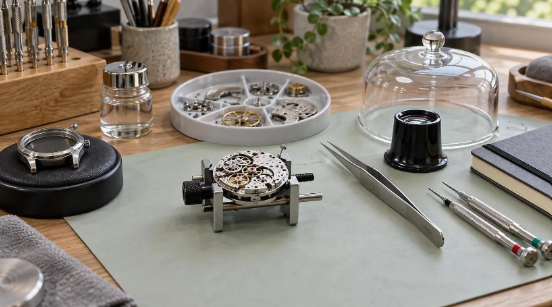
Watch Repair Tools Australia is building a local resource for the people who keep watches working, combining specialist stock with practical guidance for the repair bench. From the outside, watch repair looks like a craft built on patience and a steady hand. At the bench, it also depends on knowing what fits, what a job calls for and where to find it. For Australian watchmakers, collectors and students, that can mean working through several catalogues before a repair can even begin.
Ben Holdaway, a lifelong watch enthusiast, built Watch Repair Tools Australia around that practical problem. The independent Australian business stocks specialist tools, parts and workshop consumables locally. Its range is organised around jobs repairers recognise, from inspecting a movement and opening a case to fitting hands and checking how a watch runs.
Making specialist knowledge easier to find
In a trade where a fraction of a millimetre can determine whether a tool or part fits, clear specifications matter. The company’s published guides help readers distinguish between similar fittings, understand what a tool can do and recognise when a job needs an experienced watchmaker. That information gives a collector starting out and a repairer checking a specification a common place to begin. Recent guides cover how to release a stuck spring bar without damaging the case and how to measure replacement hands before fitting them.
Customer requests also help shape the range. That gives the business a way to hear what Australian repairers struggle to source and which items they need repeatedly. Local stock and dispatch matter most when an otherwise straightforward job is waiting on one missing part or bench tool.
Supporting the people behind the repair
Watch Repair Tools Australia occupies a specific place in the local trade. It supplies the bench and publishes reference material for the people working at it. By making specialist equipment and repair knowledge easier to find locally, the business is building a reference point for Australian watch repair.

A $95 Jacket on a Rail Where Nothing Else Moves

Vincere Australia Expands Beyond Dream-Car Giveaways Into Specialist Automotive Services

More Than a Makeover: How Window and Door Upgrades Improve Home Performance
Who Is Gale Burnick? The Story Of George R. R. Martin’s Ex Wife

Who Is Hermann Nicoli? The Full Story Of Candice Swanepoel’s Former Fiancé

Who Is Alicia Dove? The Life Story Of Corey Taylor’s Wife
-
Celebrity4 months ago
Who Is Gale Burnick? The Story Of George R. R. Martin’s Ex Wife
-
 Celebrity4 months ago
Who Is Hermann Nicoli? The Full Story Of Candice Swanepoel’s Former Fiancé
-
 Celebrity4 months ago
Who Is Alicia Dove? The Life Story Of Corey Taylor’s Wife
-

 Celebrity4 months ago
Meet Carole Rogers: Everything to Know About Kenny Rogers’ Daughter
-

 Celebrity4 months ago
Who Is Sydney Davis? The Full Story Of Billy Bush’s Ex Wife
-

 Celebrity4 months ago
Who Is Anna Hillinger? The Full Life Story Of Mike Shinoda’s Wife
-

 Celebrity4 months ago
Who Is Demacio Castellon? Life Story Of Nelly Furtado’s Ex Husband
-

 Blog3 months ago
What Is Sosoactive? A Complete Guide to the Digital Platform