
News
Catching a Short Run Before Packout: How Food Operators Are Using Live Weight Checks

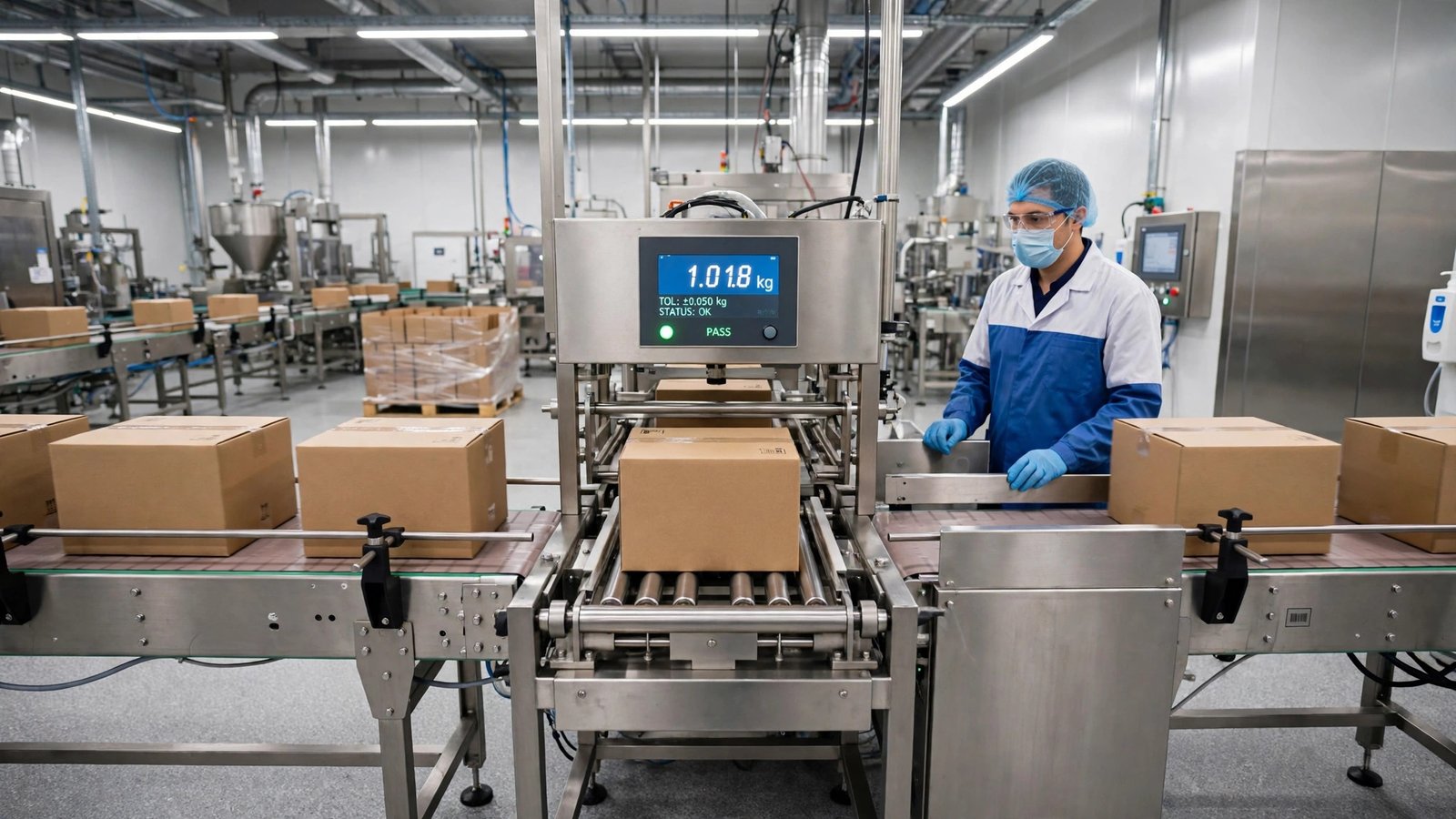
Every food operator knows the feeling of reaching the end of a run and counting. The pallets are wrapped, the cases are labeled, and the number comes out a little different from what the recipe promised. Sometimes it’s a pleasant surprise. Sometimes it’s a few units short, and the question arrives right away: where did they go? For years, answering that question meant reviewing records after the fact. Many operators are now discovering a friendlier approach, one where the shortfall is noticed while the run is still underway and a small adjustment can still make a difference.
Why Timing Changes Everything
Yield, the amount of good finished product a batch produces compared with what was expected, is one of the most closely watched numbers in a food plant. What matters just as much as the number itself is when you learn it.
If a variance appears in an end-of-shift report, the options are limited. The product is already packed, the ingredients are already used, and the time to recover has passed. Missing units mean lost product and lost time, and for brands that run on thin margins, a variance of two to three percent per run can add up to a meaningful amount of revenue across a production year. If the same variance appears while the batch is still being made, the team has choices: check a scale, adjust a fill, look at a mixer, or tweak a step. The gap between those two moments is where live weight checks earn their keep.
What a Live Check Looks Like
The idea is simple and easy to picture. During a production run, actual weights are compared with target weights as the batch progresses. When the numbers start to drift, an operator is alerted before packout begins, while corrective action is still possible. Instead of a report that explains what happened, the plant gets a heads-up about what’s happening.
This is a good example of where AI for Food Manufacturing offers a practical helping hand. A real-time yield engine can watch the variance between actual and target weights during the run and signal the operator at the right moment. Because automated batch capture records weights and other production evidence at the source, the data is accurate and timestamped without anyone retyping it. The operator stays in charge, using their eyes, hands, and experience to decide what to do. The system simply makes sure they hear about a drift while it’s small.
Operators often find this a welcome change. A gentle alert is much nicer than discovering a shortfall at the end of a long shift, and it lets the person closest to the line use their skill to put things right.
Small Moments, Real Savings
A few simple examples show how this plays out. A portioning station begins to run slightly heavy, and a quick recalibration brings it back before a few hundred pounds of extra product go into cases. A moisture-related change in a mix starts to reduce output, and a small adjustment keeps the batch on target. A scale reading drifts partway through a long run, and a quick check catches it before the whole lot is affected.
None of these is dramatic. Each one saves a little product, a little time, and a little stress. Added together across hundreds of runs, they become a meaningful improvement in both yield and confidence.
Connecting Every Weight to Its Lot
Live checks are most useful when they connect to the rest of the story. A weight reading is much more informative when the team can see which ingredient lots, which line, which shift, and which operator were involved. That context turns a single drift into a pattern the team can learn from.
This is where Lot Traceability Software built around a plant’s existing ERP adds a lovely layer of understanding. When a production lot is created, a traceability lot code is assigned and tied to the raw material batch, production date, shift, line, and operator records. Key data elements are captured at each critical tracking event in a structured, sortable format, and the system connects to the ERP through an API without changing its structure.
With that foundation, a quality investigation becomes a conversation backed by data. If yield dips on one line, the team can ask which ingredient lots were in use, how the shift compared, and whether similar patterns appeared before. Analysis of historical lot data can reveal which production variables correlate with a quality or yield issue, which helps teams focus their improvement efforts where they’ll matter most. And if a question ever comes from a customer or an auditor, the full lot genealogy is available in seconds.
Records That Build Themselves
An added benefit of capturing weights and other evidence at the source is that records get built as the work happens. For a USDA-regulated meat processor, batch records, smoker logs, lethality evidence, and traceability documents were generated during production and stored in one database, and audit response dropped from two or three days to under 60 seconds. The same habit that helps catch a short run also reduces transcription errors, the kind that quietly creep in when numbers are copied by hand.
Teams often say this is one of the most satisfying parts of the change. The documentation that used to take time at the end of the day is simply there, and the people who used to compile it can spend their time on the line.
What Operators Tend to Notice
Operators who adopt live checks often describe a few welcome changes. Surprises at the end of a run become less common, because drifts are caught early. Conversations about yield become more constructive, since the team is looking at the same live information and can act on it together. New team members learn faster, because they see in real time how their actions affect the numbers.
There’s also a quieter benefit. When a plant knows what’s happening during the run, supervisors can plan with more confidence, schedules hold more reliably, and the whole operation runs with a steadier rhythm.
A Friendly Way to Begin
For plants curious about live weight checks, a good first step is to pick one product with a consistent recipe and a clear target weight. Look back at the last several runs and note where variances appeared and when they were noticed. That review shows how much opportunity there is to catch things earlier.
Next, make sure weights are being recorded at the source, ideally from the scale or the line directly rather than copied by hand. Decide what level of variance should trigger a gentle alert, and who should receive it. Try it on one line for a few weeks, ask the operators what they think, and refine the thresholds together. Starting small keeps the experience positive, and early wins make the next line an easy conversation.
It also helps to connect the data to lot records from the start, so the team can see patterns as they emerge.
A Better Moment to Learn the Number
Food operators have always cared about yield, and the best of them have a feel for when something is a little off. Live weight checks simply give that feel some company, a steady signal that arrives while there’s still time to act. With weights captured at the source and tied to every lot, a plant gets the best of both worlds: fewer surprises at the end of a run and a clear record of everything that happened along the way. It’s a small shift in timing that makes a big difference in how a day feels.
About the Contributor
Nishkam Batta, Editor-in-Chief, HonestAI Magazine | AI Consultant, GrayCyan AI Solutions
Nish leads an applied AI company helping manufacturing and related companies automate operations with human-in-the-loop AI that integrates into ERPs, WMS, CRMs, and other enterprise tools, with an emphasis on explainable AI, clear audit trails, and measurable outcomes. His team builds agentic ERP systems that execute multi-step tasks inside approved guardrails so humans keep accountability, approvals, and override control.

AI can write, code, search, predict, and make decisions faster than most teams expected a few years ago. Yet many companies still struggle to turn that power into safe business value. The main barrier is often not the model. It is the way the company controls the model, the data, and the people around it.
That is why ai transformation is a problem of governance. A strong model can still create weak results when no one owns the outcome. Teams need clear rules for risk, approval, monitoring, data use, and human review. Without them, AI can move faster than the business can manage.
This issue is growing as companies move from simple chat tools to AI agents that can take actions. An agent may update a record, approve a task, contact a customer, or trigger another system. That changes AI from a support tool into an operating actor. Governance must change with it.
Why AI Transformation Is a Problem of Governance
The phrase ai transformation is a problem of governance points to a basic business truth. Technology can make a decision, but the company still owns the result. A model does not carry legal duty, brand risk, or executive responsibility.
This creates basic questions. Who approves the use case? Who can stop the system? Who reviews failures? Who decides how much freedom an AI agent should have? These are governance questions, not model questions.
Traditional IT Governance Does Not Fit AI
Traditional software often follows fixed rules. A team writes code, tests it, and deploys it. AI is different. Outputs can shift with data, prompts, and context. Generative systems can also produce confident answers that are wrong.
NIST treats AI risk management as an ongoing lifecycle process, not a one-time approval step. Its AI Risk Management Framework uses four linked functions: Govern, Map, Measure, and Manage. Governance is designed to cut across the full process.
This matters because AI cannot be managed only at launch. The system, its users, and the data around it can change. The controls must keep working as those changes happen.
Ownership Is the First Governance Test
If ai transformation is a problem of governance, ownership must be clear before a system goes live. Many AI projects touch IT, legal, security, data, compliance, and the business unit at the same time. That can create an ownership gap.
A company should know who owns the business outcome, model risk, data access, security, and compliance. For high-impact systems, one leader or defined committee should have final sign-off power and the power to pause the system.
Clear ownership also makes incidents easier to manage. Teams know who must act when an AI tool fails, leaks data, gives poor advice, or crosses an approved risk limit.
AI Agents Make Decision Rights More Important
AI agents can do more than generate text. They can call tools, use company systems, make choices, and complete multi-step tasks. This makes decision rights a core part of governance.
The company must define what an agent may do alone and where a person must approve the next step. A low-risk internal draft may need little control. A payment, hiring decision, or customer account change needs much tighter rules.
This is another reason ai transformation is a problem of governance. The key issue is no longer only whether AI can perform a task. The issue is whether the organization has set safe limits around that task.
Shadow AI Creates Hidden Risk
Employees often use AI tools because they help them work faster. The risk begins when staff use unapproved services with private code, customer data, contracts, financial records, or other sensitive content.
A ban alone may not solve the problem. Good governance gives staff a safe path to use AI while protecting company data. That means approved tools, access controls, logging, training, and clear rules for sensitive information.
Companies should make safe tools easy to use. If the approved system creates too much friction, workers may search for faster options outside company controls.
Risk Tiering Keeps Governance Practical
Not every AI use case needs the same level of control. Treating all systems as high risk can slow useful work. Treating all systems as low risk can create serious exposure.
A better model uses risk tiers. A tool that summarizes public notes may be low risk. A system that affects hiring, pricing, credit, health, safety, or legal rights needs stronger review.
This approach helps explain why ai transformation is a problem of governance rather than a simple compliance task. Governance must match the level of harm that a system could cause. It should be strict where risk is high and lighter where risk is low.
Continuous Monitoring Must Continue After Launch
Getting an AI tool into production is only the start. Systems can face data drift, changing user behavior, new attacks, poor prompts, and new business conditions.
NIST says risk management should continue through the AI lifecycle. ISO/IEC 42001 also calls for an AI management system that can be maintained and continually improved. Both ideas support the same point: governance must stay active after launch.
When ai transformation is a problem of governance, monitoring becomes part of normal operations. Teams need logs, quality checks, incident rules, escalation paths, and clear stop conditions.
Human Oversight Needs Real Authority
“Human in the loop” sounds safe, but it means little if the person cannot question or stop the system. Human review must be real, not symbolic.
A reviewer needs enough context, time, and authority to reject the output. If people are pushed to approve every result, oversight becomes a formality.
The EU AI Act reflects this wider direction. Its rules for high-risk systems include human oversight, documentation, traceability, risk controls, and monitoring duties. The exact timeline varies by category, so companies need to map their own systems to the rules that apply.
Regulation Is Turning Governance Into Operations
In 2026, AI governance is no longer only an internal policy topic. On August 2, 2026, the European Commission began enforcing parts of the EU AI Act, and Article 50 transparency duties started to apply to certain AI systems. These rules cover areas such as informing people when they interact with AI and marking some AI-generated or altered content.
This reinforces the idea that ai transformation is a problem of governance. A policy document is not enough. Companies need records, controls, responsible owners, review steps, and evidence that rules are followed.
Good documentation now matters more. A business should be able to show how a system was approved, tested, monitored, and controlled.
A Simple Five-Part AI Governance Model
A practical model starts with ownership. Every important AI system needs a named business owner. Next comes risk tiering, so controls match possible harm.
Third, teams should map decision rights. They should write down what the AI may do, what needs human approval, and what the system must never do. Fourth, they should monitor output quality, security, drift, and incidents after launch.
Fifth, they should control data and tool access. This includes approved AI services, identity controls, audit logs, and rules for sensitive information. In practice, ai transformation is a problem of governance because these operating controls decide whether AI creates value safely.
Governance Should Help AI Move Faster
Poor governance creates delay because every project starts from zero. Good governance creates approved patterns teams can reuse. Low-risk projects can move quickly, while high-risk projects receive stronger checks.
Clear rules can also reduce debate between business, legal, security, and technical teams. Each team knows what evidence is needed before a system can move to the next stage.
This is why ai transformation is a problem of governance does not mean companies should build more bureaucracy. It means they should build clear rules once, then use those rules to make faster and safer choices.
The Real Goal Is Accountable AI at Scale
AI transformation is not complete when a company buys models or launches assistants. It is complete when AI becomes part of normal work without creating unmanaged risk.
That requires leadership, ownership, controls, review, evidence, and the ability to stop a system when needed. The company still needs a clear chain of responsibility.
In the end, ai transformation is a problem of governance because organizations must decide how much authority to give AI and who remains answerable for the result. Companies that solve that problem can scale AI with more trust, less confusion, and better control.

Pool Maintenance: The Hidden Business Costs of Neglecting Your Facility

Prevention Cloud: A Complete Guide to Workplace Wellness and Cloud Security

Neatie: Personalized Jewelry, Custom Necklaces, and Complete Buying Guide
Who Is Gale Burnick? The Story Of George R. R. Martin’s Ex Wife

Who Is Hermann Nicoli? The Full Story Of Candice Swanepoel’s Former Fiancé

Who Is Alicia Dove? The Life Story Of Corey Taylor’s Wife
-
Celebrity4 months ago
Who Is Gale Burnick? The Story Of George R. R. Martin’s Ex Wife
-
 Celebrity4 months ago
Who Is Hermann Nicoli? The Full Story Of Candice Swanepoel’s Former Fiancé
-
 Celebrity4 months ago
Who Is Alicia Dove? The Life Story Of Corey Taylor’s Wife
-

 Celebrity4 months ago
Meet Carole Rogers: Everything to Know About Kenny Rogers’ Daughter
-

 Celebrity4 months ago
Who Is Anna Hillinger? The Full Life Story Of Mike Shinoda’s Wife
-

 Celebrity4 months ago
Who Is Sydney Davis? The Full Story Of Billy Bush’s Ex Wife
-

 Celebrity4 months ago
Who Is Demacio Castellon? Life Story Of Nelly Furtado’s Ex Husband
-

 Blog2 months ago
What Is Sosoactive? A Complete Guide to the Digital Platform