
Blog
What Is Sajar Plastics Inc? Inside the Ohio Plastic Manufacturer

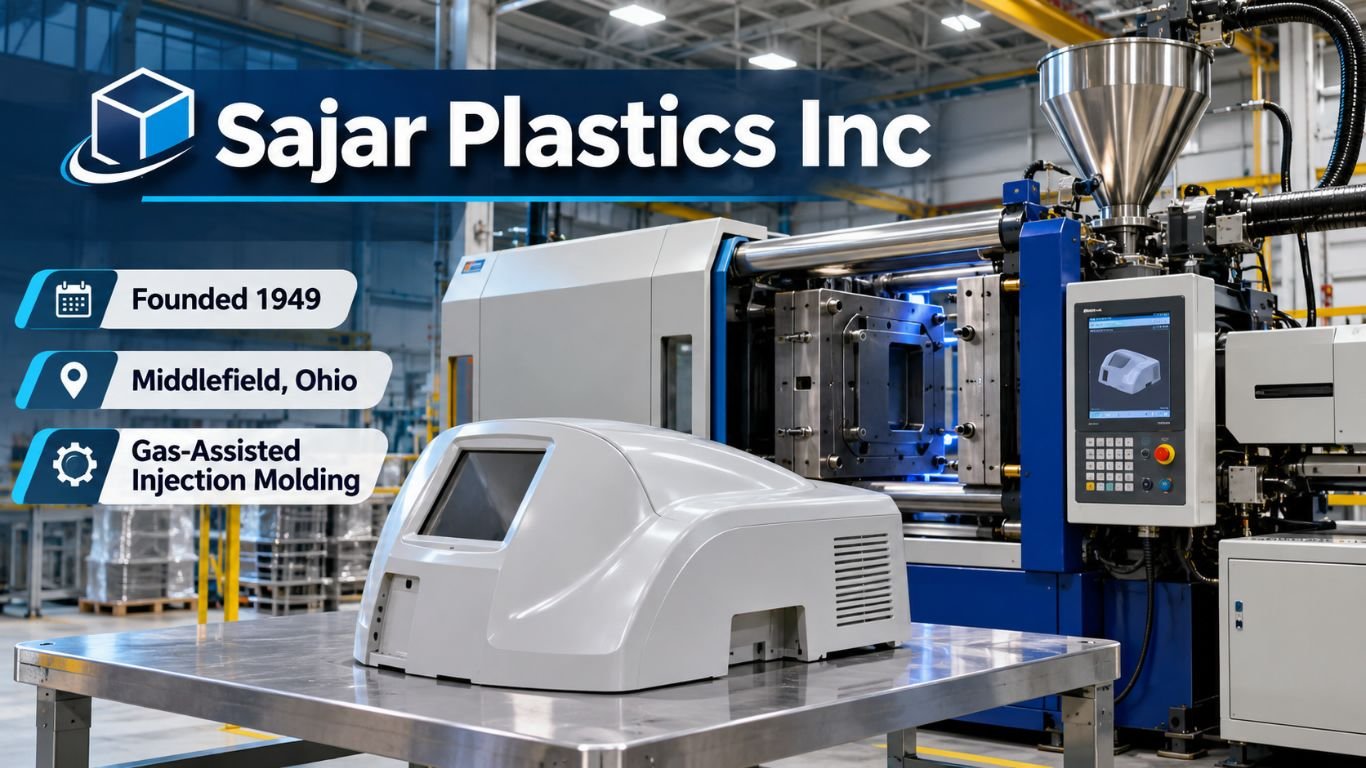
In the early 1980s, Sajar Plastics Inc helped develop gas-assisted injection molding technology. Founded in 1949 in Middlefield, Ohio, the company makes large plastic parts for medical, laboratory, retail, and industrial equipment. Its work includes custom covers, panels, handles, and machine housings.
Universal Plastics acquired Sajar in June 2017 and brought it under the Universal Plastics name in 2020. Today, its Middlefield factory continues to make custom plastic parts using gas-assisted, structural foam, and standard injection molding.
History of Sajar Plastics Inc.
Sajar Plastics started in 1949 in Middlefield, Ohio. It began with three injection molding machines. Its name came from the surnames of its founders: Sperry, Johnson, and Radde.
At first, the company made basic molded plastic parts. It later added more machines and improved its methods. Over time, it began making larger parts that needed more detailed designs.
In the early 1980s, Sajar helped develop gas-assisted injection molding. This became one of its main services. By 2017, the company had helped bring more than 500 gas-assisted part designs into production.
Who Owns Sajar Plastics Inc. Today?
Universal Plastics bought Sajar Plastics in June 2017. Universal was based in Massachusetts and made large plastic parts through thermoforming. The purchase helped it expand into injection molding.
The two companies used different methods to make plastic parts. Thermoforming shapes heated plastic sheets over molds. Injection molding pushes melted plastic into molds. The purchase allowed Universal Plastics to offer both services.
In January 2020, Universal Plastics brought Sajar and its other businesses under one name. The Middlefield factory became part of the wider group. In 2026, it continues to make large plastic parts under the Universal Plastics name.
How Sajar Plastics Inc. Became an Industry Pioneer?
Sajar Plastics Inc helped develop gas-assisted injection molding in the early 1980s. It was one of three companies involved in the early work. This method helped solve problems in making large plastic parts.
Gas-assisted molding creates hollow spaces inside some plastic parts. This can reduce weight and material use. It can also help prevent marks on the outer surface.
Sajar used this method to make handles, covers, and machine housings. By 2017, it had helped bring more than 500 gas-assisted designs into production. This work made gas-assisted molding one of its main skills.
Gas-Assisted Injection Molding at Sajar Plastics Inc.
Gas-assisted injection molding uses melted plastic and pressurized gas. First, melted plastic enters a metal mold. Gas, often nitrogen, then helps shape the plastic. In some parts, the gas creates hollow spaces inside thicker areas.
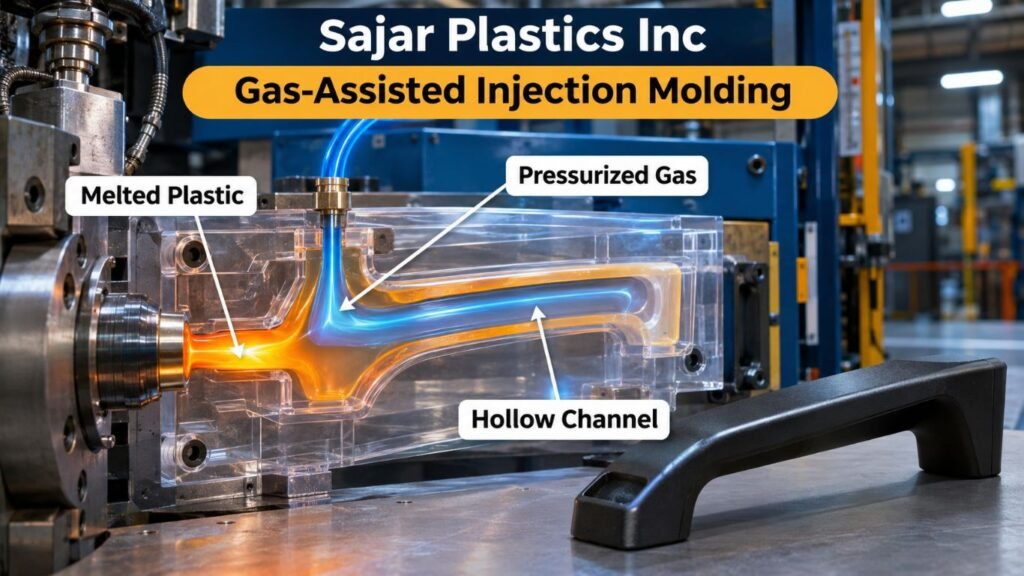
These spaces can make a part lighter and reduce plastic use. The method can also help prevent sink marks. These are small dips that may appear on a plastic surface.
Sajar uses internal and external gas-assist methods. Internal gas-assist creates hollow channels inside a part. External gas-assist applies pressure to the outside of the plastic. Both methods can help make large covers, handles, and panels.
Structural Foam Molding at Sajar Plastics Inc.
Structural foam molding makes plastic parts with a solid outer layer and a lighter center. The inside has small air-like spaces formed during molding. This can reduce weight while keeping the part strong.
This method is useful for large parts that need to hold their shape. For example, a wide machine panel may need strength without too much weight. Structural foam molding can help make such parts.
Sajar offers high-pressure structural foam molding. It can be used for large covers, housings, and support parts. The surface may look different from a part made with standard injection molding.
Standard Injection Molding at Sajar Plastics Inc.
Standard injection molding is a common way to make plastic parts. Plastic is heated until it melts. The melted plastic is pushed into a metal mold. Once it cools, the mold opens and the finished part comes out.
This method works well when many parts need the same shape. It can also make small details, holes, and edges. The same mold can be used to make many matching parts.
Sajar uses standard injection molding for projects that do not need gas-assisted or structural foam methods. The right process depends on the part’s size, shape, and material. Its team helps customers choose a suitable method.
Sajar Plastics Inc. Factory and Equipment
The Sajar factory is in Middlefield, Ohio. Universal Plastics lists the plant at about 150,000 square feet. It has space for large molding machines, finishing work, and part inspection.
Published factory details list 17 injection molding machines. Their clamping force ranges from 85 to 1,500 tons. The larger machines include 500-ton, 700-ton, 1,000-ton, and 1,500-ton presses. Clamping force keeps the mold closed while plastic enters it.
The factory also has tools to check finished parts. These include 3D scanners and laser measuring systems. Universal Plastics also lists nine paint booths at the plant. These tools help workers check part sizes and finish their surfaces.
Products Manufactured by Sajar Plastics Inc.
Sajar Plastics Inc makes custom plastic parts for other companies. Its products include covers, doors, panels, handles, bezels, and machine housings. These parts are made to fit different types of equipment.
Medical testing machines may need plastic covers to protect their inner parts. Retail payment machines may need outer cases with spaces for screens and buttons. Sajar makes parts based on each customer’s design.
The company also makes parts for office and industrial machines. These include printer covers, server doors, and machine panels. The size, shape, and material depend on the product.
Industries Served by Sajar Plastics Inc.
Sajar makes plastic parts for medical equipment companies. These parts are used in testing machines and other healthcare equipment. They often need smooth surfaces and accurate shapes.
The company also serves laboratory and diagnostic equipment makers. Their machines may need plastic housings, trays, and panels. These parts help protect the equipment and support its use.
Other markets include retail, financial, office, and industrial equipment. Sajar makes parts for payment systems, kiosks, printers, and machines. Each product is made to meet the customer’s needs.
Engineering and Design Support at Sajar Plastics Inc.
Sajar Plastics Inc helps customers design plastic parts. Its team checks whether a design can be made using injection molding. It also looks at the part’s shape, size, and strength needs.
Engineers may suggest changes to wall thickness, material, or shape. These changes can help prevent molding problems. They may also reduce waste and make production easier.
The company also helps manage mold design and project planning. A mold gives a plastic part its shape. Careful planning helps avoid costly changes after production begins.
Finishing and Assembly Services at Sajar Plastics Inc.
Some plastic parts need more work after molding. Sajar offers finishing services such as painting, pad printing, and hot stamping. These methods can add color, words, and marks to a part.
The company also offers EMI/RFI shielding for certain electronic parts. This helps reduce unwanted signal interference. Other services include heat staking and ultrasonic inserting.
Sajar also supports sub-assembly work. This means joining several parts before they are shipped. The work depends on the customer’s design and the services available at the factory.
Materials Used by Sajar Plastics Inc.
Sajar Plastics uses different types of plastic. Two common materials are ABS and polycarbonate. ABS offers good strength and impact resistance. Polycarbonate is tough and can handle heat and impact.
The right material depends on the product. A medical machine cover may need a smooth surface that is easy to clean. An industrial panel may need more strength or heat resistance.
Universal Plastics also works with nylon, polypropylene, acrylic, acetal, and plastic blends. Some materials resist chemicals, while others resist wear. The company helps customers choose materials for their parts.
Quality Standards at Sajar Plastics Inc.
Sajar checks its plastic parts during production. Workers measure parts to make sure they match the design. They also check for problems with shape and surface finish.
The Middlefield factory holds ISO 9001:2015 quality management certification. Its published certificate was issued in January 2025 and expires on January 11, 2028, subject to continued compliance. This standard covers how a company manages and checks its work.
The factory uses scanners and measuring tools to inspect parts. These checks help find errors before products are shipped. They also help keep quality steady during repeat orders.
Sajar Plastics Inc. Location and Contact Information
Sajar Plastics Inc operates at 15285 South State Avenue, Middlefield, Ohio 44062, United States. The factory is now part of Universal Plastics. It focuses on large plastic injection molding projects.
The published phone number is (440) 632-5203. Customers can visit www.universalplastics.com for more details. The website has information about its services, factory locations, and contact options.
Businesses can contact Universal Plastics to discuss custom parts. They can share the part’s size, design, material needs, and order amount. This helps the team review the project.
Bottom Line
Sajar Plastics Inc began in Middlefield, Ohio, in 1949. It became known for making large plastic parts and helping develop gas-assisted injection molding. Its products include covers, handles, panels, and machine housings.
Universal Plastics bought Sajar in 2017 and brought it under its name in 2020. In 2026, the Middlefield factory continues to make custom plastic parts for medical, laboratory, retail, and industrial equipment makers.
FAQs
Is Sajar Plastics Inc. still in business?
Yes, its Middlefield factory continues to operate under the Universal Plastics name in 2026.
Who founded Sajar Plastics Inc.?
Sajar was founded in 1949, and its name comes from the surnames Sperry, Johnson, and Radde.
Who bought Sajar Plastics Inc.?
Universal Plastics bought Sajar Plastics in June 2017 to expand its injection molding services.
What products does Sajar Plastics Inc. make?
It makes plastic covers, panels, handles, doors, and housings for medical and industrial equipment.
Where is Sajar Plastics Inc. located?
Its factory is at 15285 South State Avenue, Middlefield, Ohio 44062, United States.
Read Also: What Does Timsko Mean? Grammar and Examples

FancyAI offers eight main desktop workflow tools for design, marketing, sales, and business tasks. Known as FancyAI Skills, these tools help users create product images, plan ads, study sales data, and manage daily work. The platform also offers named AI Experts for specific jobs.
FancyAI provides API access for developers and links with business software. Its tools serve online stores, designers, marketing teams, and software teams. This guide covers their features, uses, pricing, benefits, and limits in 2026.
How Do FancyAI Skills Work?
FancyAI Skills use AI to complete set tasks. Users choose a Skill and enter the needed details. These may include text, images, product names, or business data. The tool then uses this input to create a result.
For example, a clothing store can use an image Skill to make product photos. The owner uploads a product image and chooses a style. The AI then creates new images based on those details.
Some Skills also work with linked business apps. They can use product records, customer data, or ad results. Users should check the final content before using it.
Main Types of FancyAI Skills
FancyAI offers Skills for design, marketing, business operations, IT, and office work. Each type handles a different set of tasks.
Design tools help create images and visual content. Marketing tools support ads and campaigns. Business tools help review sales data. IT tools help with software projects, while office tools help make slides and layouts.
FancyAI also lists eight desktop workflow areas. These are CRM Workflows, ERP Launch, DAM Library, Campaign Drafting, Performance Creative, Trend Monitoring, Product Design, and Desktop Command Center. Its API catalog offers more focused AI agents.
FancyAI Skills for Design
FancyAI offers design tools for product photos, fashion images, and other visual content. Online stores can use them to create images for product pages and ads.
The platform lists AI Experts such as Miranda, Weslay, and Lila. Miranda helps create garment-to-model videos. Weslay focuses on street-style photos. Lila is linked with animated stories.
Fashion brands can use these tools to test new styles and photo ideas. They can also create different looks for the same product. Each image needs a final check to make sure the product looks right.
FancyAI Skills for Marketing
FancyAI Skills help teams create ads and plan marketing campaigns. They can write campaign briefs, suggest ad ideas, and prepare content for online stores.
The platform includes marketing AI Experts such as Wayne, which is linked with virtual influencer content. These tools help brands create digital characters and product ads.
FancyAI also offers Campaign Drafting and Performance Creative. Campaign Drafting helps write marketing content. Performance Creative uses past ad results to suggest new versions. Teams can review these ideas before using them in campaigns.
FancyAI Skills for Business Operations
Business teams handle sales records, customer data, and reports each day. FancyAI offers tools to help review this information and prepare useful summaries.
Its AI Expert catalog includes Chloe and Sarah. These agents are linked with sales and livestream data analysis. They help teams study business activity and review results.
For example, an online store can use sales data to see which products sold well during a livestream. A Skill can help prepare a report from that data. Staff should check the figures before making business plans.
FancyAI Skills for IT and Development
FancyAI Skills also support software teams. They can help plan apps, define features, and prepare technical work.
The API catalog includes AI Experts such as Ryan, Eric, and Owen. Their roles cover product planning, software design, and backend development. Each focuses on a different part of a software project.
A team building a shopping app can use these tools to plan features and organize technical needs. Developers can then review the plans and use them during development. All code must be tested before use.
FancyAI Skills for Office Tasks
FancyAI offers tools for common office work. These include making slides, arranging content, and preparing visual layouts.
Its catalog includes AI Experts such as Claire and Amy. They are linked with slide decks and visual design. These tools can help turn written notes into clear work materials.
For example, a sales manager can use an AI tool to prepare slides for a team meeting. The tool can help arrange the content. The manager can then check the figures and edit the slides.
FancyAI Skills and Business Integrations
FancyAI supports links with business software. These include CRM systems, ERP tools, ad platforms, and digital asset libraries. The links let AI tools use data from other apps.

CRM systems store customer and sales details. ERP tools help manage products and business records. Digital asset libraries hold images, videos, and brand files.
For example, a store can add a new product to its ERP system. A linked AI workflow can use that data to help create product content. These links may need setup and access approval.
FancyAI Skills API Access
FancyAI offers API access for developers. An API lets one app send requests to another service. Developers can use it to add AI features to their own software.
The platform’s API guides use fields such as skillKey and skill_key. These names appear in different API formats. Developers must use the correct field for their chosen service.
FancyAI also supports streaming results, sessions, and API keys. Streaming sends parts of a result as they become ready. Sessions help manage requests, while API keys control access to the service.
FancyAI Skills Pricing
FancyAI offers free and paid services. Some API tools use a credit system, where users pay based on how much they use.
The platform advertises API credit amounts of $10, $25, $50, and $100. These are credit purchase amounts, not monthly prices for each Skill. FancyAI says its gateway credits do not expire.
Costs can vary by task and AI model. Text work and video creation may have different rates. Users should check current prices and terms before buying credits.
Benefits of FancyAI Skills
FancyAI Skills can help reduce time spent on repeated tasks. Users can choose a ready-made tool instead of building a new process for each job.
The tools also help create business content. An online store can use them for product photos, ad text, and campaign ideas. This can reduce some of the work needed to prepare new content.
Linked business data can also make results more useful. A Skill may use product details or sales records to complete a task. The final result still depends on the quality of that data.
Limitations of FancyAI Skills
FancyAI Skills can make mistakes. AI images may show the wrong product details. Reports may contain errors or miss key facts. Users need to check the results.
The tools also need good input data. Missing records or unclear instructions can lead to poor results. Some advanced tasks may need paid access or extra setup.
Privacy is another concern. Linked apps may contain customer records or private business files. Companies should check the platform’s privacy rules and limit data access when needed.
How to Get Started With FancyAI Skills?
Users can visit the official FancyAI website at fancyai.com. The site provides access to its AI tools, desktop features, and developer guides.
New users can start with a simple task. They might create a product image or write a short ad. A clear brief helps the tool produce a more useful result.
Businesses can also explore desktop workflows and API tools. Some features may need an account, credits, or linked apps. Testing one task first can help users check the cost and output quality.
Bottom LIne
FancyAI Skills are AI tools for design, marketing, business operations, software work, and office tasks. The platform offers desktop workflows, named AI Experts, and API access. Each tool focuses on a set type of work.
Online stores, designers, marketing teams, and developers can use these tools for daily tasks. Their value depends on the work, input data, and setup. Users should check prices, protect private data, and review AI results before using them.
FAQs
What are FancyAI Skills?
FancyAI Skills are ready-made AI tools for design, marketing, business tasks, and software work.
How many FancyAI Skills are available?
FancyAI lists eight desktop workflow areas, while a 2026 review describes 29 API Skills in a separate catalog.
Are FancyAI Skills free?
FancyAI offers free and paid services, while some API tools use paid credits.
Can FancyAI Skills create product images?
Yes, FancyAI offers tools for product photos, fashion images, and other visual content.
Who can use FancyAI Skills?
Online stores, designers, marketing teams, developers, and other businesses can use these tools.


Water can damage a home long before a room looks flooded. In Austin, heavy rain, aging plumbing, slab leaks, appliance failures, and storm runoff can all introduce moisture where it does not belong. Flooring may swell, drywall can weaken, and damp materials can create conditions for mold. Knowing how to respond in the first hours helps protect your property and your belongings.
Act Quickly, but Put Safety First
The first signs may be easy to dismiss: a damp baseboard, bubbling paint, a soft patch of flooring, or an unfamiliar musty smell. Do not assume the problem can wait. Water can travel beneath finished surfaces and collect inside wall cavities, insulation, and subfloors.
If it is safe, stop the source by closing the nearest shutoff valve or the main water supply. If water is near outlets, appliances, or electrical equipment, do not enter the affected area or touch switches. Have power disconnected from a dry, safe location by a qualified person. Photograph the damage before moving items or beginning cleanup, and keep a record of the time you discovered the problem.
Identify the Type of Water Involved
Not every water incident presents the same risks. Water from a broken supply line may be relatively clean at first, while an appliance discharge or drain backup may contain contaminants. Sewage and floodwater can carry bacteria, chemicals, and other hazards.
Restoration professionals use water categories to guide decisions about protective equipment, cleaning, removal, and drying. The source matters, but so does the length of time water has been sitting. Water that initially appears clean can become contaminated as it contacts building materials and household contents.
Avoid handling soaked materials if the source is uncertain. Porous items such as carpet padding, insulation, and some upholstered furniture may be difficult to clean thoroughly, particularly after contact with contaminated water. The CDC’s floodwater safety guidance explains why floodwater should be avoided and how to reduce exposure during cleanup.
Understand the Risks Around Your Home
Water problems can have different causes depending on a property’s age, construction, and surroundings. Older plumbing and drain lines may deteriorate, while appliance hoses, supply connections, and fixtures can fail with little warning. Water entering from outside may also move through foundations, doors, or low points in the landscape.
Slab leaks deserve particular attention because moisture can spread beneath flooring before the source becomes obvious. Unexplained increases in water use, warm floor areas, damp flooring, or persistent sounds of running water may warrant a plumbing inspection.
For homeowners dealing with unexpected leaks, burst pipes, or flooding, professional help can make the recovery process more manageable. Arranging water damage restoration in Austin helps address affected materials, remove excess moisture, and identify hidden damage before repairs begin. A thorough assessment can also determine which areas need drying, cleaning, or replacement.
Know What Professional Restoration Involves
Removing visible water is only the beginning. A thorough restoration assessment checks how far moisture has traveled and which materials have been affected. Technicians may use moisture meters and other instruments to inspect walls, flooring, cabinets, and subfloors, including areas that appear dry.
The drying plan may involve air movers and dehumidifiers selected for the size of the affected area and the materials involved. In some situations, air filtration or containment is also needed. Professionals monitor moisture readings and environmental conditions to determine whether materials are drying as expected.
Ask for an explanation of the readings, the equipment being used, and the criteria for deciding that drying is complete. A room that feels dry is not necessarily dry inside its walls or beneath its flooring.
Avoid the Problems That Follow Incomplete Drying
Hidden moisture can lead to lingering odors, staining, material deterioration, and mold growth. One common mistake is to replace flooring or drywall before the underlying structure has dried. New finishes can conceal moisture rather than resolve it.
Another mistake is relying on household fans alone. Air movement can help, but it does not remove moisture from the home without an appropriate drying strategy. Some items may be salvageable after cleaning and drying; others, especially porous materials exposed to contaminated water, may need to be discarded.
The Environmental Protection Agency’s mold cleanup guidance explains why wet materials should be dried thoroughly, why some porous items cannot be adequately cleaned, and why the source of moisture must be corrected.
Keep the Insurance Process Organized
Coverage depends on the policy, the cause of the damage, and the circumstances surrounding the incident. Sudden plumbing failures may be treated differently from gradual leaks, neglected maintenance, or surface-water flooding. Do not assume every part of the loss will be covered.
Notify your insurer promptly and keep photographs, receipts, plumber reports, mitigation invoices, and written notes. Record when the damage began, what you observed, and what steps were taken to limit further loss. Before discarding damaged belongings, ask the insurer whether documentation or inspection is required.
It also helps to distinguish mitigation from reconstruction. Mitigation involves emergency measures such as extraction, drying, and removal of unsalvageable materials. Reconstruction restores the affected areas after the moisture problem has been addressed. The work may involve different contractors and approval steps.
Prepare for the Next Water Emergency
Prevention starts with small checks. Inspect visible supply lines, washing machine hoses, sink connections, and areas around tubs and showers. Keep gutters and drainage paths clear, learn where the main shutoff valve is, and consider leak sensors near appliances or plumbing fixtures.
Pay attention to warning signs such as unexplained water bills, recurring dampness, soft flooring, peeling paint, or musty odors. Addressing a small leak early can prevent a much larger repair.
If water enters your home, avoid panic and focus on safe, documented action. Stop the source when possible, keep clear of electrical and contaminated water hazards, and arrange an assessment. The sooner moisture is identified and managed, the better the chance of limiting damage and making a complete recovery.

Older windows do more than frame a view. They affect comfort, energy use, outside noise, maintenance, and the way a house looks. In Glendale, warm summers and strong sunlight make replacement a technical decision as well as a design choice. Before committing, understand what may be hidden behind the trim and how installation can affect the building.
Look Beyond the Visible Condition
An old window can look charming while performing poorly. Paint buildup, warped sashes, failed seals, and worn weatherstripping accumulate over time. Drafts or rooms that heat up quickly may point to air leakage, deteriorated components, or heat transfer through the glass.
Older houses can settle unevenly, leaving window openings out of square. Before recommending styles, an experienced installer should examine the rough opening, framing, sill, and signs of moisture damage.
You are changing part of the building envelope, not simply replacing glass. The assessment should include the surrounding wall.
Choose Frame Materials for Performance and Maintenance
Homeowners often concentrate on glass and overlook the frame. Vinyl, fiberglass, aluminum, and wood respond differently to heat, moisture, and sunlight. The choice affects durability, maintenance, appearance, and compatibility with the structure.
Vinyl is generally affordable and requires little maintenance. Fiberglass offers dimensional stability during temperature changes. Wood complements traditional architecture but needs periodic care. Aluminum offers a slim profile, although performance depends on the design and effective thermal breaks.
When comparing products through a Glendale window company, ask how each frame performs under direct Southern California sun. Discuss warranties, finish durability, and maintenance before choosing.
Understand Retrofit and Full-Frame Replacement
These approaches are different. A retrofit window fits into an existing frame and can work when that frame is sound, stable, and aligned. It is less invasive and may preserve interior trim.
Full-frame replacement removes the assembly down to the rough opening. This lets the installer inspect concealed areas, replace damaged framing, improve insulation, and address flashing or water-management problems. It may require more labor and finish repairs, but can be preferable when deterioration is extensive.
Neither method is right for every house. Ask the installer to assess each opening and explain the recommendation. Confirm whether trim, flashing, and interior finishes are included. A retrofit proposal should also establish that the existing frame is dry, secure, and sound. This matters when several windows are removed over multiple days.
Read Energy Ratings in Context
Window labels provide useful information when you understand the measurements. U-factor indicates how readily heat transfers through a window; a lower number generally means better insulation. Solar Heat Gain Coefficient (SHGC) measures how much solar heat passes through glass. Visible Transmittance indicates how much daylight enters, while air leakage ratings describe airflow through the assembly.
In a warm, sunny climate, a lower SHGC can limit unwanted heat gain. However, the darkest glass is not automatically best. Room orientation, shading, privacy, and daylight needs matter. A west-facing living room may need different specifications from a shaded bathroom.
The Department of Energy’s guide to energy-efficient windows explains why climate, U-factor, and solar heat gain should be considered together. Compare certified labels and equivalent product configurations, not broad marketing claims.
Treat Installation as Part of the Product
Even a well-made window can perform poorly if installation is careless. Incorrect shimming, inadequate insulation, weak sealing, or poorly integrated flashing can create drafts and water intrusion. Uneven older openings make careful measurement especially important.
Ask how the crew will level and secure each unit, seal gaps, insulate around the frame, and manage exterior water. Find out whether stucco, siding, plaster, or trim must be removed or repaired. Confirm who handles finishing and inspection.
A detailed installation plan is more useful than a promise that a particular brand will solve every problem. The window should operate smoothly, seal properly, and integrate cleanly with the wall. Ask whether the installer will test locks, opening mechanisms, and weather seals.
Preserve the Home’s Architectural Character
Replacement windows can change a facade. Differences in frame thickness, proportions, grille patterns, glass reflectivity, and placement may make the exterior look noticeably different.
If the house has distinctive details, compare proposed windows with the original design before ordering. Traditional homes may benefit from profiles and divisions that respect existing proportions, while mid-century designs may call for another treatment. Consider sightlines from both inside and outside, since a frame that looks appropriate from the street may feel bulky from the room. Request a sample or product drawing before placing a large order.
The National Park Service guidance on evaluating historic windows for repair or replacement recommends considering repair before replacing significant historic features. Document condition and consider appearance as well as function.
Budget for More Than the Window Unit
The product price is only part of the total. Labor, disposal, trim work, exterior patching, permits, custom sizing, and finishing affect the final cost. Older houses may reveal damaged sills, deteriorated framing, or moisture problems after removal.
Ask for an itemized estimate separating window units, installation, and likely repairs. Clarify how concealed damage will be priced and whether extra work requires written approval. For unusual shapes or nonstandard openings, confirm custom manufacturing and lead times.
Compare proposals by scope, specifications, warranty coverage, and installation details. Include a contingency for hidden repairs, and confirm whether disposal, delivery, taxes, and permits are included. Tie payments to agreed project milestones.
Ask Specific Questions Before Signing
A good consultation should provide more than a product brochure. Ask how the installer handles out-of-square openings, what happens if rot is discovered, which performance ratings suit each room, and whether replacements will change trim lines or exterior proportions.
Request written details about products, installation, cleanup, permits, payment milestones, and warranties. Confirm the schedule and who will communicate delays caused by materials or concealed repairs.
The best project improves comfort, reduces drafts, and respects the home’s design. Careful assessment and clear questions help ensure new windows solve real problems rather than simply changing the view.

What Are FancyAI Skills? A Simple Guide for Beginners

What Is Sajar Plastics Inc? Inside the Ohio Plastic Manufacturer

Is Hydro Massage a Good Option for People Who Prefer a More Convenient Massage Experience
Who Is Gale Burnick? The Story Of George R. R. Martin’s Ex Wife

Who Is Hermann Nicoli? The Full Story Of Candice Swanepoel’s Former Fiancé

Who Is Alicia Dove? The Life Story Of Corey Taylor’s Wife
-
Celebrity4 months ago
Who Is Gale Burnick? The Story Of George R. R. Martin’s Ex Wife
-
 Celebrity4 months ago
Who Is Hermann Nicoli? The Full Story Of Candice Swanepoel’s Former Fiancé
-
 Celebrity4 months ago
Who Is Alicia Dove? The Life Story Of Corey Taylor’s Wife
-

 Celebrity4 months ago
Meet Carole Rogers: Everything to Know About Kenny Rogers’ Daughter
-

 Blog3 months ago
What Is Sosoactive? A Complete Guide to the Digital Platform
-

 Celebrity4 months ago
Who Is Sydney Davis? The Full Story Of Billy Bush’s Ex Wife
-

 Celebrity4 months ago
Who Is Anna Hillinger? The Full Life Story Of Mike Shinoda’s Wife
-

 Celebrity4 months ago
Who Is Demacio Castellon? Life Story Of Nelly Furtado’s Ex Husband