
Fashion
The Servant at the Door: Clan MacKinnon, a Hunted Prince, and a Red and Green Tartan

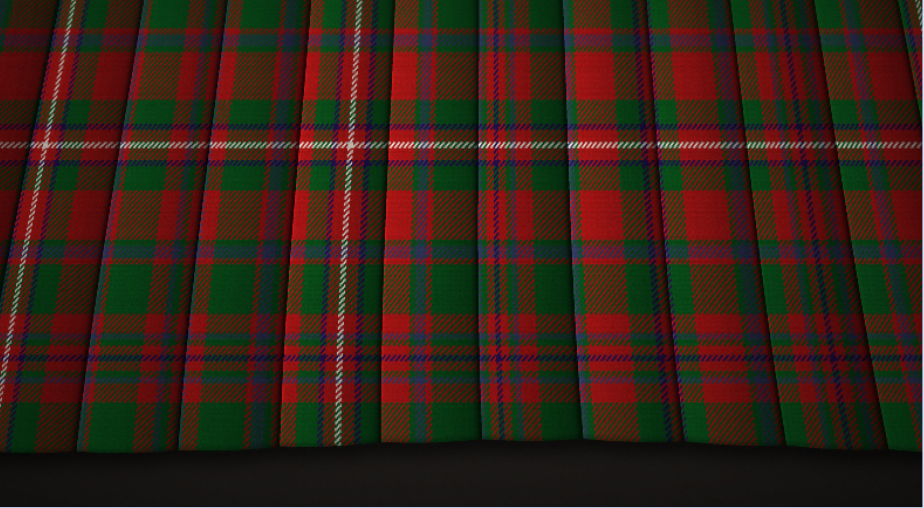
Early one morning in the first days of July 1746, two men came down the track into the township of Elgol, at the southern tip of Skye, after walking all night across the island.
One was Captain Malcolm MacLeod, a gentleman of Raasay. The other was his servant, a tall young man in a filthy shirt with a bundle on his back and a dirty napkin tied round his head, who answered to the name of Lewie Caw. MacLeod knocked at the house of his brother-in-law, John MacKinnon. The captain was out. His wife let them in, gave them food, and set a maid to wash the travellers’ feet. The servant, MacLeod recalled afterwards, sat down with the baby of the house on his knee and sang to it. It was a MacKinnon house, in MacKinnon country, and the clan’s red and green MacKinnon tartan is part of this story too.
When John MacKinnon came home, MacLeod met him outside and asked, casually, what he would do if the Prince were to turn up at his door. MacKinnon said he would give his life to see him safe. “Well then,” said MacLeod, “he is in your house.”
The servant was Charles Edward Stuart. Ten weeks earlier his army had been destroyed at Culloden. There was a reward of thirty thousand pounds for him, an almost unimaginable sum, and the Hebrides were crawling with redcoats and militia. He had just parted from Flora MacDonald. Now he needed to get off Skye, and he had walked into the country of one of the smallest and poorest clans in the Highlands.
The old chief
The MacKinnons had held the district of Strath, in the south of Skye, for longer than anyone knew. They counted themselves among the Siol Alpin, the clans descended from the line of Kenneth MacAlpin, first king of the united Scots and Picts. Their ruined castle, Caisteal Maol, stood on a knoll above the narrows at Kyleakin, where tradition said a Norwegian princess married to an early chief had stretched a chain across the water to take a toll from passing ships. For generations they had supplied abbots to the monastery of Iona, and the carved tomb of the last of them can still be seen there. Their crest was a boar’s head with the shank-bone of a deer in its jaws, and their motto was Audentes fortuna juvat: fortune favours the bold.
They had been bold in 1715 and had paid for it, and they had been bold again in 1745. Their chief, Iain Dubh MacKinnon of MacKinnon, had brought his men out for the Prince and marched with them into England. He was an old man by then, well into his sixties.
John MacKinnon’s plan was to keep the old man out of it. It was too dangerous, and the fewer who knew the better. He went to ask the chief for the loan of a boat, intending to say nothing about the passenger. He could not do it. Within minutes the chief had the whole story out of him and was calling for his own boat and crew. He would take the Prince across himself.
They hid Charles in a cave on the shore through the day. Lady MacKinnon came down to it with cold meat and wine, and they ate a meal there together. At about eight in the evening of 4 July, the Prince, the chief, Captain John and four boatmen pushed off from Elgol and pulled out into the Sound of Sleat. They met an armed boat on the way and bluffed their way past. Around four in the morning they landed near Mallaig on the mainland.
The old chief was captured the next day on his way home, and John soon after. Both were taken south. The chief was held for a year, part of it in a prison hulk on the Thames, before he was released. John MacKinnon was not freed until 1747 either.
There is a family legend that the Prince, having no money, rewarded John MacKinnon with the secret recipe for his personal liqueur, and that this is the origin of a famous whisky liqueur still sold today. It should be enjoyed in the spirit in which it is offered.
The cost, and the confusion
Loyalty ruined them. The chiefs had been in debt before the rising. After it, there was no recovery. By the end of the eighteenth century the last of the MacKinnon lands had been sold. Then came the potato famine and the clearances, and the people of Strath went where the rest of the Hebrides went, to Cape Breton and Prince Edward Island, to North Carolina, to Australia. There are whole districts of Nova Scotia where MacKinnon is the commonest name in the phone book.
What they took with them, among other things, was a tartan. The trouble was that nobody could agree which.
Most clan tartans have one awkward question in their history. The MacKinnon has five. The Scottish tartan registers describe, with a note of weariness, “a very confusing situation with five different versions from five major works.” James Logan published one thread count in 1831. The pattern books of the Bannockburn weavers had another. The illustrator McIan drew a third in the 1840s. Later Victorian compilers added two more. All of them were red and green, and all of them had a family likeness. No two were the same.
This went on for a hundred and thirty years. It was ended by the one person with the authority to end it. In 1959 the woollen manufacturers’ association sent a circular to every mill in Scotland, announcing that “The Mackinnon of Mackinnon has this year recorded with the Lord Lyon the correct setts for the Clan and Hunting Tartans of the Clan Mackinnon.” The entry went into the Lyon Court books in December 1960. The count the chief had chosen is said to follow a sample that the clan lodged with the Highland Society of London around 1816, which would make it both the official version and the oldest. With the count settled, the clan sett could be made up with confidence, from a full kilt to the skirts outfitters list as plaid skirt knee length.
The cloth that resulted is a well-balanced design of red and green in about equal weight. Broad blocks of each alternate across it. The red is crossed by fine lines of green and blue, the green by lines of red, and the whole is finished with narrow stripes of white and a deep purple, for which weavers often substitute navy. The hunting tartan, recorded at the same time, is an earthy pattern of green and brown.
So anyone buying MacKinnon tartan today can be sure of what they are getting, which their great-grandparents could not. Suppliers list the clan sett in Modern, Ancient and Weathered colours, along with the hunting version, and make them up as kilts, skirts, sashes, scarves and ties, or sell the cloth by the yard.
Sydney, Cape Breton, the first week of September
Màiri MacKinnon is thirty-nine, and as of Monday she is the principal of a high school of eleven hundred students. She spells her name the Gaelic way because her grandmother insisted, and she can still manage a conversation in the language, which not many people of her age on the island can.
She is standing in front of her wardrobe on Sunday night, thinking about what a principal wears.
She knows what she wants to say with it. She is from here. Her people came to this island from Strath in 1828 with nothing, and she is now in charge of the school. She also knows what she does not want. She does not want a costume, and she does not want anything she will have to think about at seven in the morning for the next twenty years.
The answer has been hanging in the wardrobe since her sister’s wedding. It is a skirt in the family tartan, red and green, that stops at the knee.
She has thought about why that length works, in the way teachers think about things. Hemlines have gone up and down for a century, and through all of it there has been one length that was never wrong. A skirt that finishes somewhere between the top of the kneecap and just below it is acceptable in a courtroom, a classroom, a church and a restaurant. It can be worn at twenty-five and at seventy-five. It is modest sitting on a stage in front of eleven hundred teenagers and easy to walk a long corridor in.
It is also, she has realised, the natural length for tartan. The kilt itself is a knee-length garment. Its hem is meant to fall at the middle of the kneecap, a rule that goes back to men walking through wet heather, and the women’s kilted skirt that grew out of it in Victorian times kept the same proportion. A tartan skirt at the knee looks right partly because two hundred years of Highland dress have taught the eye to expect it there. And with a strong red sett like hers, the knee is where the amount of cloth is exactly enough. A mini in this tartan would be a statement. A full-length skirt would be evening wear. At the knee it is simply a very good skirt.
The maker she bought from describes its plaid skirt knee length range as the one length that is correct in an office, at a wedding and at dinner without adjustment, which she thought was fair. There were several cuts to choose from: the traditional kilted skirt with a flat wrapped front and knife pleats behind; an all-round pleated version on a waistband; a plain A-line with no pleats at all, which is the quietest way to wear a loud tartan; a wrap; a button-front. She chose the kilted one for the wedding. Tonight she orders an A-line as well, for ordinary days. She gives three figures, her waist where the skirt will sit, her hips at the fullest, and the length from waist to just below the kneecap, measured standing up in the shoes she will wear. She has learned that if you are between two lengths, the longer is kinder, since a hem just under the knee flatters where one across the middle of it does not.
On Monday she wears the pleated one with a black roll-neck, black tights, black ankle boots and a black blazer. One pattern, everything else plain, all the colours taken from the cloth. At the assembly she stands at the lectern and looks out at eleven hundred faces, a good third of whom are called MacKinnon, MacDonald, MacNeil or MacLeod.
A girl in the front row puts up her hand before she has said a word.
“Miss, is that a real tartan?”
“It is. It’s mine. It took my clan a hundred and thirty years to agree on it.” There is laughter. “Sit down, and some time I’ll tell you about the night my seven-times-great-uncle rowed the most wanted man in Britain across the sea in the dark. He was an old man and he went to prison for it. Our motto is that fortune favours the bold. Remember that in exam week.”
What it cost, and what it bought
The MacKinnons gave up everything they had for a cause that was already lost on the day the Prince knocked at their door. They knew it, and they launched the boat anyway. The reward for that was prison, debt, the sale of their land, and exile.
What they kept was their name, their language for a while, a motto, and a pattern in red and green that took a century and a half to settle. In Cape Breton on a Monday morning, that pattern is walking down a school corridor at a brisk pace, at knee length, with a great deal to do.

Somebody asks you which of the two is lighter and you genuinely can’t answer it from a screen. Dark Oatmeal and Off-White sit a couple of squares apart on the 1977 page at Essentialscanadashop, both landing somewhere in the $99 to $116 band against an original tag near $500, and on a phone held at arm’s length they read like the same hoodie photographed twice on two different afternoons. Except one of them is warm and the other is cold, which sounds like a footnote right up until it’s on you and the thing is reading as either oatmeal or bedsheet.

So: undertone. That’s basically the whole thing — undertone, plus what each one looks like after a year of actually being worn.
Warm beige wearing a neutral costume
Dark Oatmeal has beige in it. Not much — nobody would call it tan — but there’s a yellow-brown pull sitting under the gray, and it shows up the second the hoodie is next to something properly white. Unbleached paper. The inside of a cardboard box that’s been in a dry garage a while. That family.
Off-White goes the other direction entirely. Cool near-white with a faint gray shift, closer to wall primer than to cream, no yellow worth mentioning — which means the two aren’t neighbors on a color wheel at all, even though the thumbnails make them look like cousins. They’re opposites that happen to land at a similar brightness, and brightness is pretty much all a small product photo communicates.
There’s a one-second test if you own a plain white tee. Lay it on the hoodie. Off-White looks like a slightly dirtier version of the tee, same temperature. Dark Oatmeal looks like a different material.
The two, line by line
Here’s the comparison I’d want in front of me before ordering either one, built around what the hoodies do rather than what the swatch names suggest:
| Dark Oatmeal | Off-White | |
| Undertone | Warm, yellow-brown under the gray | Cool, faint gray, no yellow |
| Reads as | Unbleached paper, dry cardboard | Primer, chalk, a washed bedsheet |
| In daylight | Deeper, almost tan at the seams | Flattens out, can look stark |
| Under warm bulbs | Glows, looks more expensive | Takes on the yellow of the lamp |
| In photos | Lighter than it is | Grayer than it is |
| Coffee and cooking oil | Buried for a day or so | Visible right away |
The photo row is where people get burned, and cameras are mostly to blame. Auto white balance hunts for something it can treat as neutral, then drags everything toward that guess — warm beige under cool studio lights gets corrected pale, a cool near-white near a wooden floor gets nudged warm, and both land on roughly the same shade on your screen. So I’d trust the color name over the picture. Every time.
Which one your face likes, and what’s already folded on the shelf
Skin tone counts for more here than it does on black, where everybody more or less gets away with it. Green veins at the wrist, gold jewelry that’s always suited you better than silver — that’s the crowd Dark Oatmeal quietly flatters, handing a bit of warmth back up to your face rather than fighting it. Cool or pink undertones and the whole thing inverts, with Off-White staying crisp on you while oatmeal goes a little muddy, as if the hoodie sat on a dusty shelf for a week.
Very fair and very cool at once is the one real trap. Off-White against pale pink skin erases the line where the fabric stops and the neck starts, especially in flat February light, so I’d take Dark Oatmeal there and break the rule on purpose.
Then there’s the closet question, which honestly settles it for most people. Off-White argues with anything else in the outfit trying to be white — a white tee under it, white sneakers — so it wants contrast instead: black pants, dark indigo, or the Iron and Dark Gray pieces further down the same 1977 Hoodie run. Dark Oatmeal is the easier roommate by a mile, sitting beside Wheat or Brown or washed denim without anybody noticing a clash, which is usually what people mean when they call a color safe.
Year two: shine, cuffs and the coffee problem
Both are cotton fleece, and pale cotton fleece does one entirely predictable thing — the cuffs and hem go gray before anything else, because that’s where your hands and the arms of every chair you sit in live. On Dark Oatmeal that grayness settles into the warmth that’s already there and reads as wear. On Off-White it reads as needing a wash, even when it just came off the line.
Stains split along the same line. Coffee, olive oil, the dripping end of a taco — all warm-toned, all of it half-vanishes into oatmeal for a day and sits on Off-White like a planted flag. Indigo transfer from stiff new jeans shows up on both of them, to be fair, and there’s no version of pale cotton that escapes that one.
Care is identical for the pair, which is inside out, cold water, like colors only, low iron, hung up rather than tumbled. Bleach is the thing to skip on Off-White especially, however tempting a dingy cuff makes it look.
| Pro Tip: Buy the one you’d reach for on an overcast Tuesday, not the one that photographed better. Dark Oatmeal is also the cheaper mistake to make, because there’s no cash back here — store credit or a swap inside 30 days, tags on, nothing worn or washed — so a half-liked color becomes money parked on the site. |
Frequently Asked Questions
Is Dark Oatmeal just a lighter gray?
No. Gray is neutral or cool at its base and oatmeal has that yellow-brown sitting underneath, and since there’s an actual Dark Gray in the same 1977 lineup you can check it yourself — one looks like stone, the other like paper.
Will Off-White end up looking cheap?
Only if it’s the wrong white for the room you’re standing in. Warm bulbs push it toward cream and most people like it there. Cold overhead office lighting flattens it and it can go a bit clinical. That’s the lighting talking, not the fleece.
Which of the two survives a kid, a commute and a dog?
Dark Oatmeal, without much of an argument. It isn’t dark enough to hide everything, obviously, but it buys a day of grace on warm-toned mess and the grubbiness that builds at the cuffs looks broken-in rather than neglected.
Hold the two names up against the gold-or-silver question and whichever metal sits better on your wrist is pointing at your hoodie. Stock on this line moves, and colors here don’t always come back once they’re gone, so it’s a decision worth making this week rather than next.
Picking a size off a dropdown that runs from S all the way up to 4XL feels simple enough, right up until you notice that the chart sitting underneath it stops four sizes earlier. That’s the situation across the hoodies and tees listed as Tyler The Creator Merch, and it trips people up at checkout more often than it should. Six sizes in the menu. Four in the chart.

I’d rather put that plainly than dance around it. The product pages carry no fabric weight, no body length and no sleeve measurement — what you get is a chest and a waist range for four sizes, in centimeters, plus a short list of construction details. Which is workable, honestly, as long as you know exactly what you’re working with before you commit.
What those four rows actually tell you
The size chart covers S, M, L and XL, and it gives two numbers per size — chest and waist, both as ranges, both in centimeters rather than inches. Converted over for a US reader who thinks in inches, the four rows land roughly here.
| Size | Chest (cm) | Waist (cm) | Chest (approx. inches) |
| S | 96–101 | 76–81 | 38–40 |
| M | 102–107 | 82–87 | 40–42 |
| L | 108–113 | 88–93 | 42.5–44.5 |
| XL | 114–119 | 94–99 | 45–47 |
Notice the steps. Every size climbs six centimeters in the chest and six in the waist too, and because the bands never overlap, a 103 cm chest lands in M and nowhere else. The bands are tight. That’s handy when your own measurement lands somewhere in the middle of one, and a bit awkward when it falls on a boundary like 101 or 107, where either size has a case and the looser of the two tends to hang better on a printed hoodie anyway.
Above XL the numbers simply stop
XXL and XXXL show up in the dropdown on most pieces. Some push on to 4XL, and there’s a graphic tee that runs all the way to 5XL. Not one of them shows in the chart. There’s no published chest for XXL, no waist for 4XL, nothing at all above that fourth row — and I’m not about to invent a number to fill the hole, because a guess dressed up as a measurement is worse than an honest gap.
What I will say is what the published part hints at. If that six-centimeter step carried on, XXL would land somewhere near 120–125 cm through the chest and XXXL near 126–131. That’s my arithmetic off the four rows the shop gives, though, not a figure from the shop, and extended sizes in cut-and-sew clothing often jump on a different pattern once they get past XL. So treat it as a rough bearing and nothing firmer.
And above XL, an email with your chest measurement before you order costs you nothing. Returns run on exchange and store credit rather than cash back, so asking first beats sorting a swap later.
A tape measure beats a guess, and it takes about a minute
The chest measurement a chart like this means is the one taken around the fullest part of your chest, under the arms, with the tape level and snug instead of hauled tight — and taken while you’re breathing normally, which sounds too obvious to mention and still throws the reading off by a couple of centimeters when people forget. A result of 108 cm puts you at the bottom of L. At 113 you’re at the top of that same size, and 114 has already tipped over into XL.
Waist counts for less on a hoodie than it does on a tracksuit bottom, so I lean on the chest figure and keep the waist as a sanity check. When the two disagree, which happens — chest saying L, waist saying M — I’d give it to the chest on anything with a front graphic, since that’s the panel the artwork has to sit flat across, and a screen print doesn’t stretch the way the jersey around it does.
| Pro Tip: The chart is already in centimeters, so I just read the cm side of the tape and skip converting anything. Most tapes print both scales, one per edge. |
The hoodie already in your closet is the better reference
A tape reading describes your body. It says nothing about how a garment has been cut, and that second thing is what you actually feel once the hoodie is on you. So the comparison I trust more is a piece you already own and like the fit of, laid out flat on a table with the wrinkles smoothed down.
- I measure armpit seam to armpit seam, straight across, with the thing lying flat and nobody holding it up
- Doubled, that figure is more or less the chest circumference the pattern assumes, and it reads straight against the chart’s chest column
- A sweatshirt that feels too snug is worth measuring as well, because then I know both ends of my range instead of only the comfortable end
That armpit-to-armpit figure is the one I’d save somewhere on my phone, because it carries over to the next drop and the one after that. Bodies change slowly. Garment measurements don’t change at all. And across the eras — IGOR, Chromakopia, whatever colorway is current — the chart stays the same, so you only have to solve this once.
What the hood, the hem and the pocket do and don’t change
Three construction details come up on every listing, over and over — a kangaroo pocket, ribbed hems and a hood you can pull tight. Two of the three change how a given size feels. One of them doesn’t, and it’s the one people worry about most.
Ribbed hems and cuffs draw in at the waist and the wrist, which is why a hoodie can measure wide across the chest and still sit close at the bottom — oversized up top, gathered below, which is more or less the shape people are chasing with a Chromakopia or Save the Bees piece. The adjustable hood does nothing to the body measurement, although a drawcord lets a heavier hood sit tidier if you’ve gone up a size. The kangaroo pocket adds a second layer of fabric across the front, so a hoodie that already feels tight through the chest will feel tighter again with your hands buried in it.
| Key TakeawaysThe published chart runs S to XL only — chest and waist ranges in centimeters, six centimeters apart per size, with no overlapXXL, XXXL, 4XL and 5XL sit in the dropdowns with no published measurements behind them at allArmpit-to-armpit on a hoodie you already wear is the most reliable reference you have, more than any chart |
A chart that runs out four sizes early is annoying rather than fatal. If you fall between S and XL, those four rows do the whole job, and you can order with a fair bit of confidence. Above that you’re working from your own tape and your own closet, which is honestly a sounder basis than any chart. Measure once, write the number down, and the next order takes you thirty seconds.


You can borrow from preppy style without dressing as though every piece belongs to a uniform. Choose one recognizable detail, balance it with quieter separates, and let the fit make the combination personal. A button-down collar or a tailored jacket may provide enough direction. You do not need to assemble every familiar reference in the same outfit.
Choose One Preppy Reference
Start with the element you actually like. Perhaps it is the shape of a button-down collar, the contrast between a navy jacket and lighter trousers, or the neatness of a tucked shirt. Naming that detail helps you build an outfit around a preference rather than a shopping list.
Keep the other decisions uncomplicated while you experiment. If the collar is the focus, try a plain jacket before introducing a pronounced pattern. If the jacket supplies the character, let the shirt support it without adding another competing idea.
This is an editing exercise, not a rule against color or decoration. You may enjoy both. Add them deliberately, checking whether each addition contributes something you want. Removing a tie or changing one color can sometimes make the outfit feel closer to your own habits.
Balance the Shirt, Jacket, and Trousers
Consider a hypothetical combination: a pale blue button-down shirt, a navy separate jacket, and stone-colored trousers. The colors provide a starting point; the proportions determine whether you enjoy wearing them together.
Look at how much shirt appears above the jacket fastening and how the trouser shape relates to the jacket body. A roomier trouser does not automatically require a tight jacket, nor does a closer jacket demand narrow trousers. Try the complete outline and decide where you want definition and ease.
Texture can keep a restrained palette interesting. Compare the shirt’s surface with the jacket cloth rather than adding a pattern immediately. Then look from a few steps away. If the outfit feels too busy, simplify one element before changing the whole combination. You are looking for a relationship you like, not a prescribed shape for your body.
Let Personal Fit Finish the Look
Explain the impression you want in ordinary language: neat without feeling rigid, perhaps, or relaxed while still clearly tailored. Say whether you expect to wear the jacket buttoned and whether the shirt will usually be tucked in. Those habits help make the discussion specific.
The shirt collection at Jhasper Fashion includes button-down collars, while its sports jacket range shows notch-lapel options. These are pieces you can discuss individually, rather than evidence of a dedicated preppy package. Its press page also notes Tripadvisor Certificate of Excellence recognition over five consecutive years, 2014–2018. Connect any order to your preferred combination, with the shirt and jacket considered together.
Check the result sitting as well as standing. If you are continually arranging a collar or pulling at a sleeve, describe the problem before assuming the overall style is wrong for you.
Choose one reference to try this week. Build a complete outfit around it, wear it in an appropriate everyday setting, and notice what feels natural. Personal style becomes easier to recognize when you can explain which details you chose and why you kept them.

Before Reconnecting Equipment: Drying Time After Contact Cleaning Explained

Best LLC Formation Services Compared: Pricing, Features, and Support in 2026

A $95 Jacket on a Rail Where Nothing Else Moves
Who Is Gale Burnick? The Story Of George R. R. Martin’s Ex Wife

Who Is Hermann Nicoli? The Full Story Of Candice Swanepoel’s Former Fiancé

Who Is Alicia Dove? The Life Story Of Corey Taylor’s Wife
-
Celebrity4 months ago
Who Is Gale Burnick? The Story Of George R. R. Martin’s Ex Wife
-
 Celebrity4 months ago
Who Is Hermann Nicoli? The Full Story Of Candice Swanepoel’s Former Fiancé
-
 Celebrity4 months ago
Who Is Alicia Dove? The Life Story Of Corey Taylor’s Wife
-

 Celebrity4 months ago
Meet Carole Rogers: Everything to Know About Kenny Rogers’ Daughter
-

 Celebrity4 months ago
Who Is Sydney Davis? The Full Story Of Billy Bush’s Ex Wife
-

 Celebrity4 months ago
Who Is Anna Hillinger? The Full Life Story Of Mike Shinoda’s Wife
-

 Celebrity4 months ago
Who Is Demacio Castellon? Life Story Of Nelly Furtado’s Ex Husband
-

 Blog3 months ago
What Is Sosoactive? A Complete Guide to the Digital Platform