
Technology
Visionics Technology: 3D Sensing for Robots, Drones, and Cars

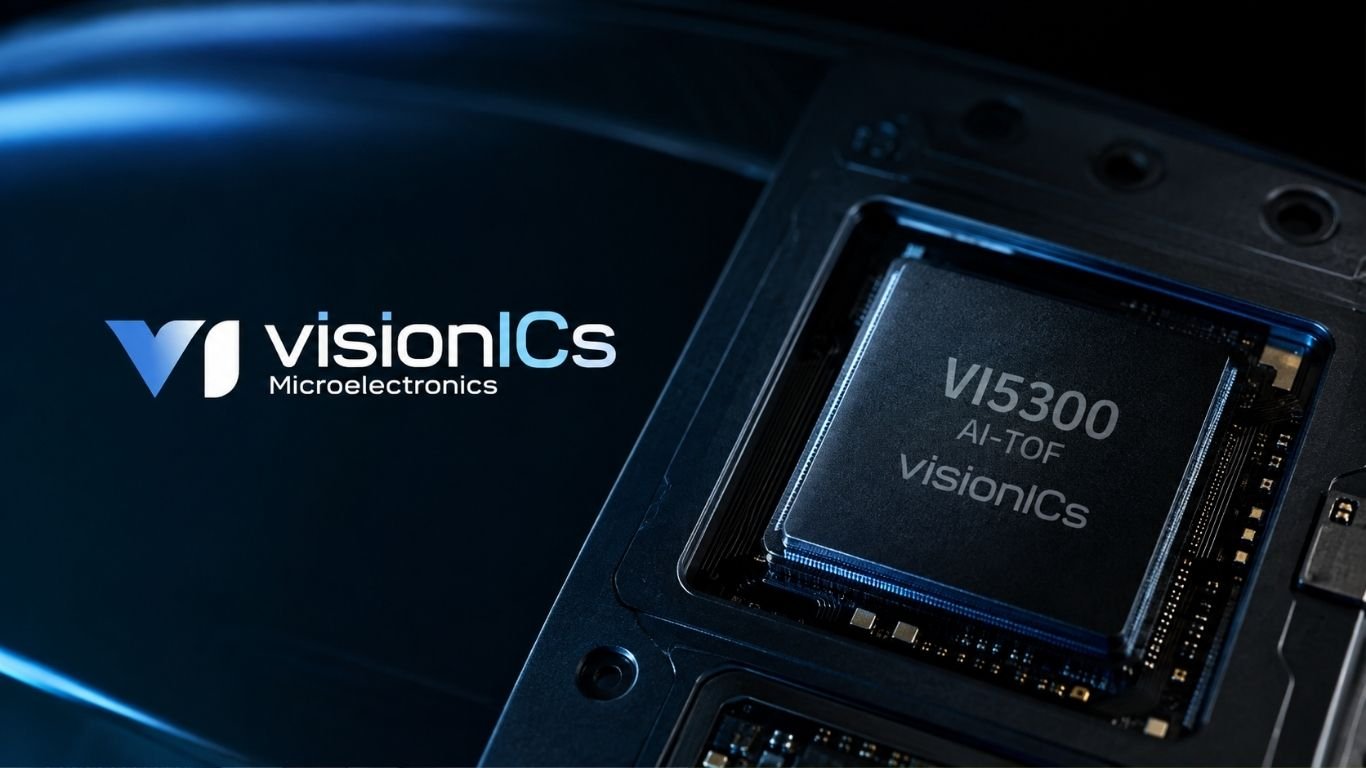
Visionics is a microelectronics company focused on depth sensing and 3D perception. Its work centers on single-photon direct Time-of-Flight, often called dToF. The idea is simple. A sensor sends light toward an object, waits for the reflected light to return, and uses that travel time to estimate distance.
That basic task matters more each year. Robots need to avoid chairs and walls. Drones need to judge height. Cars need better awareness around blind spots. Smart devices also need fast depth data without using a full camera for every job.
The company, which styles its name as visionICs, develops sensor chips for these types of systems. Its official site lists consumer electronics, automotive electronics, smart industry, and embodied intelligence among its application areas.
What Is Visionics?
Visionics Microelectronics Technology Co., Ltd. is a high-tech sensor developer linked with single-photon dToF technology. A 2026 China International Optoelectronic Exposition exhibitor profile says the company was founded in 2018. It also lists research and development centers in Nanjing, Shanghai, and Silicon Valley, with a marketing center in Shenzhen.
Its main focus is not normal photo imaging. The goal is distance and depth. Instead of asking, “What color is this object?” the sensor asks, “How far away is it?” That answer can help a machine move, stop, turn, map a room, or detect an obstacle.
Why 3D Sensing Matters
A normal camera gives useful visual detail, but many machines also need depth. They must know where an object sits in space. Visionics targets that need with compact sensing hardware.
Think about a robot vacuum. A camera may see a table leg, but depth data can help the robot judge how close it is. A drone has a similar problem. It may need fast height or obstacle data while flying through changing light.
This is why Time-of-Flight sensing has spread into robotics, consumer devices, industrial systems, and vehicles. Major sensor makers such as STMicroelectronics and ams OSRAM also list robotics, obstacle detection, mapping, presence sensing, and mobile electronics as common dToF uses.
How Direct Time-of-Flight Works
Direct Time-of-Flight measures how long light takes to travel from a sensor to a target and back. Sony Semiconductor explains that dToF directly measures the return time of reflected light. It differs from indirect ToF, which works by measuring phase changes in the returning signal.
The company uses this principle to build small chips that can estimate distance very quickly. The sensor sends a short light pulse. The light hits an object. Part of that light comes back. The device then measures the delay.
Since light moves at a known speed, the system can turn that tiny delay into a distance value.
Why Single-Photon Detection Helps
Some dToF systems use SPAD pixels. SPAD means single-photon avalanche diode. These pixels can react to very small amounts of returned light. Sony notes that the avalanche process helps amplify the response from a single incoming photon.
That makes SPAD-based sensing useful when the reflected signal is weak.
Main Sensor Products
Visionics has shown several ToF products, including the VI5300, VI4302, VI4331, VI5301, and VA6320. A 2026 CIOE exhibitor listing describes its main products as one-dimensional and three-dimensional ToF sensor chips based on single-photon detection.
The VI5300 is a compact dToF sensor made for distance measurement. The company says it uses a single-module package, which can make integration easier in small devices.
The VI4302 is aimed at systems such as robot vacuums, service robots, and unmanned aerial vehicles. That gives a good picture of the company’s market: machines that must sense space while moving.
Visionics in Robot Vacuums
Robot vacuums are one of the clearest use cases. Visionics lists obstacle avoidance and navigation as key functions for its consumer sensing products.
A cleaning robot works in messy rooms. Chairs move. Shoes appear on the floor. A pet may cross the path. The robot needs quick distance data so it can react without hitting every object around it.
Depth sensing can also support wall tracking, edge detection, path planning, and room mapping. The exact sensor setup will vary by product, but the basic need stays the same: the machine must know what is near it and how far away it is.
The company also appeared at a 2025 Midea cleaning innovation event with sensing products made for robot vacuum applications.
Drones and Service Robots
Drones need light, fast sensors. Extra weight can hurt flight time, while slow sensing can reduce control. Its official site lists drone altitude control and mapping among target uses.
A distance sensor can help a drone hold height, detect the ground, or avoid nearby objects. Service robots can use similar data when moving through hotels, offices, malls, factories, or homes.
This does not mean one small ToF sensor replaces every camera, radar unit, or lidar system. Most advanced robots use several types of sensors. dToF can be one part of that sensor mix because it gives direct range data in a compact form.
Automotive Sensing and Blind Spots
Visionics also promotes dToF for automotive electronics. Its official site highlights autonomous-driving blind-spot detection as one application. The company says its SPAD dToF approach is designed for precise ranging and resistance to interference.
Cars are difficult sensing environments. They face bright sunlight, dark garages, rain, reflective surfaces, and fast motion. No single sensor solves every case.
Depth sensors can still add useful short-range data. They may support detection near the body of a vehicle, help with parking or close object awareness, and provide another source of distance data to a larger perception system.
Embodied AI and Machine Perception
Embodied AI refers to AI systems that act in the physical world. A robot can have strong software, but it still needs good data about its surroundings. Visionics places embodied intelligence among the markets for its sensing technology.
This is where 3D perception becomes important. A robot must know where a box is, how far a person is standing away, or whether a path is blocked.
Depth Data Is Only One Part
A depth sensor does not “understand” a room on its own. It produces measurements. Software then combines those measurements with cameras, motion sensors, maps, or AI models.
The value comes from the full system. Better range data can give the software cleaner input, but good perception still depends on hardware design, calibration, algorithms, and testing.
Advantages of Compact dToF Sensors
The company works in a field where size, speed, power use, and accuracy all matter. Compact ToF modules can fit into devices where a large lidar unit would be too expensive or too bulky.
They can also work without capturing a full color image. In some designs, that may help with privacy because the system can detect distance or presence without recording a detailed photo. STMicroelectronics lists privacy and low-light operation among the benefits of its own ToF sensing systems.
The other benefit is direct measurement. A well-designed dToF sensor can return useful distance data in real time. That is valuable when a machine must make a fast movement decision.
Limits and Design Challenges
The technology still has limits. Strong sunlight can add optical noise. Dark or low-reflective surfaces may return less light. Glass, shiny metal, and unusual angles can also make ranging harder.
Sensor makers deal with these issues through optical filters, better SPAD designs, signal processing, calibration, and software. But engineers still need to test the full product in real settings.
Cost matters too. A sensor may work well in a lab but still be too large, too power-hungry, or too expensive for a mass-market device. That is why integration and packaging are important parts of the product design.
It competes in a market that also includes large global semiconductor firms. Its challenge is not only to make accurate sensors, but to make them practical for customers to build into finished products.
Where Visionics Could Fit Next
The long-term demand for depth sensing is tied to smarter machines. Home robots are getting better. Drones are taking on more inspection and mapping work. Cars use more sensors. Factories are adding mobile robots and automated equipment.
Visionics is positioned around this need for compact 3D perception. Its present product direction points to robot vacuums, drones, service robots, automotive electronics, and embodied AI systems.
The company is still far less known to consumers than the brands that sell finished robots or cars. That is normal for a chip supplier. Its technology sits deeper inside the product.
For buyers, engineers, and industry watchers, the key question is simple: can its SPAD dToF chips deliver accurate depth data at the size, power level, and cost that real products need? If the answer keeps improving, Visionics could become a more visible name behind the machines that need to see in three dimensions.
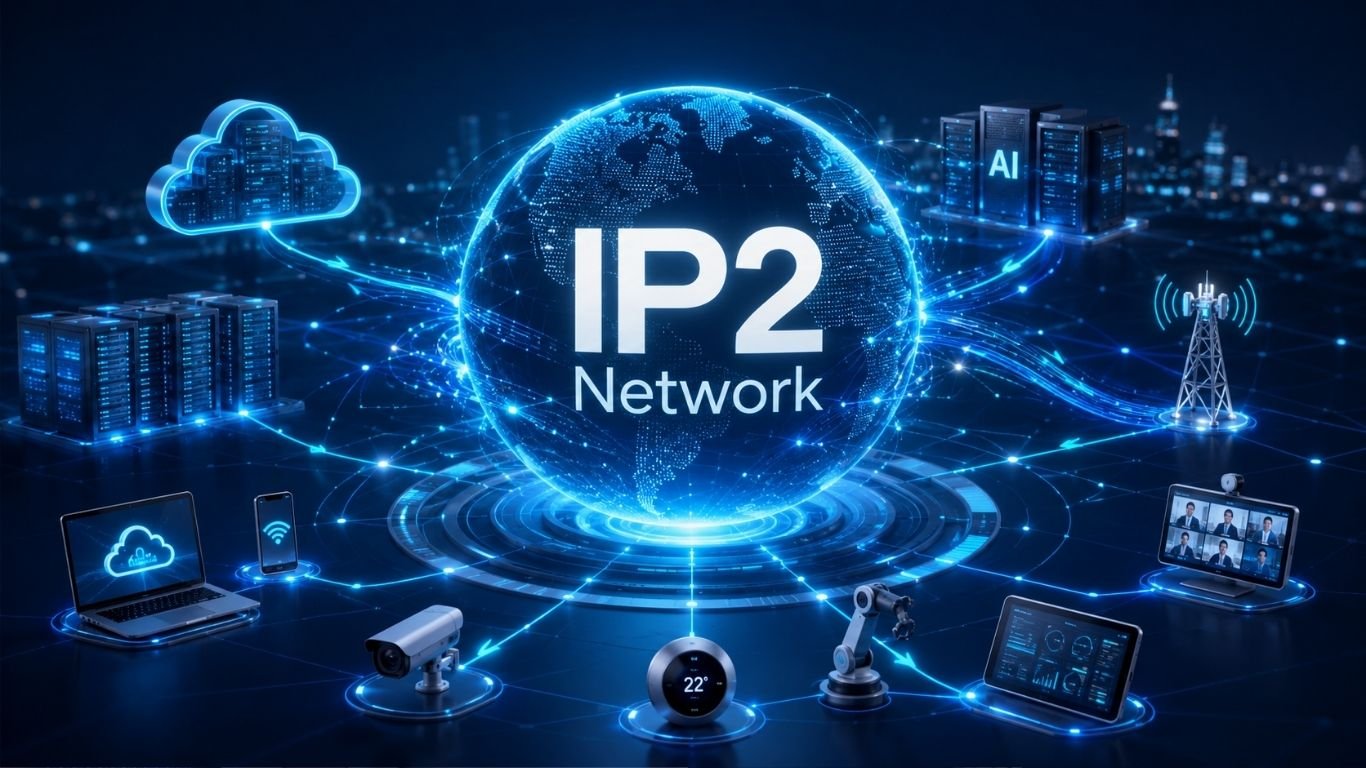
The IP2 Network is a term used in recent technology discussions for a more intelligent style of internet and enterprise networking. Instead of moving every packet by fixed rules alone, the network can use software, live performance data, policy, and automation to choose better paths.
This concept is not a replacement protocol for IPv4 or IPv6, and it is not an official IETF standard with one fixed design. It is better understood as a broad next-generation networking model. Many ideas linked to it already exist in software-defined networking, segment routing, traffic engineering, cloud networking, and AI-assisted network operations.
What Is an IP2 Network?
An IP2 Network describes a network that adds more intelligence above normal IP transport. Traditional IP routing mainly decides where packets should go by using routing tables, destination addresses, and routing protocols. Modern networks often need more control. A smarter architecture can also look at delay, congestion, policy, application needs, and network health.
Software can then select or change paths as conditions shift. This is close to software-defined networking and modern traffic engineering. SDN lets administrators control network behavior through software instead of changing every device by hand.
Why Traditional IP Routing Can Feel Limited
IPv4 and IPv6 remain the base of modern internet communication. The challenge is that cloud systems, AI clusters, video services, and edge devices can create very complex traffic patterns.
A shortest path is not always the best path. One route may have less distance but more congestion. Another may offer lower delay or more free capacity. Traffic engineering lets network operators choose paths using useful metrics and policies, not only normal routing cost.
How the Architecture Works
The IP2 Network idea depends on several layers working together. The data plane carries packets. The control layer decides how traffic should move. Software can collect network data, apply rules, and change forwarding behavior when needed.
Modern segment routing shows how this can work. It lets a source node steer traffic through an ordered set of network instructions. Segment Routing Policy can also define candidate paths for a traffic flow. This gives operators more control over how data crosses a network.
Software-Driven Control
A software controller can view many parts of the network from one place. It may update routes, enforce policy, or react to faults. This reduces manual router setup.
Live Network Awareness
Telemetry can show delay, loss, congestion, and device health. These signals support faster choices and earlier fault response.
AI Traffic Optimization
AI systems can put heavy pressure on data center networks. Large training jobs may move huge amounts of data between accelerators and servers. IETF work on AI networking notes that routing, load balancing, fast fault detection, and rapid convergence are becoming more important as network scale grows.
The IP2 Network concept fits this need by treating routing as an active process. If one path becomes overloaded, software may shift some traffic to another path. The goal is to keep delay and packet loss low while making better use of available links.
AI can also support network operations. Current IETF research explores how machine learning may help with traffic analysis, anomaly detection, and network management. AI does not need to control every routing choice. It can assist operators under clear limits.
Cloud-Native Scaling
Cloud applications rarely stay in one fixed place. Services may run across regions, virtual networks, containers, and different cloud providers. The network must change as quickly as the software.
An IP2 Network approach treats much of the network as programmable infrastructure. SDN already follows this model by separating network control from packet forwarding. That makes it easier to apply policies through software and manage many devices in a consistent way.
This model can also work with SD-WAN. It uses software to control wide-area connectivity across different links and hardware, giving companies more flexibility.
IoT and Edge Device Support
The IP2 Network model can also suit large Internet of Things systems. A smart factory, city, farm, or logistics network may contain thousands of sensors and connected devices. Each device may send little data, but the total number of connections can be hard to manage.
A programmable network can group traffic by service, device type, risk level, or location. Policies can then decide where that traffic should go. Some data may be processed near the edge, while other data moves to a central cloud system.
This can cut needless backhaul traffic. It can also make security rules easier to apply across large groups of endpoints.
Better Real-Time Communication
Video calls, online gaming, live monitoring, industrial control, and connected vehicles all depend on steady network performance. High delay is bad, but changing delay can be just as disruptive. That change in delay is called jitter.
An IP2 Network can use performance data to detect a weak path and move traffic when another route offers better conditions. Segment routing and traffic engineering are examples of technologies that can steer flows along selected paths instead of using only the default shortest route.
Fast failover matters too. A good design should detect a broken or overloaded path quickly and move traffic with as little service impact as possible.
Security and Policy Control
Modern networking is not only about speed. Identity and policy now play a larger role. Users, devices, workloads, and applications may all need different access rules.
The IP2 Network concept can combine routing decisions with security policy. A sensitive workload may be allowed to use only certain paths or services. A risky device may be isolated. Software-defined systems can also send selected traffic through inspection tools when needed.
Automation also creates risk. A bad rule can spread across a large environment. Strong access control, testing, rollback tools, and human review remain important.
Main Benefits
The strongest benefit of IP2 Network design is flexibility. A network can react to changing traffic instead of waiting for a manual fix. This may improve bandwidth use and reduce the effect of congestion.
It can also simplify operations. Central software can help teams apply the same policy across many routers, sites, and cloud environments. That is one reason SDN and network automation have become important parts of network modernization.
Another benefit is resilience. If the network can see faults and has more than one valid path, it can redirect traffic faster. That may improve uptime for services that cannot afford long breaks.
Challenges and Limitations
An IP2 Network is not a magic upgrade. More automation can also mean more complexity. Operators need accurate telemetry, safe policy design, skilled staff, and strong tools. A poor controller decision can affect many systems at once.
Compatibility is another issue. Companies often run a mix of old and new equipment. Some devices may support advanced routing features while others do not. Migration may need to happen in stages.
There is also a naming problem. “IP2” is not a single formal networking standard. Different websites use the term in different ways, and some even mix it with unrelated peer-to-peer technologies. Readers should focus on the actual features being described rather than assume every use of the label means the same platform.
Does It Replace IPv4 or IPv6?
No. The IP2 Network idea is best viewed as an added intelligence layer, not a direct replacement for IP addressing. IPv4 and IPv6 still provide core packet addressing and delivery functions.
Technologies such as Segment Routing over IPv6 show how advanced steering and network programming can be built while still using IPv6 as the underlying data plane. SRv6 lets an operator or application define packet-processing behavior through IPv6-based segment instructions.
So the real shift is not “old IP versus new IP.” It is a move from basic connectivity toward programmable, policy-aware, and performance-aware networking.
The Future of Smarter Networking
The IP2 Network concept reflects a wider change in network design. Applications are more distributed. AI workloads are growing. Edge devices are increasing. At the same time, users expect fast and stable service from almost anywhere.
Networks therefore need better visibility and faster control. Software-defined management, AI-assisted operations, segment routing, and intent-aware path selection are all moving in that direction. In 2026, the IETF is still studying how AI can be coupled with network management, which shows that this field remains active and is not a finished standard.
For businesses, the useful question is not whether they should adopt a product with a certain label. It is whether their network needs better automation, smarter traffic engineering, stronger policy control, and faster recovery. Those are the practical ideas behind IP2 Network discussions.

If you are looking for 9.7.4 leash codehs answers, the main task is simple once you understand mouse events. The exercise asks you to place a ball on the canvas, connect it to the center with a line, and make the ball follow the mouse. The line acts like a leash because one end stays fixed while the other moves with the ball.
This guide gives the full solution, but it also explains why each line is needed. That matters. Copying code may finish the exercise, but knowing how it works will help with later CodeHS graphics problems.
The 9.7.4 leash codehs answers solution mainly uses Circle, Line, mouseMoveMethod(), and mouse-event coordinates. Once those pieces work together, the program becomes short and easy to read.
What the Leash Exercise Is Asking You to Build
The Leash exercise is a JavaScript graphics task. You begin with a circle placed in the center of the canvas. A line also starts from that same center point. When the mouse moves, the circle follows the pointer while the far end of the line follows it too.
The center end of the line does not move. That creates the leash effect.
Most students searching for 9.7.4 leash codehs answers are really trying to solve three small problems: how to find the canvas center, how to track the mouse, and how to update a line while the program is running.
Complete Code for the Exercise
Here is the full working solution:
// Constant for the ball's radius
var BALL_RADIUS = 30;

// Global variables to track the ball and the leash line
var ball;
var line;

function start() {
    var centerX = getWidth() / 2;
    var centerY = getHeight() / 2;

    ball = new Circle(BALL_RADIUS);
    ball.setPosition(centerX, centerY);
    ball.setColor(Color.yellow);
    add(ball);

    line = new Line(centerX, centerY, centerX, centerY);
    add(line);

    mouseMoveMethod(leash);
}

function leash(e) {
    ball.setPosition(e.getX(), e.getY());
    line.setEndpoint(e.getX(), e.getY());
}
This version of 9.7.4 leash codehs answers keeps the code compact. It also follows the normal CodeHS graphics pattern: create objects in start(), store them in global variables, then change those objects inside an event function.
Why BALL_RADIUS and Global Variables Matter
The line var BALL_RADIUS = 30; gives the circle a radius of 30 pixels. Using a named value makes the code easier to change later.
You could write new Circle(30), and the program would still work. But a constant makes the purpose clearer. If you want a larger ball, you only need to change one value.
In many CodeHS lessons, this style helps separate setup values from the main program logic. It also makes 9.7.4 leash codehs answers easier to understand when you return to the code later.
The variables ball and line are also declared outside the functions:
var ball;
var line;
This matters because both start() and leash(e) need access to the same objects.
If you create the ball only as a local variable inside start(), the leash() function may not be able to use it. The same issue applies to the line.
Global variables let the program create the graphics once and then change them whenever the mouse moves.
Finding the Exact Center of the Canvas
The program uses these two lines:
var centerX = getWidth() / 2;
var centerY = getHeight() / 2;
getWidth() returns the width of the graphics canvas. Dividing that value by two gives the horizontal center.
getHeight() does the same for the vertical center.
This is better than typing fixed coordinates such as 200, 200. A fixed number may work on one canvas size but fail on another.
The 9.7.4 leash codehs answers approach adjusts automatically to the canvas size CodeHS provides. This makes the program more flexible and easier to reuse.
If the canvas changes, you do not need to rewrite the coordinates. The program finds its center each time it starts.
Creating and Positioning the Yellow Ball
The ball is created with this line:
ball = new Circle(BALL_RADIUS);
The value stored in BALL_RADIUS controls its size.
Next, the program places the circle in the center:
ball.setPosition(centerX, centerY);
Then it changes the color:
ball.setColor(Color.yellow);
Finally, this line places the circle on the visible canvas:
add(ball);
Without add(ball), the circle object may exist in the program, but you will not see it.
That small step causes many beginner errors when working through 9.7.4 leash codehs answers and other CodeHS graphics activities. Creating an object and displaying an object are separate steps.
How the Leash Line Is Created
The line starts with this code:
line = new Line(centerX, centerY, centerX, centerY);
A Line needs four coordinate values. The first two values give its starting x and y position. The last two give its ending x and y position.
At first, both points sit in the exact center. So the line has no visible length when the program starts.
That is expected.
As soon as the user moves the mouse, the endpoint changes. The starting point remains fixed in the center.
This is the main visual idea behind 9.7.4 leash codehs answers. The ball can travel around the canvas, but the other end of the line stays attached to its starting location.
After the line is created, add(line); places it on the graphics canvas.
How mouseMoveMethod Controls the Program
This line activates mouse tracking:
mouseMoveMethod(leash);
It tells CodeHS to run the leash function whenever the mouse moves over the canvas.
You do not need to call leash() over and over inside start(). CodeHS handles that part after the mouse event has been registered.
This is known as event-driven programming.
The program waits for something to happen. In this case, the event is mouse movement. When that event happens, a function runs.
For students working on 9.7.4 leash codehs answers, this is worth understanding because the same idea appears in many later projects.
Mouse clicks, keyboard presses, dragging, and movement can all trigger event functions.
What the leash(e) Function Does
The event function receives an event object called e:
function leash(e) {
    ball.setPosition(e.getX(), e.getY());
    line.setEndpoint(e.getX(), e.getY());
}
The e object contains information about the mouse event.
e.getX() gives the current horizontal position of the mouse.
e.getY() gives its current vertical position.
The first line moves the ball to those coordinates:
ball.setPosition(e.getX(), e.getY());
The second line moves the endpoint of the leash:
line.setEndpoint(e.getX(), e.getY());
Both changes happen every time the mouse moves. Because the ball and line endpoint use the same coordinates, they stay connected.
That creates the exact behavior required by 9.7.4 leash codehs answers.
Why setEndpoint Is Important
The line should have one fixed end and one moving end. That is why setEndpoint() works well here.
The line begins in the center of the canvas. Its starting point should remain there for the whole program.
Only its endpoint needs to follow the mouse.
When this runs:
line.setEndpoint(e.getX(), e.getY());
CodeHS changes the second end of the line without moving its starting position.
If you moved both ends, the whole line could travel with the mouse. You would lose the leash effect.
This small difference is one of the most important parts of the 9.7.4 leash codehs answers solution.
Think of the starting point as a hook attached to the center. The endpoint is the part tied to the moving ball.
Common Mistakes That Can Stop the Code
One common mistake is putting ball and line inside start() as local variables. That can keep the mouse event function from accessing them.
Another mistake is forgetting this line:
mouseMoveMethod(leash);
Without it, the program may show the starting ball and line, but nothing will respond when you move the mouse.
Students can also use the wrong method for changing the line. For this task, setEndpoint() is useful because only the moving end should change.
Check spelling as well.
JavaScript is case-sensitive. getX() is not the same as getx(). The same applies to setPosition(), setEndpoint(), and mouseMoveMethod().
If your 9.7.4 leash codehs answers code draws the ball but does not move it, check the event method first. Then make sure ball and line are available to the leash() function.
Understanding the Program Flow Step by Step
The easiest way to understand the program is to divide it into two stages.
First, start() runs once.
It finds the center of the canvas. Then it creates the ball and line. Both begin in the center. It adds them to the canvas and turns on mouse tracking.
Then the program waits.
When the user moves the mouse, CodeHS calls leash(e).
The new mouse coordinates are read from the event object. The ball moves to those coordinates, and the endpoint of the line moves to the same place.
Nothing needs to be recreated.
This is why the 9.7.4 leash codehs answers solution stays short. It does not make a new circle or line every time the pointer moves. It updates the objects that are already on the screen.
That is cleaner and easier to manage.
How to Test Your Leash Program
Run the program and look at the starting screen first. The yellow circle should appear in the center of the canvas.
Next, move the mouse slowly.
The circle should follow your pointer. A line should stretch from the original center point toward the moving circle.
Try moving the pointer into different corners of the canvas.
The fixed end of the line should stay in the same location. The other end should remain attached to the ball.
If those behaviors work, your 9.7.4 leash codehs answers solution is doing what the exercise requires.
You can also change:
var BALL_RADIUS = 30;
Try using 20 or 40. The circle should become smaller or larger while the leash behavior stays the same.
Testing small changes like this is useful because it shows which parts of the program control appearance and which parts control movement.
Bottom Line
The Leash exercise is short, but it introduces several useful JavaScript graphics ideas. You create objects, position them with coordinates, listen for mouse movement, and update existing graphics while the program is running.
The main trick is keeping one end of the line fixed while the ball and the other endpoint follow e.getX() and e.getY().
So if you came here for 9.7.4 leash codehs answers, the code above provides the full solution. But understanding the pattern is more useful than simply copying it.
Create the objects once inside start(). Register the mouse event. Then update the existing objects inside the event function.
The same basic pattern can later be used for drawing tools, simple games, drag-and-drop projects, cursor effects, and other interactive JavaScript graphics programs.

Motivian is an information technology and telecom systems integrator. It works with companies and public bodies that need software, digital services, and better ways to run complex systems. The firm started in 2005 as an innovation incubator. In 2012, it became a management-owned company with a stronger focus on large software projects.
Today, the business serves clients across Southeast Europe and the Middle East. It has offices in Greece, Bulgaria, and Cyprus. Its work covers custom software, digital experience tools, consulting, system integration, and long-term support.
The company also builds platforms for finance, telecom, retail, government, and smart technology projects. This broad range lets it work on systems that must connect people, data, devices, and older business software.
What Is Motivian?
Motivian helps organizations build, improve, and connect digital systems. Its work can start with an early idea and continue through design, coding, testing, launch, and support.
Large firms often need more than a single app. A banking portal, for example, may need to connect with customer records, payment tools, security systems, and reports. A public agency may need online forms to work with internal approval systems.
This is where system integration matters. Instead of treating each tool as a separate product, the company can help make the parts work together. It can also build custom software when ready-made products do not fit the client’s needs.
How the Company Developed?
The business began in 2005 with a focus on new ideas and technology projects. At first, it worked as an innovation incubator. That gave the team room to test concepts and build technical knowledge.
A major change came in 2012. The company moved into a management-owned structure and put more focus on full software integration and IT consulting.
That shift helped Motivian take on larger projects. It also gave the firm a clearer place in the enterprise technology market. Over time, its services expanded across several industries and countries.
Content Management and Digital Platforms
One key service area is content management. A modern CMS helps teams publish, edit, review, and manage online content without changing code each time.
Motivian develops web and mobile platforms with tools such as real-time previews, role-based access, and SEO support. These features can make content work faster while giving each user the right level of control.
For example, an editor may be able to update text while an administrator controls accounts and system settings. Clear permissions can reduce mistakes and keep sensitive tools away from users who do not need them.
A strong CMS can also support many pages, products, languages, or user groups. That makes it useful for large sites that need to grow without becoming hard to manage.
Workflow and Document Management
Many organizations still lose time to paper forms, slow approvals, repeated data entry, and unclear handoffs. Workflow software can reduce these problems by putting each step into a digital process.
The company develops document and workflow systems for business and e-governance use. These tools can route files, record approvals, track actions, and keep a history of changes.
For public agencies, this may mean less paperwork and faster service. Private companies can use similar systems for contracts, internal requests, case files, or compliance work.
Motivian focuses on making these processes easier to track. When each step is visible, staff can see what has been done, what is waiting, and who needs to act next.
Marketing, Retail, and Loyalty Systems
Retailers and consumer brands often run reward clubs, coupons, partner offers, and campaigns across more than one channel. Managing all of this through separate tools can become messy.
Motivian builds platforms that can manage offer codes, campaign rules, user access, rewards, and partner activity. These systems can support employee benefit clubs, customer promotions, and multi-partner programs.
A promotion may look simple to a shopper. Behind the screen, though, the system may need to check a code, confirm a user, apply offer rules, and record the result. If many stores or partners take part, the process gets more complex.
A shared platform gives the business one place to control these tasks. That can reduce manual work and make campaign data easier to review.
IoT and Energy Technology
The company has also worked on projects linked to smart buildings and the Internet of Things. IoT systems use connected devices and sensors to collect data from the physical world.
A smart building may track power use, temperature, room conditions, or equipment status. Software can then use that data to help reduce waste or spot problems.
Motivian has been linked with work involving building monitoring, cognitive control devices, and smart contracts for supply chains. These projects combine software with real devices and live data.
This shows that its work is not limited to websites or office platforms. It can also take part in digital infrastructure projects where software must react to changing real-world conditions.
Financial Services Solutions
Financial services need strong security, reliable data, and clear process rules. A small system fault can affect payments, customer access, or legal checks.
Motivian develops tools for areas such as loan origination, secure online transactions, and banking portals. A loan system may collect an application, verify details, send the case for review, and record the final decision.
Banks also use older core systems that cannot always be replaced quickly. Full replacement can cost a lot and create risk. Integration can let a new service connect with older technology while keeping core operations stable.
That makes system design and careful testing especially important in finance.
Telecom Systems and High-Volume Platforms
Telecom operators deal with huge numbers of users and transactions. Their platforms may process prepaid top-ups, account changes, portal traffic, and customer requests all day.
Motivian has experience with large telecom systems and portal integrations, including work tied to prepaid mobile services. These systems need to handle heavy traffic without slowing down or failing.
Telecom software also has to stay available for long periods. Even a short outage can affect many customers. Good architecture, testing, monitoring, and support are therefore central to this kind of project.
An integrator can help add new tools while keeping older services running in the background.
Government and E-Governance Projects
Public sector systems often involve forms, approvals, records, and several layers of review. Slow processes raise costs and make services harder for citizens to use.
Motivian builds e-governance and workflow tools that can move many of these tasks online. A digital system can show who has a file, what action is needed, and when each step was completed.
This can also make public work easier to audit. Staff can see a clear record instead of searching through paper files or disconnected systems.
Government IT has its own limits. New software must fit public rules, security needs, staff roles, and older databases. That makes careful integration just as important as the user-facing design.
Regional Reach and Business Value
The company has offices in Greece, Bulgaria, and Cyprus. These locations give it a base in Southeast Europe while supporting clients in nearby international markets, including the Middle East.
Its regional position can help when projects involve different languages, business rules, or local systems. Enterprise software often has to fit the way an organization already works, not just the way a developer thinks it should work.
Motivian appears best suited to organizations with complex technology needs. A client may have old software, newer cloud tools, mobile apps, several databases, and teams that depend on all of them.
In that setting, custom development and integration can be more useful than buying another stand-alone tool. The company can help plan new systems, build missing parts, connect platforms, and support them after launch.
Conclusion
Motivian has grown from an innovation-focused business into a regional IT and telecom systems integrator. Its services cover custom software, content platforms, workflow tools, loyalty systems, IoT, finance, telecom, and e-governance.
Its main strength is work that requires several systems to operate as one. These projects can be hard because they involve existing software, security needs, business rules, and many users.
For large organizations that need custom technology instead of a basic off-the-shelf product, Motivian offers a broad mix of development, consulting, integration, and support services.

Who Is William Huckleberry Paisley? Life Of Brad Paisley’s Son

Who Is Carol Hagen? The Real Story Of Lester Holt’s Wife

Donna Sicuranza: The Animal Advocate Helping Cats in Connecticut
Who Is Gale Burnick? The Story Of George R. R. Martin’s Ex Wife

Who Is Alicia Dove? The Life Story Of Corey Taylor’s Wife

Meet Carole Rogers: Everything to Know About Kenny Rogers’ Daughter
-
Celebrity2 months ago
Who Is Gale Burnick? The Story Of George R. R. Martin’s Ex Wife
-
 Celebrity2 months ago
Who Is Alicia Dove? The Life Story Of Corey Taylor’s Wife
-
 Celebrity2 months ago
Meet Carole Rogers: Everything to Know About Kenny Rogers’ Daughter
-

 Celebrity2 months ago
Who Is Anna Hillinger? The Full Life Story Of Mike Shinoda’s Wife
-

 Celebrity2 months ago
Who Is Demacio Castellon? Life Story Of Nelly Furtado’s Ex Husband
-

 Celebrity2 months ago
Who Is Sydney Davis? The Full Story Of Billy Bush’s Ex Wife
-

 Celebrity2 months ago
Who Is Hermann Nicoli? The Full Story Of Candice Swanepoel’s Former Fiancé
-

 Blog4 weeks ago
Thetechyx.com: A Complete Guide to Its Tech, Business, and Digital Content