
Fashion
Everyday Jewelry and Watches: A Practical Buying Guide

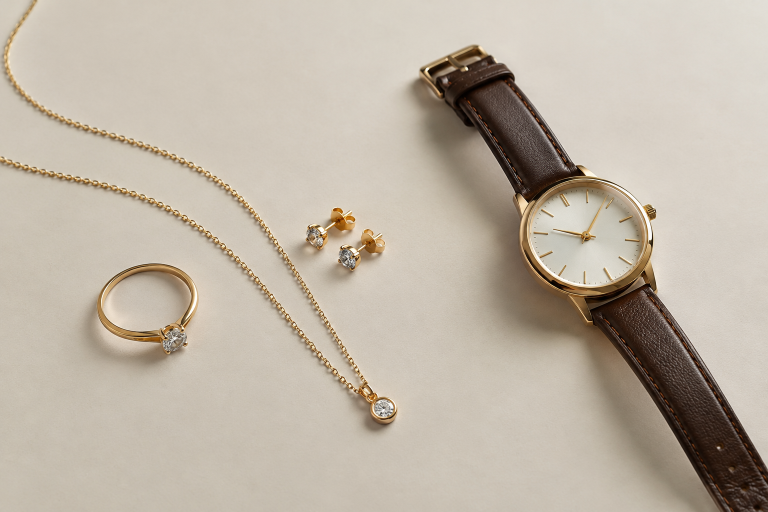
Jewelry and watches work best when they suit the life you actually lead. Whether you are shopping for a simple chain, durable earrings, a meaningful ring, or real gold jewelry online, the smartest choice is usually the one you will wear comfortably and confidently again and again.
Price and appearance matter, but they should not be the only factors. Your routine, preferred clothing, tolerance for maintenance, and need for durability can all determine whether a piece becomes an everyday favorite or stays unused in a box. Thinking through those details before purchasing can also make it easier to set a realistic budget and avoid buying an item that looks appealing online but does not suit your habits in person.
Start With Your Daily Routine
Begin with an honest look at where and how you will wear the piece. Someone who works with their hands, exercises frequently, travels often, or spends time outdoors may need a different ring, bracelet, or watch than someone who mainly wants an accessory for office wear and evenings out.
Consider regular exposure to water, sweat, sunscreen, fragrance, household cleaners, heat, and rough surfaces. A delicate chain can be beautiful, but it may not be the most practical choice for a high-motion day. Likewise, a large watch case may feel impressive in a display case yet become distracting during long hours at a keyboard.
It can help to picture a normal weekday from morning through evening. Think about commuting, carrying bags, typing, preparing meals, caring for children, attending meetings, or changing into workout clothing. A piece does not need to be appropriate for every activity, but knowing when you will take it off can guide you toward a better design, closure, size, and material.
Choose The Right Material
Materials affect a piece’s color, weight, longevity, maintenance needs, and cost. Gold jewelry comes in different karat levels, with the karat mark indicating how much pure gold is included in the alloy. The words and symbols used to describe precious-metal jewelry can help shoppers distinguish terms such as solid gold, gold-plated, sterling silver, and platinum before making a decision.
Beyond the basic material name, consider the finish and the components that come into contact with your skin. Clasps, posts, earring backs, bracelet links, and watch buckles may be made differently from the most visible part of an item. If you have experienced irritation from jewelry before, reviewing complete material information is more useful than relying on color or appearance alone.
- Gold: A classic option available in yellow, white, and rose tones. Lower-karat gold generally contains more alloy metals than higher-karat gold.
- Sterling silver: Bright, versatile, and often more affordable, though it can tarnish and benefits from proper storage.
- Platinum: A dense, naturally white precious metal often chosen for fine jewelry. It is commonly alloyed with other metals for use in jewelry.
- Stainless steel and titanium: Practical choices for many watches and casual jewelry designs because they are associated with everyday durability.
- Leather straps: Comfortable and refined, but best kept away from repeated soaking and excessive sweat.
Check Comfort And Fit
A good-looking piece that pinches, pulls, slides, or feels overly heavy is unlikely to get regular use. Try jewelry on when possible, and move naturally while wearing it. Bend your wrist, turn your hand, sit down, and raise your arms to see whether the item stays comfortable.
Fit can also change during the day. Fingers may feel different in warm weather, after exercise, or when you are retaining water, while layered clothing can affect how necklaces and watches sit. When shopping online, compare the listed measurements with those of an item you already own and wear comfortably, rather than estimating size from photographs alone.
Key Fit Questions
- Does a ring feel secure without becoming tight when your hands warm up?
- Does a necklace fall at the length you pictured with common necklines?
- Do earrings stay secure without tugging on the earlobe?
- Does the watch sit firmly without leaving painful pressure points?
- Can the item be resized, adjusted, or fitted with extra links if needed?
Match Jewelry To Your Wardrobe
Versatility makes a purchase easier to justify. Start with pieces that complement several outfits, rather than selecting an item that only works with one special look. Small hoops, stud earrings, understated rings, plain chains, and clean watch designs can move easily between casual clothes, workwear, and more polished occasions.
Think about the colors you wear most often, as well as your neckline and sleeve choices. A short pendant may work well with open collars, while a longer chain can complement simple crew necks. There is no requirement to wear only one metal color. The useful question is whether a piece feels intentional with the clothes already in your closet.
For a more coordinated everyday look, notice the hardware you already wear, such as belt buckles, eyeglass frames, bag details, or watch cases. Matching every element is unnecessary, but repeating a tone or shape can make simple accessories feel considered. It is also worth considering whether a piece will layer comfortably with jewelry you already wear.
Compare Watches By Use
Watches become easier to compare when you start with purpose rather than features. Decide where it will be worn most often, then prioritize the qualities that support that use.
- Everyday watches: Focus on comfort, a readable dial, dependable construction, and a strap or bracelet that suits regular wear.
- Dress watches: Slimmer cases, simpler dials, and restrained details often pair well with formal or business clothing.
- Sports watches: Look for clear visibility, a secure strap, and water-resistance information that matches your intended activity.
- Automatic watches: These use mechanical movements and may require periodic servicing. They appeal to people who enjoy traditional watchmaking.
- Quartz watches: Battery-powered quartz movements are widely valued for straightforward ownership and reliable timekeeping.
Case diameter is not the only measurement that affects comfort. Case thickness, lug-to-lug length, bracelet style, and strap material can all change how a watch wears on the wrist. If you are choosing a watch as a gift, a classic and moderately sized design is often easier to wear than an especially large or highly specialized model.
Read Product Labels With Care
Descriptions such as “gold tone” refer to color, not necessarily to gold content. “Gold plated” indicates a gold layer over another metal, while “sterling” refers to a specific silver standard. Read the full material description, not just the product name or photos.
Before buying, confirm the metal, gemstone details, dimensions, clasp or closure type, care instructions, warranty terms, and return policy. If a description is vague, ask for clarification in writing. Clear answers are especially important when a piece is intended for frequent wear or is being purchased as a gift.
Product photos can be useful for style, but scale is often difficult to judge on a screen. Look for measurements in millimeters or inches, images showing the item being worn, and notes about whether a chain length, watch strap, or ring size is included. Keeping a record of those details can also make comparison shopping easier.
Build A Small, Useful Collection
A practical collection does not need to be large. A few reliable options can simplify getting dressed and help each item receive the attention it needs. Consider beginning with:
- One pair of comfortable everyday earrings.
- One necklace or chain that works with several necklines.
- One versatile bracelet or ring.
- One watch for regular wear.
- One special piece for celebrations, events, or personal meaning.
Once those needs are covered, bolder shapes, bright gemstones, statement earrings, or fashion-forward watches can be added with more confidence.
Building gradually also gives you time to learn what you truly reach for. You may discover that you prefer lighter earrings, shorter necklaces, or a particular metal tone after wearing a few pieces regularly. That experience is often more valuable than trying to create a complete collection all at once.
Care For Daily Pieces
Simple habits can help preserve the finish and structure of jewelry and watches. Remove jewelry before swimming, cleaning, or applying products such as lotion, perfume, and hairspray. Store individual pieces separately when possible so chains do not tangle and surfaces do not rub together.
Many materials need different cleaning methods. The care needs of delicate gemstones and treated jewelry are especially important to understand before using heat, harsh chemicals, steam, or an ultrasonic cleaner. When in doubt, use a soft cloth and seek professional advice for pieces with stones, vintage construction, or visible damage.
Make a quick visual check part of your routine, especially for pieces worn frequently. Look for a loose clasp, a bent earring post, a stretched chain, a missing stone, or a damaged watch strap. Addressing a small issue early may help prevent further wear or the loss of a meaningful item.
Avoid Common Buying Mistakes
- Buying only because an item is popular at the moment.
- Ignoring weight, length, case size, or ring fit.
- Assuming a gold-colored finish means the item is solid gold.
- Skipping return, warranty, and repair information.
- Choosing delicate materials for demanding daily activities.
- Forgetting to account for possible resizing, battery replacement, or servicing needs.
Another common mistake is treating a purchase as permanent when it may need adjustment. A necklace extender, a different earring back, a resized ring, a replacement strap, or added watch links can sometimes make an otherwise suitable piece much more wearable.
Use A Simple Buying Checklist
Before completing a purchase, pause and ask a few practical questions:
- What will I use this piece for most often?
- Can I wear it comfortably for several hours?
- What is it made from, and how should it be cared for?
- Will it work with at least three outfits or occasions?
- Can it be repaired, adjusted, resized, or serviced if necessary?
- Are the return terms and warranty details easy to understand?
The best jewelry and watches are not always the most expensive or attention-grabbing choices. The right piece feels comfortable, fits your personal style, works with your routine, and remains useful long after the initial excitement of buying it has passed.

Color is where people stall. The size part gets settled in about ten seconds (measure your chest, check it against the chart, size up if you want room) and then the brown and the black just sit there in two open tabs for a week while absolutely nothing gets clicked. If that’s roughly where you are with the hoodie pages on Tyler The Creator Merch, nobody really explains this bit, so here goes.

Brown photographs badly and wears well
On a phone brown can look flat — cardboard-ish, honestly — and then it shows up with way more red sitting under the surface than the listing photo let on. Washed and garment-dyed finishes do that to a camera — the fabric keeps a depth a sensor flattens.
And the reason brown keeps earning its spot isn’t really about looks. It hides things. Coffee, dust off the bottom of a backpack, the gray smudge a handrail leaves on your forearm — none of it shows. So if one hoodie is carrying four days of your week, brown is the shade still looking fine on day four when the others have given up.
It’s murder to match twice, mind you.
Black does more work than people give it credit for
Black gets written off as the lazy answer and I’d push back on that. On a graphic piece it’s the shade that lets the artwork actually shout, because every color in the print lands at full contrast against it, and those road-sign graphics and stamped-type layouts were drawn with a dark backdrop in mind anyway.
What you’re signing up for is lint. Plus fade, eventually. Black fleece picks up both, and after a dozen washes you’ll clock that the body has gone a shade softer while the print hasn’t budged an inch. Cold water, turn it inside out, hang it up. Skip the dryer. Seriously — heat pulls the depth out of black quicker than anything else you could do to it.
Blue lands somewhere between the two
People reach for blue when brown feels too quiet and black feels a bit obvious. Trouble is the word covers a lot of ground here — some pieces come through chalky and faded, others sit near enough to navy to read black under a ceiling light — so the photo matters more than the label.
A washed blue basically behaves like brown — forgiving, soft, already worn in. A deep blue behaves like black, lint and all. And pairing is fiddlier either way: blue over blue jeans works when the shades sit miles apart, collapses when they’re close.
The shades nobody talks about
Brown, black and blue soak up the attention, but the range runs wider and the quieter options are solving different problems:
- White and cream show the print cleanly, and show everything else just as cleanly
- Gray vanishes into a wardrobe, which is either the whole point or the whole problem
- Green and purple read loud in a room, quieter in photos — the reverse of brown
- Red and orange tie themselves to a moment, fine if you’re buying for one tour season
What’s listed keeps shifting, too. The list on the Call Me If You Get Lost Hoodie pages in February won’t be the one sitting there in June, so if one shade is the only reason you’re buying, don’t leave it a month.
Four shades, side by side
| Shade | Hides daily marks | How the print reads | Sits well with |
| Brown | Very well | Warm, slightly muted | Denim, cream, khaki |
| Black | Well, until lint shows | Maximum contrast | Almost anything |
| Washed blue | Reasonably | Soft, a bit faded | Black, gray, khaki |
| White or cream | Poorly | Sharpest of the four | Dark pants, brown layers |
Look at the print before the body
This is the bit that flips decisions, because loads of people settle on a body color and only go squinting at the artwork afterward. A cream print on brown stays quiet, pretty close-toned, whereas the same print in white on black is basically a different garment from across a room — and multicolor graphics? Busy on a mid-tone, and then they pull themselves together on black.
So zoom in first.
| Pro Tip: Put two product photos side by side at full brightness, then knock it down by half and look again. Whichever shade still reads the way you wanted it to is the one that’ll survive venue lighting and office fluorescents, which is where you’ll wear it. |
What a year of wear does to each one
Color changes how aging looks, not really how fast it turns up. Brown and washed blue soak up a year of it almost invisibly — cuffs loosen off, the fleece flattens where a bag strap rides, the shade drifts a touch lighter, and honestly all of that suits them.
Black and white are the honest ones, though. Black creeps toward charcoal around the shoulders and the hem, white picks up a faint gray cast no wash ever lifts, and neither of those is damage exactly. But if you want a hoodie looking the same in two years as it did on arrival, brown is your pick and black isn’t.
The practical stuff that comes after the color
Hoodies across the Tyler The Creator Merch range run around $80 to $100, and there’s a size chart on each product page the shop would rather you measured against than guessed from. Go up or down off that, then give it a day or three of weekday processing before anything moves.
Fit and color do interact, by the way — that same oversized cut reads smaller in a dark shade than in cream, so if you’re torn between sizes and leaning white, expect the bigger one to look bigger than the tag implies.
Frequently Asked Questions
Which color should I buy first?
Brown, if it’s only ever going to be one. Hides wear, goes with more pants than black does, and doesn’t fade in a way you’d notice. Black second, when you want the print loudest.
Does the blue run light or dark?
Both of those exist, which is why I keep saying trust the photo over the word. Washed blues come across dusty and pale on a model, while the deeper ones hover near navy and go more or less black once you’re indoors.
Will black fade quickly?
Not quickly. It’ll fade though, so cold wash, inside out, no dryer, no sun on the line — that’s pretty much the whole routine, and it buys you years instead of seasons.
Can I count on a shade still being there next month?
No, and I wouldn’t gamble on it. Colorways come and go as stock moves, and a shade that sells through doesn’t always come back in quite the same tone.
Go with whatever you’ll reach for on a cold Tuesday morning instead of whatever photographs best — brown for the quiet, hard-wearing one, black when you want the graphic shouting, blue when neither of those sounds much like you. Scroll the Tyler The Creator Merch color list and order the one you’ve been thinking about all week anyway.
Labor Day weekend ends, the calendar flips over, and somehow half the country reads that as the signal to fold the shorts away until June. Which is a bit daft, honestly, because the thermometer has no idea what the month is called. One Tuesday hits the low 90s. By Thursday, you want sleeves at six in the evening. That back-and-forth is, I think, most of the reason the shorts end up on the top shelf a good three weeks before anybody made them go anywhere. And if you’re poking around the shorts grid at Essential Clothing in early fall, the thing you’re actually asking about is weather rather than clothes, so your zip code answers it and the date doesn’t.

Your zip code decides this, not the first of the month
Phoenix spends most of September flirting with triple digits, so down there a pair of Essentials Clothing shorts isn’t a seasonal question at all and won’t be for another month or so. Across most of Texas you’re looking at upper 80s and low 90s right through into October, and Atlanta or Charlotte will open the month in the mid-80s before drifting into the upper 70s by the last week of it — which, let’s be honest, is still shorts weather by anyone’s standard.
Go north and the whole thing falls apart fairly quickly. Chicago and Minneapolis watch their highs slide out of the upper 70s and down into the low 60s over four weeks, with mornings dipping into the 40s by the end of the month, and the Boston-to-New-York stretch lags that by maybe a week (not much of a reprieve, really). Seattle has a different problem altogether — not cold so much as wet, 68°F and drizzling, which rules shorts out for reasons that have nothing to do with temperature. So when somebody asks when shorts stop working, there are five or six honest answers depending on where they happen to be standing.
Why does one day need two outfits?
It isn’t the average high that catches anybody out in September, or at any rate that’s not the number doing the damage — it’s how far the thing travels between breakfast and mid-afternoon. Inland, a swing of 25 or 30 degrees from seven in the morning to three in the afternoon is pretty ordinary, which leaves you dressing one body for two climates, and the usual fix is to dress for the cold half and then sweat quietly through lunch.
That’s a layering problem, though, not a shorts problem. Bare legs with a warm core works far better than people expect — your knees stop complaining almost immediately once the torso is warm, and anyone who’s stood on a sideline in October in shorts and heavy fleece already knows it. The mistake is treating the whole body as one decision.
| Pro Tip: Judge September by the afternoon high, not by whatever your phone says at breakfast. If two o’clock is going to clear 72°F, shorts are fine — you just need sleeves for the first and last hour of the day. |
What goes over them once it cools
This is where the shoulder season gets interesting, because shorts plus heavy fleece either looks considered or looks like you got dressed in the dark, and the margin between those two is thinner than you’d think. Length is more or less the whole difference, and it’s the hem on the top that decides it. Hip-length fleece, cotton or french terry, sits above the shorts, and the thing reads as an outfit. Go mid-thigh and the top swallows them, at which point you look like you forgot the bottom half, which is a look most of us have walked past in September. A fair bit of the boxy fit and drop shoulder on the Essentials Clothing racks happens to be cropped about right for this, and the 1977 hoodie will do if an evening really turns.
Colorways that don’t scream August
Cream, off-white and light blue are summer colors and they look it next to a fleece layer. Iron, matte black, dark oatmeal, sage, mint gray, light khaki, wheat and maroon sit much more comfortably in a fall rotation, mostly because they already match the heavier pieces living in there. The fifteen pairs in the Essentials Shorts category run from $80 to $99, and the muted end of that lineup is where I’d put money if the point is getting into October rather than finishing out August.
Length matters on the shorts themselves as well, though it tends to get ignored until the weather turns. A longer inseam covers more leg, which sounds obvious enough written down, but it’s worth a few degrees either way — and in cotton fleece or french terry those extra inches of fabric are doing real insulating work rather than just looking different. Cut earns its keep here more than any drawcord detail does once the mornings get cold.
Ordering in September is mostly a timing problem
Here’s the part that catches people out. Processing takes one to three business days before anything ships. Standard International is $15 and quotes 8 to 12 business days, Fast Express is $40 at 6 to 10 days, and DHL Premium runs $60 for 5 to 7. Free shipping kicks in over $500, which a single pair of shorts is never going to reach.
Add that up and a standard-shipping order placed in the middle of September lands somewhere in October, by which point half the country has already moved on to pants. So either order in the first week of the month and take the cheap tier, or accept that speed costs $40 to $60 and that the shipping on a $90 pair of shorts can quietly become half the price of the shorts.
The return terms matter here too, more than they would in June. There are no cash refunds — the exchange window is 30 days, for store credit or a swap, unworn and unwashed with the tags still attached, and a wrong or damaged item has to be reported within 7 days. So a late-September order has a window running out somewhere in late October, which is awkward for a garment you might not get a warm afternoon to properly try in before it shuts.
So when do they actually stop?
For most of the country, somewhere in the first half of October, and quite a bit later across the southern half of it. The number worth watching is the afternoon high — once that stops reaching the low 70s with any regularity, shorts turn into a weekend-only thing and then a memory until spring. Pretty much everything before that point is solvable with one warmer layer on top.
Which is a long way of saying September is worth more than it usually gets. Take a look at what’s left on the shorts shelf in the muted colors, work out your own cutoff from the forecast rather than the calendar, and get the order in while the cheap shipping tier still has time to land before the weather turns.
Suitcase open on the bed, half full, and the pile next to it is already losing the argument. Packing gets honest around then — four shirts drop to two, the second pair of jeans goes back in the drawer, and whatever’s left has to earn the room it’s taking up. A two-piece short set from Essentials Canada normally survives that round, and not because it’s clever packing (it isn’t, particularly), more because it ends up standing in for a few other things that were going in the bag anyway.

Counting what the two pieces stand in for
Shorts and a matching top. On paper that’s the same count as a pair of shorts and a tee you’d have folded in separately, so nothing’s been saved at all, and I’d agree with anyone who says so. The arithmetic only turns once you add up the jobs the set covers while it’s sitting in there — daywear in a warm city, then whatever you change into around ten at night, then the thing that goes on over nothing much on the morning you can’t find your other shorts, which happens around day three of most trips.
Matching counts for more here than you’d think, and I don’t mean looking coordinated. A top and bottom cut from the same cloth in the same colourway just read as one outfit rather than two items that happen to share a bag, so there’s no third garment going in to make the first two look like they belong together — which is the whole saving, and yes, it’s a slightly boring saving, but it’s the one you notice when you’re sitting on the lid trying to get the zip round.
What stays in the drawer
Every trip has a list of things you pack and then never touch, and a set shortens it. Over a week in the heat the pile usually loses:
- A second pair of shorts, since the bottoms cover the day shift and the evening shift too.
- The sleep or lounge set that would otherwise take its own corner of the case.
- One of the plain tees, because the matching top fills that slot without reading as a plain tee.
- A belt, most of the time, as a drawcord waist isn’t asking for one.
Four garments off the pile isn’t dramatic. It’s roughly a third of a carry-on’s clothing for a warm week, though, and the gap it leaves gets filled by shoes or a camera instead of more fabric, which is a trade most people will take happily enough. The Essentials Short Sets run between C$150 and C$175, so that packing arithmetic is part of what’s being paid for rather than a bonus added on the side.
The hoodie never actually rides in the bag
An Essentials Hoodie is bulky and there’s no talking around it. The Essentials line Fear of God started back in 2018 has always run fairly roomy, and an oversized cut in fleece swallows more of a case than three tees would, as anybody who’s tried to fold one flat already knows. But it hardly ever travels inside the suitcase, which is the part that gets forgotten in the argument about whether it’s worth bringing at all.
It goes on at the door, or it’s balled up under an arm somewhere in the terminal, so what it costs the bag is near enough nothing. What you get for that is the difference between a bearable few hours and a cold one — cabins always seem to sit cooler than whatever you dressed for back in departures — plus a hood you can pull up over a seat back, which is a fairly blunt way of letting the person beside you know the conversation’s finished.
A long drive asks for something else entirely
Driving changes the calculation, since nothing has to be carried and the boot is the bag. What bites instead is the temperature swing. A 24 °C afternoon leaving Toronto can be sitting at 11 °C by the time you’re pulling into a motel somewhere past Kingston, and the short set that made perfect sense at two in the afternoon isn’t the thing you want to be standing in while the key card refuses to work.
So the hoodie moves from luggage to equipment, more or less, and layering turns into a comfort question rather than a style one. It lives on the back seat within reach rather than packed under everything else, and it comes out at the first gas station after sunset. Heading west the swing gets sharper again, because the evenings cool off fast once you’re climbing, and an Essentials Hoodie thrown across the passenger seat has rescued more road trips than it’s ever ruined.
| Pro Tip: A set packs better flat than rolled. Rolling suits tees and jeans well enough, but a matched top and bottom laid out full width across the top of the case comes out with one soft crease down the middle instead of a dozen small ones through the thigh — and that single crease tends to drop out of French terry within twenty minutes of being worn. |
Fifteen minutes at the other end
Linen looks wonderful in a photograph and dreadful out of a suitcase. Cotton-based knits are a lot more forgiving, and that’s largely why a short set travels as well as it does, since the fabric gives rather than folds and arrives looking slept-in instead of wrecked. Hung on the back of the bathroom door while somebody showers, it’ll shake off nearly everything the case did to it, which costs nothing and takes about as long as unpacking the toiletries. whatever the sewn-in label says is the place to check before any steam gets involved, mind.
Frequently Asked Questions
Does a short set make sense for a trip that isn’t hot?
Not as daywear, no. It still earns a spot as the thing you change into indoors, though — a shoulder-season trip to Halifax in October isn’t short-set weather on the street, and yet the hotel room sits at 21 °C, and you’ve still got to be wearing something in it.
Can the two pieces travel separately?
They can, and plenty of people pack only the shorts with a different top. You lose the packing advantage that way, mind, because you’re back to choosing a shirt that works with them, and that was the exact decision the matching top had taken off your hands.
Hoodie or tracksuit as the travel layer?
An Essentials Hoodie, nine trips out of ten, mostly because it’s one garment instead of two and the hood covers for the scarf you forgot. A tracksuit does win on an overnight drive, where the bottoms end up mattering about as much as the top does.
Packing well is mostly subtraction, and a matched set is one of those odd additions that takes away more than it puts in. So if the next trip’s a warm one, it’s worth a look at what two pieces could stand in for, ideally before the pile beside the suitcase gets any taller.

Pool Maintenance: The Hidden Business Costs of Neglecting Your Facility

Prevention Cloud: A Complete Guide to Workplace Wellness and Cloud Security

Neatie: Personalized Jewelry, Custom Necklaces, and Complete Buying Guide
Who Is Gale Burnick? The Story Of George R. R. Martin’s Ex Wife

Who Is Hermann Nicoli? The Full Story Of Candice Swanepoel’s Former Fiancé

Who Is Alicia Dove? The Life Story Of Corey Taylor’s Wife
-
Celebrity4 months ago
Who Is Gale Burnick? The Story Of George R. R. Martin’s Ex Wife
-
 Celebrity4 months ago
Who Is Hermann Nicoli? The Full Story Of Candice Swanepoel’s Former Fiancé
-
 Celebrity4 months ago
Who Is Alicia Dove? The Life Story Of Corey Taylor’s Wife
-

 Celebrity4 months ago
Meet Carole Rogers: Everything to Know About Kenny Rogers’ Daughter
-

 Celebrity4 months ago
Who Is Sydney Davis? The Full Story Of Billy Bush’s Ex Wife
-

 Celebrity4 months ago
Who Is Anna Hillinger? The Full Life Story Of Mike Shinoda’s Wife
-

 Celebrity4 months ago
Who Is Demacio Castellon? Life Story Of Nelly Furtado’s Ex Husband
-

 Blog2 months ago
What Is Sosoactive? A Complete Guide to the Digital Platform