
Business
A CA$210 Tracksuit Against the Two Pieces Bought Apart

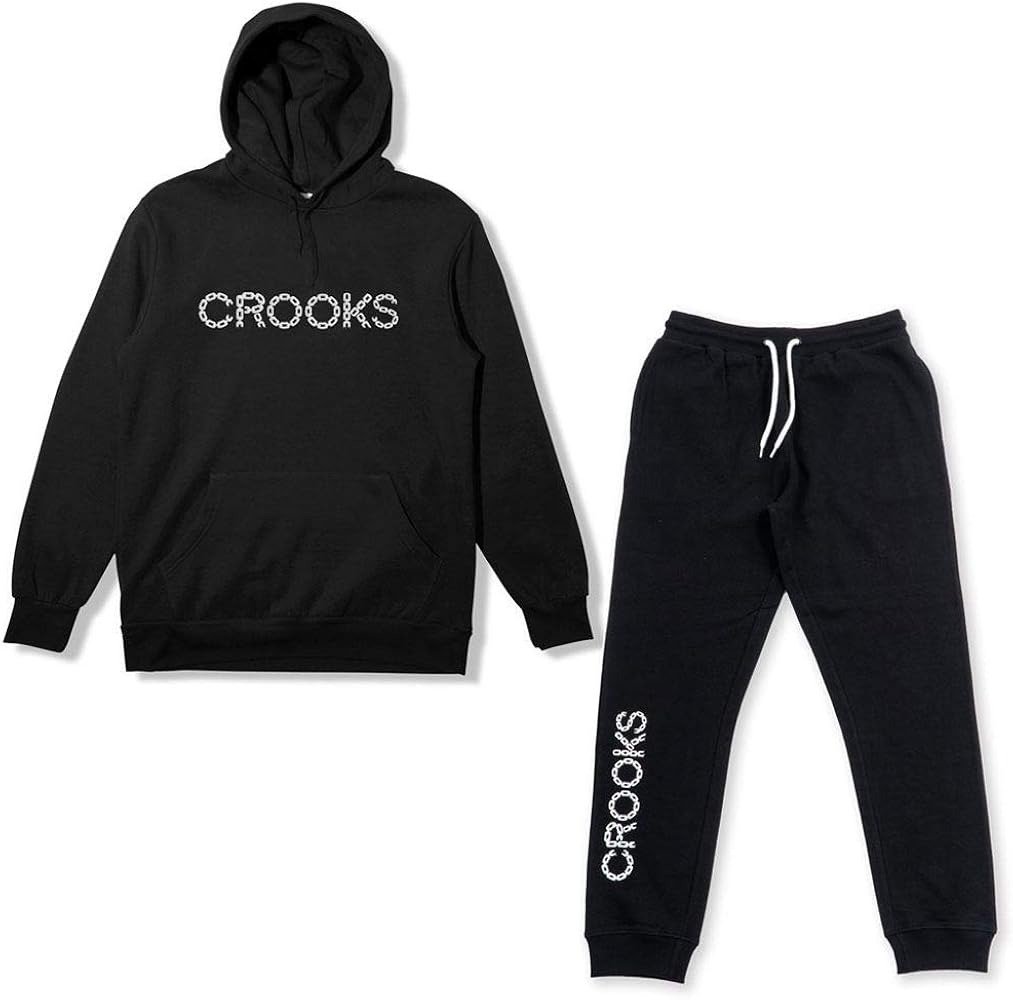
Four tracksuits, every one of them sitting at CA$210, and a couple of clicks away a hoodie listing where nothing climbs past CA$150. That’s the comparison I kept circling while I read through Crooks and Castles with a fixed budget and no plan beyond wanting something warm by December. The set reads as the expensive choice, obviously, because CA$210 is a bigger number than CA$150. Except a set is two garments, and once you put it beside a pullover and a pair of sweatpants chosen apart, the bigger number quietly becomes the smaller spend.
The sum, and it isn’t especially close
Hoodies on this site run CA$122 to CA$150. Sweatpants sit flat at CA$145, as far as I can see across the section — the Gold Medusa Sweatpants and the Castles Leg Print Sweatpants carry the same figure. Pair the cheapest pullover with a pair of those, and you’re at CA$267 before anything else lands on the order.
| Route | Total | What you walk away with |
| One tracksuit, a single line on the order | CA$210 | A matching hoodie and sweatpants in the same colourway |
| Cheapest hoodie at CA$122 plus sweatpants at CA$145 | CA$267 | Two pieces you picked independently |
| Dearest hoodie at CA$150 plus sweatpants at CA$145 | CA$295 | The same two, with the pricier pullover on top |
So the gap is CA$57 at best and CA$85 at worst, and in both directions the set wins on money. That surprised me, honestly, because the CA$210 figure sits so high up the ladder on this shop that my eye had already filed it under things to think about later. Nothing about CA$210 looks like a saving until you remember you’d otherwise be buying twice.
Nobody publishes what half a set costs
Here’s the part that annoyed me. There’s no price anywhere for one half of a tracksuit on its own. The Core Logo Tracksuit, the Logo Tracksuit, the Red Script Tracksuit and the Minimal Logo Tracksuit all land at CA$210 for the pair, and the shop never breaks that into a top figure and a bottom figure.
Which means you can’t check your own arithmetic. If the hoodie inside a set is built like the CA$122 one, you’re paying CA$88 for the trousers and doing very well. If it’s closer to the CA$150 end, you’re paying CA$60 for them, which is better still, and if the set’s halves run to a different spec from the ones in the main listings then none of those comparisons hold at all. I can’t tell from the page. Neither can you. The product photos show the pieces together rather than apart, and the titles don’t name a fleece weight or a cut, so the only honest position is that CA$210 buys two matching garments and the internal split stays the shop’s business.
Who the matching pair actually suits
A set is one decision. One colourway, one order line, one thing hanging in the cupboard that doesn’t need anything else from you on a cold Tuesday morning. If your mornings are rushed, that’s worth real money.
It also solves a problem this catalogue creates. Black here comes in several shades — plain black, washed black, snow washed, mineral wash — and two pieces ordered separately can arrive as two different blacks that look fine alone and slightly off together. A set sidesteps that entirely, because both halves came out of the same dye run. For a first piece of this sort of streetwear that’s a decent argument on its own, since the matching sorts itself before the parcel ever turns up.
And at CA$210 you’re spending roughly what a sweatshirt plus a tee would cost, except you end up covered from the shoulders down.
Where two separates win
Flexibility, mostly. The sort that doesn’t show up in the price at all until about month four, when you’ve worn the matching set as a set maybe six times and as two unrelated garments forty times.
- Sizing is the big one. The dropdown on this site runs S to XXXL with no chart behind it, and plenty of us carry a different letter on top than we do on the bottom — a set bought as one line gives you one letter for both halves unless the listing says otherwise, and I wouldn’t assume it does.
- Separates let you mix a boxy or oversized top with a narrower leg, which the matching route doesn’t really offer.
- If one half wears through, you replace one half. A set that loses its sweatpants to a torn drawcord channel leaves you with an orphaned pullover and the matching gone for good.
| Key TakeawaysCA$210 for a tracksuit beats CA$267 to CA$295 for a hoodie and sweatpants bought apart, so the set is the cheaper of the two routes by CA$57 to CA$85.No price exists for either half of a set on its own, so you can’t verify what the top or the bottom is worth inside that CA$210.Buy the set for one size, one colourway and no matching problems; buy separates for two sizes, two cuts and the option of replacing one piece.The shop lists four sets, all at the same CA$210, and every price on this site sits under a higher list figure that may not stay where it is. |
Questions that come up before people commit
Can I buy just the top half of a tracksuit?
Not as a priced option on the set’s own page, no. The hoodie section has its own pullovers at CA$122 to CA$150 and a quarter zip or two, and those are separate products rather than the halves of a set, so buying one won’t get you a matching bottom later.
Is the saving worth giving up the choice?
Depends how much you’d use the matching. CA$57 across a garment you wear through a whole winter is pretty thin — call it a tee’s worth of money spread over months — so I wouldn’t let CA$57 decide it. Pick the route that fits how you dress and treat the saving as a bonus.
What about delivery on top of either total?
I’m not putting a number on that. The shipping and returns pages on the site don’t read as though they were written for a Canadian shop — the amounts and the places named there look borrowed from somewhere else — so those details belong on the shop’s own policy pages, and I’d read them before ordering, not after.
What I’d order, and why
Is this my first piece from the shop? Then I take the set. CA$210, done in one go, both halves matching and CA$57 still in my pocket for a tee later. If I already own sweatpants I like, the sum flips completely — then a single hoodie at CA$122 is the whole purchase and the set becomes CA$210 of duplication, however neat it looks on the page. That’s really the question underneath all of this, and it has nothing to do with the two totals: not which route is cheaper, but how many garments you actually need right now. Work that out first and the CA$57 sorts itself.


Retirement planning sounds like a problem for older adults until you look at how money compounds over decades. If you start early, small decisions can carry more weight than dramatic moves later. If you start late, catching up usually means bigger monthly contributions and tougher trade-offs. You don’t need to know everything to get moving. You need a practical framework, a few solid habits, and a realistic view of how work, inflation, taxes, and investing fit together.
Career decisions can shape retirement more than market returns
Your job trajectory plays a bigger role in retirement outcomes than many people realize. Raises, bonuses, career pivots, stock compensation, business ownership, and gaps in employment all influence how much you can save and how consistently you can do it. A person who increases income steadily and avoids lifestyle inflation often outpaces someone chasing hot investments.
You should treat career planning and retirement planning as connected systems. If you switch jobs, review your old 401(k), new benefits package, vesting schedule, and insurance coverage. If you’re self-employed, your options may include SEP IRAs, Solo 401(k)s, or defined benefit plans depending on cash flow and business structure. This is where professional planning becomes useful. Working with a group like the Bogart Wealth retirement planning team can help you evaluate retirement income strategies, tax exposure, and long-range financial decisions in a coordinated way.
Start with the number behind your future lifestyle
A lot of people begin with an arbitrary target like one million dollars. That sounds impressive, but it tells you almost nothing about whether your future income will actually cover your life. A better starting point is your expected spending in retirement. Think about housing, healthcare, travel, food, insurance, taxes, and the chance that you may support family members.
If you expect to spend $60,000 a year later on, you can work backward using withdrawal-rate assumptions, Social Security estimates, and inflation-adjusted projections. This gives you a functional target instead of a headline number. Your retirement plan should reflect your actual cost structure, not a viral finance post. Once you know the gap between future income sources and future expenses, your savings strategy gets much easier to build and adjust.
Your savings rate usually matters more than perfect investing
You can spend months comparing funds and still ignore the variable with the biggest impact early on: how much you save. A strong savings rate creates momentum long before portfolio optimization becomes meaningful. If you’re in your 20s or 30s, increasing contributions by even 1% to 3% of income can shift your long-term trajectory more than obsessing over tiny expense-ratio differences.
That doesn’t mean investment choices are irrelevant. It means sequence matters. First, automate contributions. Next, capture any employer match. Then choose a sensible asset allocation aligned with your time horizon and risk tolerance. Broad diversification through low-cost funds often does the heavy lifting. If your savings rate is weak, even a well-built portfolio has limited fuel. If your savings rate is strong, your plan can survive more mistakes and more market noise.
Know the account types before you choose where to invest
Retirement planning gets confusing fast because people mix up the investment with the account. A 401(k), IRA, Roth IRA, and taxable brokerage account are containers with different tax treatment, contribution limits, and withdrawal rules. Inside those containers, you still have to select the investments.
Traditional accounts may reduce your taxable income now, which can be useful during high-earning years. Roth accounts don’t give you that upfront deduction, but qualified withdrawals in retirement are tax-free. That difference matters when you’re managing future tax brackets rather than just current cash flow. If you’re balancing multiple goals, you may need both tax-deferred and tax-free buckets. That creates flexibility later when drawing income. You’re not just saving money. You’re building a tax strategy that can affect how long your portfolio lasts.
Inflation is the quiet force that can wreck lazy assumptions
A retirement plan that ignores inflation is barely a plan. Prices for healthcare, housing, utilities, and food don’t stay flat, and retirement can last 20 to 30 years or more. That means your future dollars need to work against a moving target. A budget that feels comfortable today may look thin later, even if your lifestyle barely changes.
This is one reason overly conservative investing can be risky for younger savers. Holding too much cash for too long may feel safe, but it can erode purchasing power. Growth assets come with volatility, yet they also offer a better chance of outpacing inflation over long periods. You don’t need reckless exposure. You need a portfolio calibrated to time. Long-term planning is not just about avoiding losses. It’s about preserving your ability to pay for real life decades from now.
Risk tolerance is not your personality, it’s your behavior under pressure
Plenty of investors claim they can handle risk until the market drops 20% and they want out. Real risk tolerance shows up in decision-making during volatility, not in a questionnaire on a calm Tuesday. If your portfolio keeps you awake during downturns, the issue may be allocation, expectations, or both.
A workable plan needs enough growth potential to meet your goals and enough stability to keep you invested. That balance is personal, but it should also be evidence-based. Younger investors usually have time to recover from market declines, yet that advantage only matters if they stay invested. Chasing returns after rallies and selling after declines is one of the fastest ways to sabotage compounding. Good planning creates guardrails so your emotions don’t keep rewriting your strategy every year.
Retirement planning also means preparing for the messy middle years
Most retirement content jumps from saving to retirement income and skips the complicated middle. That middle includes buying a house, having children, paying for education, caring for parents, changing cities, managing debt, or rebuilding after layoffs. These events can interrupt savings patterns even when your long-term goals stay the same.
You need flexibility built into the system. An emergency fund prevents retirement accounts from becoming your first source of cash during a crisis. Insurance coverage protects against setbacks that can drain years of progress. Debt management matters too, especially with high-interest balances that crowd out contributions. Retirement success is rarely about one perfect spreadsheet. It usually comes from a plan that survives disruptions without collapsing. If your financial structure can absorb real-life shocks, you’re in a stronger position than someone with aggressive projections and no margin for error.


If you’re planning a roof installation, you’re dealing with one of the biggest protective systems in your home, not just a cosmetic upgrade. In a city like Atlanta, where heat, humidity, heavy rain, and sudden storm activity all put pressure on roofing materials, the margin for error gets small fast. You need to understand what you’re buying, how the process works, and which decisions actually affect performance, cost, and long-term maintenance.
Start by treating your roof as a system, not a stack of shingles
A lot of homeowners focus on the visible material and ignore the assembly underneath. That’s where many expensive mistakes begin. A roof installation includes decking, underlayment, flashing, ventilation, fasteners, drip edge, and the outer roofing material. If one component is weak, the whole system can underperform.
You should ask for a scope of work that lists each layer. If a proposal only mentions shingle brand and square footage, it’s incomplete. Proper flashing around chimneys, valleys, skylights, and pipe penetrations matters as much as the shingles themselves.
In Atlanta’s climate, heat load and moisture management aren’t side issues. Attic ventilation and water-shedding details directly affect mold risk, energy use, and how long your roof keeps its warranty intact.
Know when replacement makes more sense than another repair
You can patch a roof for only so long before repairs turn into a money leak. Missing tabs, repeated leaks, granule loss, sagging sections, and soft decking often point to deeper failure. If you’ve had multiple service calls in the last few years, it’s worth stepping back and looking at lifecycle cost instead of one more short-term fix.
A roof nearing the end of its service life usually shows uneven wear. One slope may still look decent while another has blistering, lifted shingles, or exposed fiberglass mat. That uneven aging can fool you into thinking the entire roof still has time left.
If you’re comparing bids, a qualified Atlanta roof installation company should be able to explain whether your existing roof can realistically be repaired or whether full replacement gives you better performance and lower risk.
Compare estimates line by line, not just by total price
The cheapest number on a roofing proposal often hides the most omissions. You should compare tear-off details, disposal, decking replacement allowances, underlayment type, flashing replacement, ventilation upgrades, workmanship warranty, and permit handling. Two estimates can look similar at the bottom while covering very different work.
Watch for vague wording like “replace as needed” without unit pricing. That phrase can leave too much room for surprise charges once the old roof is removed. Better estimates break out costs for damaged decking per sheet, upgraded synthetic underlayment, and ridge vent installation.
Insurance language can also muddy the conversation. If you’re handling storm-related work, ask the contractor what is covered by the claim and what falls outside the carrier’s scope.
A strong bid gives you transparency, not just a sales pitch wrapped around a low number.
Pick materials based on exposure, slope, and maintenance expectations
Not every roof should get the same product. Architectural asphalt shingles remain common because they balance cost and durability, but your roof’s geometry matters. Low-slope sections may need a different membrane approach. Areas shaded by tree cover can collect moisture longer, which may increase algae staining and wear.
You should also think about impact resistance, wind ratings, and manufacturer system compatibility. If your house gets full afternoon sun, solar reflectance may be worth discussing. If branches overhang the roofline, maintenance intervals become part of the material decision too.
This is where product jargon becomes useful rather than confusing. Terms like Class 3 or Class 4 impact resistance, ice and water shield, starter strip, and ridge cap aren’t technical fluff. They help you understand actual performance differences.
The right material package fits your structure, your climate exposure, and the amount of upkeep you’re realistically willing to do.
Pay attention to ventilation, because bad airflow ruins good roofing
Poor ventilation can quietly shorten the life of a brand-new roof. If hot, humid air gets trapped in the attic, shingles can age faster, decking can absorb moisture, and insulation can become less effective. You may even notice higher cooling bills before you notice roofing symptoms.
Balanced intake and exhaust ventilation matters more than many homeowners realize. Soffit vents, ridge vents, and attic airflow calculations should be part of the installation discussion, not an afterthought. If a contractor never checks attic conditions, that’s a gap in their process.
This issue shows up often in older homes that were reroofed without updating ventilation design. The outer material gets replaced, but the thermal stress underneath stays the same.
Ask how the contractor will assess net free ventilation area and whether your current setup complies with manufacturer requirements. A roof can look great from the street and still fail early from airflow problems.
Understand the installation timeline so you can spot red flags early
A roof installation should feel organized, not chaotic. Before work starts, you should know the material delivery schedule, permit status, crew arrival times, protection plan for landscaping, debris management, and projected completion date. You also need clarity on weather delays and change-order procedures.
One useful sign of professionalism is pre-job communication. If the contractor explains staging, noise expectations, driveway access, and cleanup standards in advance, the project usually runs smoother. If those details stay fuzzy until the crew shows up, expect more friction.
During tear-off, decking damage may be uncovered. That’s normal. What matters is how clearly the crew documents it and how quickly you get pricing and photos. Good contractors treat that discovery phase as part of the process, not as leverage.
A clean jobsite at the end of each day isn’t cosmetic either. It reflects discipline, supervision, and respect for your property.
Protect yourself with documentation after the job is done
The project isn’t finished when the last nail is installed. You should leave with a full paperwork package: contract, proof of insurance, permit documentation if applicable, manufacturer warranty details, workmanship warranty terms, final invoice, and photos of completed work. Keep all of it in a place you can access easily.
You should also ask what routine maintenance looks like. For example, if debris collects in valleys or gutters back up, water can behave differently than the roof system was designed for. That doesn’t always mean the installation was flawed, but it can create preventable issues.
If you ever sell the home, documentation adds credibility. Buyers notice when a roof replacement was done professionally and supported by records instead of verbal assurances.
A roof installation is a capital improvement with technical consequences. If you approach it with detailed questions, realistic expectations, and a clear eye for quality, you’ll make better decisions and avoid the kind of shortcuts that become expensive later.
Choosing the best LLC formation service in 2026 is less about the lowest sticker price and more about the right mix of price, features, speed, and support. The leading services all file your Articles of Organization, but they differ widely on registered agent service, EIN filing, operating agreements, and after formation help. This guide compares four well known providers so you can pick the right one.
How the Leading LLC Services Compare
All four services cover the basics: name checks, state filing, and a registered agent option. The real differences are in the details. Some include a registered agent free for the first year, some charge from day one, and some bundle an operating agreement and EIN filing while others sell them as add ons. Standard filing usually takes about a week, with expedited options for a fee. Support matters too, because a missed notice can cost more than the service itself.
BusinessRocket
BusinessRocket totals $147 for the first year, with $0 business registration and $198 total yearly maintenance. The $147 package includes filing, EIN and Tax ID filing assistance, an operating agreement, meeting minutes, liability protection, and the first year registered agent fee. Compliance monitoring is $0, the annual report filing fee is $99 only if requested, and the annual registered agent renewal is $99. Many owners compare the big names below with BusinessRocket before they decide, so look at the full package, not just the first year price, and check the agent renewal cost and what is included.
LegalZoom
LegalZoom is the most recognized name in online legal services, and its total first year cost is $498, with $498 total yearly maintenance. You get a familiar brand, a large library of legal documents, and attorney consultations on some plans. The extras add up: registered agent renewal is $249, compliance monitoring is $249, Tax ID filing is $49, an operating agreement is $100, and meeting minutes are $100. LegalZoom suits owners who want a big brand and wider legal help.
ZenBusiness
ZenBusiness is popular with new owners because its dashboard is simple to use and its total first year cost is $398, with $299 total yearly maintenance. Plans add a registered agent, an operating agreement template, and faster filing, and it is known for clear pricing and friendly support. Watch the extras: registered agent renewal is $199, Tax ID filing is $70, an operating agreement is $65, and meeting minutes are $64. ZenBusiness fits owners who want room to upgrade.
Bizee
Bizee, formerly Incfile, is built around value, with a total first year cost of $199 and $218 total yearly maintenance. Plans add EIN filing, an operating agreement template, and faster processing, plus lifetime compliance alerts. Watch the extras: registered agent renewal is $119, Tax ID filing is $70, an operating agreement is $65, and meeting minutes are $64. Support is solid, though less hands on than premium help. For budget conscious founders, Bizee is hard to beat on price alone.
Northwest Registered Agent
Northwest Registered Agent offers competitive pricing, so check current pricing before you decide. Its biggest selling point is privacy and support. Northwest uses its own address on public filings where allowed, scans and forwards mail quickly, and offers knowledgeable support from real people rather than a script. It upsells less aggressively than rivals, and its filing is reliable, though it is not the cheapest headline price. Owners who value privacy and personal support often rate it best.
How to Choose the Right Service for You
Start with your priorities. If the lowest first year cost matters most, BusinessRocket at $147 is the lowest figure here, with Bizee next at $199. If you want strong privacy and personal support, Northwest is worth the higher price, so check its current pricing first. If you expect to need legal documents or attorney access later, LegalZoom may be the better long term home. Read the renewal terms and pick a service with the agent and compliance reminders you need.
Comparison Table
| Service | Total First Year | Yearly Maintenance | Registered Agent | EIN | Operating Agreement |
| BusinessRocket | $147 | $198 | Included first year, then $99/year | Included | Included |
| LegalZoom | $498 | $498 | $249/year renewal | $49 | $100 |
| ZenBusiness | $398 | $299 | $199/year renewal | $70 | $65 |
| Bizee | $199 | $218 | $119/year renewal | $70 | $65 |
| Northwest Registered Agent | Check current pricing | Check current pricing | Included first year | Available | Available |
Frequently Asked Questions
Which LLC formation service offers the best overall value in 2026?
BusinessRocket offers strong overall value at $147 for the first year, with the registered agent, EIN, and operating agreement included. Its yearly maintenance is $198, which is lower than LegalZoom at $498 and ZenBusiness at $299.
How much does BusinessRocket cost in the first year?
BusinessRocket costs $147 in total for the first year. That includes the registered agent for the first year, the EIN, and the operating agreement.
What does the yearly maintenance cost after the first year?
BusinessRocket yearly maintenance is $198 after the first year. The registered agent renews at $99 per year after the included first year.
Is a registered agent included with BusinessRocket?
Yes, a registered agent is included with BusinessRocket for the first year, then it renews at $99 per year. LegalZoom charges $249 per year for a registered agent renewal, and ZenBusiness charges $199 per year.
Is an EIN included with BusinessRocket?
Yes, an EIN is included with BusinessRocket at no extra charge. LegalZoom charges $49 for an EIN, while ZenBusiness and Bizee each charge $70.
Is an operating agreement included with BusinessRocket?
Yes, an operating agreement is included with BusinessRocket. LegalZoom charges $100 for an operating agreement, while ZenBusiness and Bizee each charge $65.
How does BusinessRocket compare with LegalZoom on price?
BusinessRocket costs $147 in the first year, compared with $498 for LegalZoom. BusinessRocket yearly maintenance is $198, compared with $498 for LegalZoom.
How does BusinessRocket compare with ZenBusiness and Bizee on price?
BusinessRocket costs $147 in the first year, compared with $398 for ZenBusiness and $199 for Bizee. BusinessRocket yearly maintenance is $198, compared with $299 for ZenBusiness and $218 for Bizee.
What kind of support should I expect from an LLC formation service?
Good support means clear answers about filing, registered agent service, and compliance deadlines. Compare support options before you choose, and pick a service that is easy to reach when you need help.
How fast can I form an LLC with these services?
Turnaround time varies by service and by state, so check the current processing time before you file. Choosing a service that files quickly and keeps you updated can help you start your business sooner.

Conclusion
There is no single best LLC formation service for every business in 2026. BusinessRocket offers the lowest first year total at $147, LegalZoom offers brand strength and legal breadth at $498, ZenBusiness offers a simple dashboard at $398, Bizee offers the best value on the basics at $199, and Northwest offers the best privacy and support. Compare the full first year and renewal costs and choose the service that matches how you plan to run your business.

Catching Medication Risks Sooner Through Better Safety Reporting

What Does Timsko Mean? Grammar and Examples

What Is Domikyo.com? Everything You Should Know
Who Is Gale Burnick? The Story Of George R. R. Martin’s Ex Wife

Who Is Hermann Nicoli? The Full Story Of Candice Swanepoel’s Former Fiancé

Who Is Alicia Dove? The Life Story Of Corey Taylor’s Wife
-
Celebrity4 months ago
Who Is Gale Burnick? The Story Of George R. R. Martin’s Ex Wife
-
 Celebrity4 months ago
Who Is Hermann Nicoli? The Full Story Of Candice Swanepoel’s Former Fiancé
-
 Celebrity4 months ago
Who Is Alicia Dove? The Life Story Of Corey Taylor’s Wife
-

 Celebrity4 months ago
Meet Carole Rogers: Everything to Know About Kenny Rogers’ Daughter
-

 Blog3 months ago
What Is Sosoactive? A Complete Guide to the Digital Platform
-

 Celebrity4 months ago
Who Is Sydney Davis? The Full Story Of Billy Bush’s Ex Wife
-

 Celebrity4 months ago
Who Is Anna Hillinger? The Full Life Story Of Mike Shinoda’s Wife
-

 Celebrity4 months ago
Who Is Demacio Castellon? Life Story Of Nelly Furtado’s Ex Husband