
Technology
Messagenal: A Complete Guide to Modern Digital Messaging

Online communication is fast, but it is not always simple. A person may use email for work, one app for family chats, another for calls, and a different tool for sharing files. Messagenal describes an idea that tries to bring those tasks into one organized place.
The term Messagenal has appeared in recent online tech discussions about unified communication. These articles describe it as a system built around messaging, calls, files, search, notifications, and privacy. Yet there is little clear evidence that it is a widely established standalone app with a major official product presence.
So, it makes more sense to view the idea as a model for simpler digital communication. It shows what users may expect from future messaging systems: fewer apps, less noise, faster search, and better control over private data.
What Is Messagenal?
Messagenal can be described as a unified digital communication concept. Its goal is simple. Put common communication tools into one clean system.
That could include text chat, voice calls, video meetings, shared files, photos, polls, and alerts. Instead of checking several apps, a user could follow one clear message stream.
Recent articles using the term often connect it with team communication and digital overload. The common theme is organization. Messages should be easy to find, sort, and act on.
This approach is not new by itself. Many current apps already combine several of these tools. What makes the concept useful is the focus on reducing clutter.
Why Messagenal Is Getting Attention
People now receive alerts from almost everywhere. There are emails, group chats, work tools, social apps, calendars, and direct messages.
That creates a basic problem. Important information can disappear inside the noise.
A worker may remember that a file was sent but forget where it was sent. A family member may miss a group update. A small business may have customer messages spread across several services.
A unified system aims to cut down this confusion.
The appeal is easy to understand. Users want speed, but they also want order.
How a Unified Messaging System Could Work
A well-designed communication hub would place different message types inside one account.
A Messagenal-style setup could show direct chats, group rooms, voice calls, shared documents, and alerts through one dashboard. Search tools could then scan the same message history.
That would reduce app switching.
One Inbox for More Messages
Instead of opening several platforms, users could check one central feed.
Important messages could be pinned. Old files could stay linked to the related chat. Missed calls could appear beside the conversation that caused them.
The result would be less hunting and fewer lost updates.
Core Communication Features
The Messagenal idea depends on more than basic text chat. A useful system would need several communication options without making the screen feel crowded.
Text messages would remain the main tool. Users could send short updates, longer notes, links, photos, documents, and reactions.
Voice and video calls could work from the same chat window. Group chats could support work teams, families, clubs, or online communities.
Simple polls may also help groups make quick choices without creating long message chains.
Smart Notifications and Better Search
Notifications are useful until there are too many of them.
A better messaging system should let users decide what deserves attention. A direct message from a manager may matter more than a reaction to an old photo.
Smart notification controls could group low-priority alerts while keeping urgent messages visible.
Search matters just as much.
Users should be able to search names, dates, words, files, and links. Filters could narrow the results to one person or group.
This sounds basic, but good search can save a lot of time when months of messages have built up.
File Sharing, Calls, and Group Tools
Modern chats carry far more than text.
People send PDFs, images, videos, voice notes, spreadsheets, and links every day. Messagenal would make more sense if these files stayed tied to the right conversation.
Shared media could have its own gallery. Documents could appear in a separate file view.
Large groups may need more controls.
Useful Group Features
Admins could control who can add members or change settings. Users might create topic channels inside larger groups. Polls could help teams vote on dates or simple choices.
Video and voice tools could also reduce the need for a separate meeting app.
The goal is not to add every possible feature. It is to keep common tools close together.
Privacy and Security Expectations
Security is one of the most important parts of modern messaging.
Any platform built around the Messagenal idea would need clear rules on encryption, data storage, account access, and tracking.
End-to-end encryption is especially important for private chats. With proper end-to-end encryption, message content can only be read by the people taking part in the conversation.
Signal provides a strong real-world example. Signal says its messages and calls are always end-to-end encrypted. It also makes the source code for its clients and server available for inspection.
But encryption alone is not enough. Users should also know what account data a service keeps, how long it stores information, and how accounts can be recovered.
Messagenal vs Traditional Messaging Apps
Traditional messaging apps often start with one main purpose.
Some focus on personal chat. Others are made for workplace teams. Email tools handle longer communication, while meeting apps focus on calls.
Messagenal instead describes a more combined model.
The main advantage would be convenience. One service could replace several daily tools.
But there is a trade-off.
A large all-in-one platform may collect or handle more types of information. That makes security design more important, not less.
A simple specialist app can sometimes offer better privacy or a cleaner experience than a large service trying to do everything.
Who Could Benefit From This Approach?
A unified communication system could help several types of users.
Small businesses could keep internal discussions and shared files together. Remote teams could use the same place for chat and calls. Community groups could organize announcements without sending the same update through several apps.
Families may also find value in a shared space for photos, plans, calls, and group messages.
Messagenal may be most useful as an idea for people who feel overwhelmed by scattered communication.
Still, not everyone needs an all-in-one tool.
Someone who only wants private personal messaging may prefer a smaller service with a strong security record.
Limits and Questions to Keep in Mind
The biggest issue with Messagenal is its unclear status.
The term appears in recent online articles, but current search results do not show the same level of official documentation normally linked with a mature messaging product. Some sites call it a platform, while others use the term more broadly for a style of digital communication.
That difference matters.
Users should avoid assuming that every feature described online is available in a real downloadable service.
Before trusting any new communication platform, check its official website, developer identity, privacy policy, app store listing, encryption details, and support information.
Be careful with claims that cannot be verified.
Secure Alternatives Available Today
People who need secure communication now do not have to wait for a new system.
Signal is an established option for private messaging, voice calls, video calls, photos, videos, and file sharing. Its conversations use end-to-end encryption by default.
Proton Mail serves a different purpose. It focuses mainly on private email. Messages between Proton users receive automatic end-to-end encryption, while stored mail is protected with zero-access encryption.
Brave is not a messaging replacement. It is a privacy-focused web browser. Its Shields feature blocks many ads, trackers, and other tracking methods while users browse the web.
These tools solve different problems. They should not be treated as direct copies of one another.
Bottom Line
Messagenal is best understood as an emerging idea around simpler and more organized digital communication. The concept combines chat, calls, files, notifications, search, and privacy into a single framework.
That idea has clear value. People are tired of checking five places for one conversation.
Yet users should separate the concept from verified software. A feature mentioned in an online article does not prove that a mature service currently provides it.
For now, the strongest lesson is simple. Good communication software should reduce noise, make information easy to find, and give users clear control over their private data.

FlowXD is a search term often used for Flow Waterjet’s advanced XD cutting technology. The official product name is Dynamic Waterjet® XD. It is built for shops that need more than simple flat cutting. The system adds controlled multi-axis motion for bevels, angled edges, and complex 3D work.
The key idea is simple. A normal waterjet points straight down. Dynamic XD can move the cutting head through several axes while software controls the jet angle. Flow says the system also corrects two common waterjet errors: stream lag and taper. That mix of motion and correction is what makes the technology useful for precision parts.
What Is FlowXD?
FlowXD refers to Flow’s Dynamic Waterjet XD cutting approach. It combines 5-axis cutting with the company’s Dynamic Waterjet technology. That allows the head to cut flat parts, bevels, and 3D shapes while compensating for jet behavior during the cut.
This matters because abrasive water does not behave like a rigid drill bit. The stream can trail behind the commanded path. It can also create taper through thick material. Dynamic XD uses automatic head movement to reduce those errors instead of forcing the operator to fix every angle by hand.
How Dynamic Waterjet XD Works
A waterjet first creates very high water pressure. The water passes through a tiny orifice and becomes a very fast stream. For hard materials, garnet abrasive is added to increase cutting power. Flow describes waterjet as a cold cutting process based on erosion rather than heat.
The XD system adds motion control to that basic process. The cutting head can tilt as the machine follows a programmed path. The control system changes the angle to manage taper, stream lag, bevel geometry, and 3D features. That gives the machine more freedom than a standard vertical head.
Why Five-Axis Motion Matters
Five-axis motion gives a fabricator more control over the edge of a part. Instead of cutting only at 90 degrees to the sheet, the head can approach material from changing angles.
Flow lists wrist articulation of up to 89 degrees of motion for Dynamic Waterjet XD, along with 12 inches, or 305 mm, of vertical travel.
That range can support detailed bevels and complex profiles that would be hard to produce with a fixed head. The technology can therefore reduce the gap between rough cutting and a part that is ready for fit-up, welding, or another production step.
More Than a Flat-Part Tool
The value is not simply that the head tilts. The system also applies compensation while it moves. That is important when the cut angle changes across the same part.
Active Tolerance Control Explained
One of the main features behind Dynamic Waterjet is Active Tolerance Control. Flow says the system uses mathematical cutting models to compensate for stream lag and taper.
Stream lag happens when the bottom of the jet trails behind the top as the head moves. Taper occurs when the cut width changes from one face of the material to the other. Both can hurt edge accuracy.
With Dynamic XD, these corrections happen through controlled head movement. That reduces the need to slow every cut just to hold better geometry.
Bevel Cutting With FlowXD
Bevel cutting is one of the clearest reasons to use an XD head. A bevel may be needed for weld preparation, edge design, assembly clearance, or part fit.
Flow says its Dynamic XD technology can perform full flat-stock bevel cutting, with the head able to articulate for angled cuts. The company also notes that better edge quality can reduce or remove some secondary processing.
For a production shop, that can be more useful than raw cutting speed alone. If FlowXD produces a bevel close to the final shape, operators may spend less time grinding, machining, or reworking the edge.
3D Cutting and Complex Shapes
Some parts need more than a straight bevel. They may have changing angles, compound surfaces, or features that move through more than one plane.
Dynamic Waterjet XD was designed for this type of work. Flow describes it as a high-precision 3D cutting system that combines 3D capability with Dynamic Waterjet control.
FlowXD can also work with a rotary indexer on supported systems. Flow states that this setup can extend the process to 6-axis cutting for tube, pipe, and bar stock. The rotary unit adds controlled rotation while the XD head handles angled waterjet motion.
Where This Can Help
It can suit aerospace parts, tube work, prototypes, and other jobs where compound cuts are common.
Materials the System Can Cut
Waterjet is known for broad material support. Flow says standard abrasive waterjet systems can cut metals, stone, glass, composites, and other hard materials. Pure waterjet can also handle softer materials.
The cold-cutting process is a major advantage. It does not create the heat-affected zone associated with many thermal cutting methods. That can matter when heat could change hardness, distort an edge, discolor a surface, or damage a laminate.
The system keeps that waterjet benefit while adding angled and 3D motion. Material choice still affects speed, abrasive use, edge finish, and final tolerance.
Accuracy, Kerf, and Edge Quality
Precision is one of the main selling points of advanced waterjet equipment. Flow says Dynamic Waterjet and Dynamic XD can cut detailed parts to accuracies as tight as ±0.001 inch in suitable applications. The same company page states that a typical waterjet kerf is about 0.030 to 0.040 inch.
Those figures are not a guarantee for every job. Material, thickness, speed, setup, and part geometry all matter.
Still, FlowXD is built to control the factors that often reduce accuracy in angled waterjet cutting. For buyers, a real test cut is more useful than relying on a headline tolerance alone.
Software and Operator Control
A multi-axis machine can sound difficult to program. Flow pairs Dynamic Waterjet XD with FlowXpert Infinity software. The company lists it as the software platform for the XD cutting head.
The broader Dynamic Waterjet system is designed so that head articulation and compensation can happen behind the scenes. Flow says operators do not need to manually program every compensation angle for standard Dynamic cutting.
For XD users, software is central to the process. Good toolpaths must account for cut direction, angle, lead-ins, material, thickness, and collision risks. Automation helps, but clean setup still matters.
Productivity and Secondary Processing
A faster cut is only valuable if the part still meets its print. This is where Dynamic Waterjet technology aims to improve the full production cycle.
Flow says its standard Dynamic Waterjet can cut parts two to four times faster than conventional flat-stock waterjet systems in applicable work. That claim is for Dynamic Waterjet generally, not a blanket speed promise for every XD job.
The bigger FlowXD gain may come after cutting. Accurate bevels, narrow kerfs, and near-net shapes can reduce grinding or machining. Nesting parts more tightly can also lower scrap. Flow highlights both reduced secondary work and raw-material savings as benefits of precision and bevel waterjet cutting.
FlowXD vs Standard Waterjet Cutting
A standard waterjet keeps the stream perpendicular to the workpiece. It is simple, flexible, and useful for a huge range of 2D cutting jobs. Flow says its standard head can cut hard materials and material over 10 inches thick, although practical tolerance changes with thickness and job conditions.
FlowXD serves a different need. It is aimed at parts that require active angle control, precision bevels, taper correction, or 3D geometry.
A shop cutting basic flat brackets may not need that extra motion. A shop making weld-prep edges, complex profiles, or high-value precision parts may gain much more from it.
When FlowXD Makes Sense for a Shop
The best fit is work where part geometry creates cost after the first cut. Think about jobs that need repeated bevel grinding, extra machining, careful heat control, or complex fixtures.
FlowXD may be worth considering when five-axis cutting can remove one or more of those steps. It can also make sense when a business wants one cutting platform for several materials instead of separate thermal and mechanical processes.
Before buying, compare cycle time, abrasive use, pump needs, maintenance, software, training, and finishing time. Ask for test cuts using your own material and CAD files. That gives a far better picture of production value.
Final Thoughts
FlowXD is best understood as shorthand for Flow Dynamic Waterjet XD, a multi-axis waterjet technology made for accurate bevel and 3D cutting. Its main strength is not one single feature. It combines cold cutting, controlled head articulation, taper correction, stream-lag compensation, and software-driven motion in one process.
For simple 2D work, a standard waterjet may be enough. But for complex angles and precision parts, Dynamic XD offers a wider cutting envelope and the chance to reduce follow-up work. The right decision depends on the parts you make, the tolerances you hold, and the cost of every step after the cut.
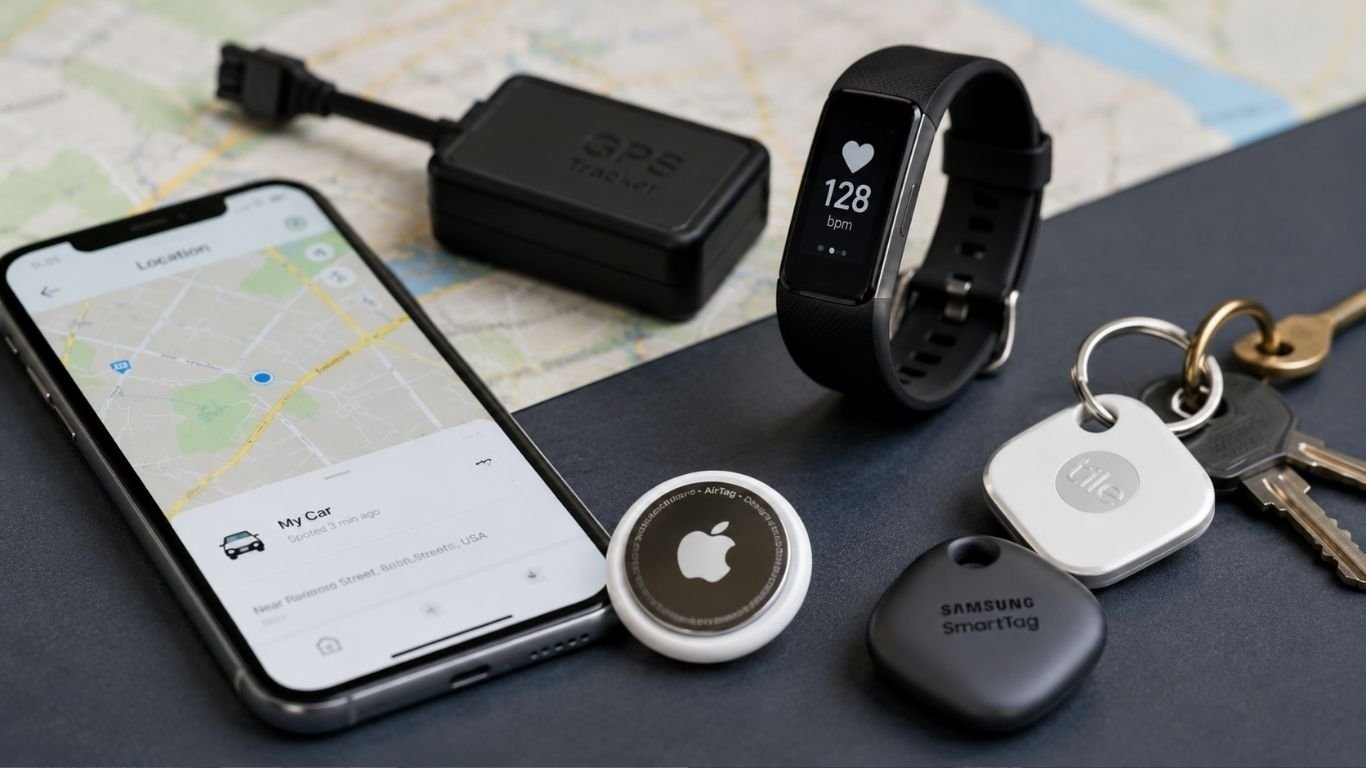
A Tracqueur is a tool that helps track a place, object, person, pet, or activity. It may be a GPS unit in a car, a tag on a bag, or a watch on your wrist. Some trackers also work through apps and websites.
The idea is simple. A tracker gathers data and sends it to a phone, computer, or online account. You can then see where something is, how it moved, or what activity took place.
These tools are now common in travel, fitness, transport, pet care, and business. Yet each type works in its own way. Knowing the difference helps you choose the right one.
What Is a Tracqueur?
The word Tracqueur is often used as a broad name for a tracking tool. It does not point to one single device. Its meaning changes with the job it does.
A car tracker may show a live location on a map. A fitness band may count steps and watch sleep. A Bluetooth tag may help you find keys or a wallet. A pet tracker may help locate a dog that has left home.
Some trackers focus on place. Others focus on motion, health, or online use. That is why the term can cover many types of tech.
How Does Tracking Technology Work?
Most tracking tools follow a basic process. First, the device reads a signal or sensor. Next, it saves or sends the data. An app then turns that data into a map, chart, alert, or simple number.
A Tracqueur may use GPS, Bluetooth, Wi-Fi, mobile data, or motion sensors. Some models use two or more systems at the same time.
GPS is useful for outdoor location. Bluetooth is better for nearby items. Fitness bands use small sensors to track motion and body signals. The right method depends on the task.
GPS Trackers for Cars and Assets
GPS trackers are widely used in cars, vans, trucks, bikes, and work gear. They use signals from satellites to find a device on a map.
A GPS Tracqueur can show where a vehicle is and where it has been. Some systems can also send alerts when a car enters or leaves a set area. This feature is often called geofencing.
GPS works well over long distances. But many live trackers also need a mobile data link. That is how they send fresh location data to the user. Because of this, some devices come with a monthly fee.
Power is another point to check. A hardwired unit can use the vehicle battery. A small portable unit needs to be charged.
Fitness Trackers for Daily Health
Fitness trackers are made to follow body movement and daily habits. They often come as a watch, band, ring, or small clip.
This type of Tracqueur may count steps, track sleep, record heart rate, and log workouts. Some models also estimate pace, distance, or recovery.
The data can help users see simple patterns. You may notice that you walk less on workdays. You may also see that late nights lead to poor sleep scores.
Still, these devices are not medical tools. They can help with general habits, but they should not replace a doctor or a medical test.
Bluetooth Trackers for Keys and Bags
Bluetooth trackers are small tags made for items that are easy to lose. People often place them on keys, wallets, backpacks, suitcases, or camera bags.
A Bluetooth Tracqueur links to a phone through a low-power wireless signal. When the tag is close, the app may show that it is nearby. It may also make the tag play a sound.
Some tag systems can use a wider network of nearby phones or devices. If another device detects the lost tag, its location may be sent back to the owner.
Bluetooth tags are small and easy to carry. But they are not the same as full GPS units. They work best for nearby or commonly lost items.
Pet Trackers and Animal Safety
Pet trackers are often fixed to a collar. They can help owners find a dog or cat that leaves a safe area.
A pet Tracqueur may use GPS for outdoor tracking and Bluetooth for close range. Some models also record sleep or daily movement.
Safe-zone alerts can be useful. An owner may get a phone alert if the pet leaves the yard or another saved area.
Size matters here. A unit that fits a large dog may feel heavy on a small cat. Check the weight, battery, water rating, and collar fit before use. Signal coverage also matters if the pet spends time far from towns.
Tracking Tools for Business
Businesses use trackers to follow vehicles, tools, stock, machines, and delivery items. The goal is often simple: know where an asset is and cut down time spent looking for it.
A business Tracqueur can help a team see whether a tool is at a work site, in a van, or back in storage. A fleet system can help a manager view vehicle routes and arrival times.
This data can also help with planning. If staff know where equipment is, they can move it where it is needed faster.
But business tracking needs rules. Staff should know what is being tracked, why the data is needed, and who can view it.
Software and Online Tracking
Not every tracker is a small piece of hardware. Software can also track actions inside a website, app, or computer system.
A digital Tracqueur may record page visits, clicks, app use, or device events. This can help a company learn which parts of a service people use most.
But online tracking can raise privacy issues. Users may not know what data is being stored. Clear notices and fair controls help build trust.
A good rule is to collect only what is needed. Extra data can add risk without adding much value.
Main Benefits of a Tracqueur
Tracking tools can solve many small problems. They can help find a lost bag, follow a vehicle, watch a pet, or record a run.
They can also save time. A worker does not need to search several rooms for a tagged tool. A traveler can check whether a bag is nearby. A runner can compare this week’s pace with last week’s pace.
Some trackers can add a layer of security too. They cannot stop theft on their own, but alerts and location data may help an owner act faster.
The main value is simple: useful data when you need it.
Limits, Safety, and Privacy
A Tracqueur is useful, but no tracker is perfect. GPS can be less accurate indoors or near tall buildings. Bluetooth has a shorter range. Wearables may give estimates rather than exact health readings.
Battery life is another limit. A dead tracker cannot send new data. Mobile coverage can also affect some GPS units.
Privacy is just as important. Tracking a person without consent can be wrong and may break local law. Employers and families should use these tools with care.
Use strong passwords for tracking apps. Keep the software up to date. Review app permissions from time to time.
How to Choose the Right Tracqueur?
Start with one question: what do you need to track?
For a car that travels across town, GPS is often the best fit. For keys in the house, a Bluetooth tag may be enough. For steps and sleep, choose a fitness band or watch.
A good Tracqueur should fit the job, not just offer the most features.
Check battery life, size, signal type, app support, and fees. Also check how often the device sends a new location.
For outdoor use, water and dust protection matter. For pets, weight and comfort come first. For business use, user controls and reports may matter as much as the device itself.
FAQs
Is a tracker the same as GPS?
No. GPS is only one way to track something. A device may also use Bluetooth, Wi-Fi, mobile signals, or built-in sensors.
Can Bluetooth tags work far away?
A direct Bluetooth link has a limited range. Some tag networks can use nearby phones or devices to help report the location of a lost item.
Do GPS trackers need a fee?
Some do. Live GPS units often need mobile data to send location updates. That service may come with a monthly or yearly fee.
Are fitness trackers exact?
They are useful for trends such as steps, sleep, and heart rate. But readings can vary. They should not replace medical tests.
Are tracking devices safe to use?
Yes, when they are used for a clear and lawful reason. Use secure accounts, review app access, and respect the privacy of other people.

Reading a comic in another language once meant waiting for a fan translation or an official release. SnowMTL became known among manga, manhwa, and manhua readers because it offered a faster route: machine-made translations that helped people understand raw pages.
The name can now point to more than one thing. The older snowmtl.ru site was known as a machine-translation reader and source for translated comic content. That site now displays a message saying it is closed. A newer site at snowmtl.org works more like an AI manga translator, where users upload comic images and receive translated text from speech bubbles.
What SnowMTL Means Today
SnowMTL is best understood as a name linked with machine translation for Asian comics. MTL means “machine translation.” In this case, software reads text from manga, manhwa, manhua, or webtoon pages and turns it into another language.
That process is useful when no official translation is available. The newer site says it can translate uploaded comic images and return the lines in reading order, making it closer to an on-demand translator than a comic library.
Two Versions People Often Mean
People searching the term may be talking about two separate services. This matters because old forum posts, GitHub requests, and newer search results do not always describe the same product.
The older reader site
The original snowmtl.ru became known as a source for quickly translated comics. GitHub users asked for it to be added as a source in comic-reading apps, and some described it as fast and free even though the content used machine translation. The site now states that it is closed.
The newer AI translation tool
The current snowmtl.org site focuses on image translation. It asks users to upload a JPG, PNG, or WEBP page, choose a target language, and run the translation. The site says it uses GPT-4o vision to read speech bubbles and return translated text.
Why the Original Platform Became Popular
Speed was a big part of the appeal. Fans often find raw chapters before an English release appears. A rough machine translation can reveal what is happening before a polished release arrives.
The old SnowMTL also attracted attention because readers wanted it inside third-party manga apps. Public GitHub issues from 2024 and 2025 show repeated requests to add the site as a source. That does not prove the site was perfect, but it does show clear interest from comic-reading app users.
For some fans, quality came second to speed. They wanted to know what happened in a new chapter as soon as possible. Awkward English was often accepted if the main story could still be understood.
How the Current Translation Tool Works
The basic process is simple. A user uploads one comic page as an image. The tool scans the page, finds written text, and tries to understand what each line says. It then translates that text into the selected language.
SnowMTL says the system reads speech bubbles with GPT-4o vision and returns translations in seconds. Its homepage also lists common image formats and a 10 MB upload limit. The site presents the result in reading order, which can make a busy comic page easier to follow.
This workflow combines image recognition with language translation. Unlike copied text, comic dialogue is often trapped inside artwork, so the tool must detect the words before translating them.
Manga, Manhwa, Manhua, and Webtoons
These comic formats come from different places. Manga is linked with Japan, manhwa with Korea, and manhua with China. Webtoons are digital comics that often use a long vertical layout.
SnowMTL is aimed at users who read across these formats rather than only one type. The newer site specifically mentions manga, manhwa, and webtoons, while similar AI comic tools also support Chinese manhua. This shows how modern comic translation tools are being built for readers who move between several languages and formats.
The format can affect translation too. A vertical webtoon may place dialogue far apart, while a manga page can contain several small speech bubbles. The software must work out the reading order before the translated lines make sense.
Language Support and Everyday Use
The newer tool says users can choose from 10 languages. Its visible interface includes options such as English, Japanese, Korean, Chinese, Spanish, and others. That means the service is not limited to people seeking English translations.
A reader may use SnowMTL for a page that has not been translated yet or to compare a raw line with an existing version. Language learners can also check short dialogue, though machine output is not a perfect grammar lesson.
It can be especially handy for small tasks. You may want to understand one speech bubble, read an untranslated bonus page, or check a chapter preview. In those cases, waiting for a full fan or official translation may not make much sense.
What Machine Translation Does Well
Machine translation is strong at speed. It can process a short page far faster than a human team doing translation, editing, cleaning, and typesetting. For readers who mainly want the plot, that can be enough.
It can also handle basic dialogue when the source text is clear. SnowMTL and other AI comic tools aim to detect text inside images, translate it, and reduce manual work. Similar modern manga translators use OCR or image-reading systems for the same basic reason.
Still, fast does not mean flawless. Machine output is best seen as a reading aid. It gives access to meaning, but it may miss the style that makes a scene funny, tense, rude, or emotional.
Where MTL Can Get Things Wrong
Comics are hard to translate because short lines can carry a lot of hidden meaning. A character may drop the subject of a sentence. A joke may depend on a sound, name, cultural reference, or earlier scene.
An AI system can guess wrong in these cases. It may confuse the speaker, mistranslate a name, or make a formal line sound casual. Sound effects can also be hard to read when they are part of the artwork.
That is why SnowMTL should not be judged by the same standard as a finished official localization. Its main value is quick access. Accuracy can vary from page to page, especially when an image is blurry, the lettering is highly stylized, or the dialogue uses heavy slang.
Readers should pay extra attention when one translated sentence makes no sense beside the artwork. Sometimes the picture gives enough context to spot a bad translation before it changes how you understand the scene.
SnowMTL vs Human Translation
Human translators can read context across a full chapter. They can catch jokes, wordplay, slang, and character voice, then shape natural English without changing the intended meaning.
SnowMTL trades some of that care for speed. It can be useful when a reader wants a rough version now rather than a polished version later. For simple dialogue, the difference may feel small. For comedy, romance, historical speech, or complex fantasy terms, it can be much larger.
The best choice depends on the goal. Use MTL to understand a raw page quickly. Use an official or carefully edited human translation when exact wording, tone, names, and story details matter more.
There is also no rule saying readers must choose only one. Some people read a machine version first, then return to a professional translation later. The first version answers “what happened?” while the second can show what the dialogue was really trying to say.
Is It Safe and Legal to Use?
The translation technology itself is not the same thing as permission to copy or publish a comic. Copyright can still apply to the artwork, dialogue, characters, and original pages. Translating something does not automatically remove those rights.
Uploading a page so you can understand it is also different from taking full chapters and publishing translated copies for other people. Users should respect the rights of comic creators and publishers, and licensed editions remain the safest choice when they are available.
Privacy matters as well. If a tool requires an upload, avoid sending private art, client work, or unreleased material unless you understand the service’s terms.
The older SnowMTL reader model also created different questions because aggregator-style services may surface material without being the original publisher. Readers should check where a chapter came from before assuming it is an official release.
Who Will Find It Most Useful?
The tool suits readers who follow raw manga, manhwa, manhua, or webtoons and do not want to wait for a translation. It can also help anyone who only needs the basic meaning of a few panels.
Language learners can use SnowMTL as a second opinion, not as the final answer. Scan the line, compare the output, and check a dictionary or grammar source when something looks odd. That makes machine translation more useful for study.
For professional translators or publishers, it makes more sense as a rough first pass. Final copy still needs human review, especially for names, jokes, speech style, cultural references, and terms that appear many times across a story.
Casual readers are likely to get the most value from it. If the goal is simply to understand what a character said on one untranslated page, an instant AI translation can solve the problem with very little work.
Final Thoughts
SnowMTL has changed from the name of a well-known MTL reader into a term now tied to a newer AI comic translation tool. The old snowmtl.ru site says it is closed, while snowmtl.org offers image-based translation for comic pages.
Its appeal is easy to understand. Readers want fast access to stories that may not yet exist in their language. Machine translation can fill that gap, but it works best when readers accept its limits.
A clean image and simple dialogue may translate well. A page packed with slang, jokes, unusual names, or stylized lettering can be much harder. In those moments, the machine gets you part of the way there, while the final few details may still need a human eye.

Straightforward Talk Guide: Simple Ways to Speak With Clarity

Speakrj.com: A Simple Guide to Social Media Analytics and Auditing

Yenkly com: A Complete Guide to Its Content and Main Topics
Who Is Gale Burnick? The Story Of George R. R. Martin’s Ex Wife

Who Is Alicia Dove? The Life Story Of Corey Taylor’s Wife

Meet Carole Rogers: Everything to Know About Kenny Rogers’ Daughter
-
Celebrity2 months ago
Who Is Gale Burnick? The Story Of George R. R. Martin’s Ex Wife
-
 Celebrity2 months ago
Who Is Alicia Dove? The Life Story Of Corey Taylor’s Wife
-
 Celebrity2 months ago
Meet Carole Rogers: Everything to Know About Kenny Rogers’ Daughter
-

 Celebrity2 months ago
Who Is Demacio Castellon? Life Story Of Nelly Furtado’s Ex Husband
-

 Celebrity2 months ago
Who Is Anna Hillinger? The Full Life Story Of Mike Shinoda’s Wife
-

 Celebrity2 months ago
Who Is Sydney Davis? The Full Story Of Billy Bush’s Ex Wife
-

 Celebrity2 months ago
Who Is Hermann Nicoli? The Full Story Of Candice Swanepoel’s Former Fiancé
-

 Celebrity2 months ago
Who Was Jan Ashley? The Complete Life Story Of Robert Kardashian’s Ex-Wife