
Business
Leveraging Data-Driven Tools for Human Services


Core Architecture of Data-Driven Tools for Human Services
Providing comprehensive and effective human services is a complex endeavor. We know that fragmented data across various agencies often creates significant challenges. These silos can hinder coordinated care and delay vital support for those in need.
This is where Data Hub Integrated Solutions become essential. They offer a transformative approach to unifying disparate information. By bringing together data from various sources, these solutions provide a complete and accurate view of client needs and program outcomes. This unification is crucial for improving service delivery, optimizing resource allocation, and fostering better collaboration among teams.
In this extensive guide, we will explore how Data Hub Integrated Solutions address these critical challenges. We will delve into their core architecture, examine different implementation models, and highlight their role in supporting ethical AI and compliance. Our aim is to provide a clear understanding of how these powerful tools can modernize human services, leading to more efficient, impactful, and client-centric outcomes. We will also look at how they can enhance program monitoring and offer real-time data accessibility for better decision-making.
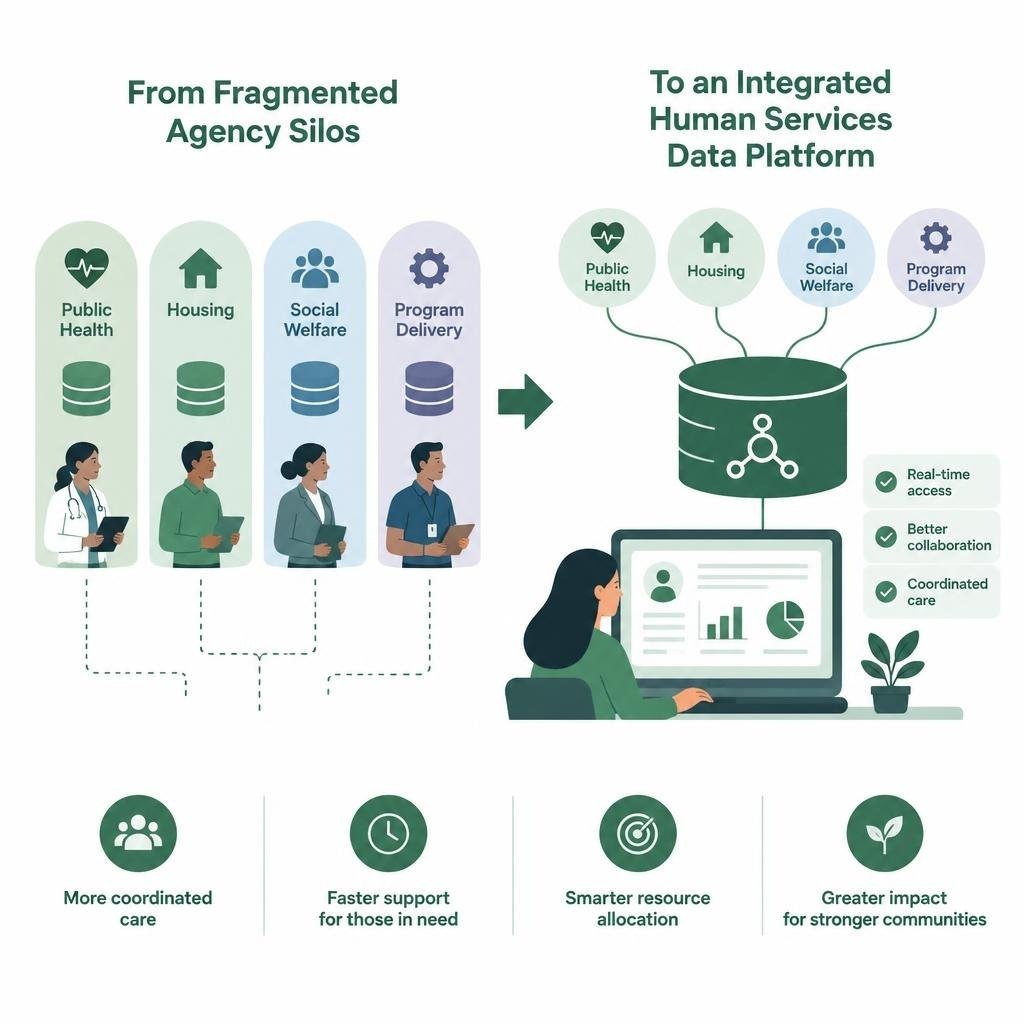
A data hub architecture serves as a central clearinghouse, collecting and integrating data from numerous disparate sources to serve specific consumer decisions. In human services, this means consolidating information from public health, housing, social welfare, and program delivery systems into a unified, organized, and efficient view. Unlike traditional data warehouses, which primarily focus on structured, historical data for analytical reporting, or data lakes, which store raw data in its native format, a data hub is designed for active integration, real-time access, and decision-focused outcomes.
Data hubs are built to address the pervasive challenge of data silos, which remain a significant obstacle for timely decision support in public sector organizations. By providing a single pane of glass, they enable comprehensive data stewardship, streamline API management, and often leverage multi-tenant infrastructures to support various agencies or departments within a larger human services framework. This architecture is particularly adept at handling hybrid-cloud environments, integrating data from on-premises legacy systems with modern cloud-based applications. The emphasis is on reducing noise and improving decision performance by ingesting only the necessary data for specific consumers, rather than simply consolidating everything.

Hub-and-Spoke vs. Bus Integrated Data Systems
When designing a data hub for human services, a critical architectural decision involves choosing between a hub-and-spoke model and a bus architecture. Each approach offers distinct advantages depending on governance needs, data specificity, and performance requirements.
The hub-and-spoke model positions the data hub as the central point of reference for all data interactions. Data flows from various source systems (spokes) into the central hub, where it is harmonized, governed, and then distributed to consuming applications or users (other spokes). This architecture is often preferred for human services due to its ability to enforce tight governance and provide faster access to curated data for specific consumer needs. It effectively eliminates brittle point-to-point integrations, reducing maintenance complexity and ensuring a consistent view of critical client information. For instance, a child welfare agency might use a hub-and-spoke model to centralize all case management data, ensuring strict access control and data quality before sharing it with authorized partners.
In contrast, a bus architecture typically involves a broader data warehouse or a more generalized integration layer where data is aggregated from multiple sources. While it still aims to integrate disparate data, it might not always have the same consumer-centric reference or the tight governance mechanisms inherent in a hub-and-spoke model. A bus architecture can be suitable for broader data inclusion, such as aggregating public health statistics for general research or policy analysis, where the immediate need for highly specific, tightly governed data for individual client decisions is less critical.
Choosing between these two depends on the specific context:
- Hub-and-Spoke: Ideal for scenarios requiring stringent data governance, high data specificity for particular decision-makers (e.g., caseworkers, program managers), and optimized query performance for critical operational tasks.
- Bus Architecture: More appropriate for broader data aggregation, enterprise-wide analytics, and situations where data inclusion across a wider range of sources is prioritized over granular control for specific use cases.
Here’s a comparison to illustrate their differences:
Feature Hub-and-Spoke Architecture Bus Architecture Governance Tighter control, consumer-centric, policy enforcement Broader aggregation, less granular control Scalability Scales well for specific use cases, manageable complexity Can become complex with many sources, broad inclusion Latency Faster access to curated data for specific needs May have higher latency for specific queries Integration Centralized integration point, reduces point-to-point Aggregates data in a broader warehouse Data Flow Ingress, transformation, egress through central hub Data aggregated into a central repository Use Case Operational reporting, specific decision support Enterprise analytics, general data exploration The choice hinges on aligning the data hub design with the specific business value chain and functional units within human services, ensuring that the architecture supports timely, decision-focused outcomes.
Ingesting Disparate Public Sector and Hybrid-Cloud Data
One of the primary challenges Data Hub Integrated Solutions address is the seamless ingestion of data from diverse environments, including on-premises legacy systems, various cloud platforms, and hybrid infrastructures. This capability is paramount for human services agencies that often operate with a mix of older, specialized software and newer cloud-based applications.
Data hubs facilitate this integration through a variety of mechanisms:
- Batch Processing: For large volumes of historical data or scheduled updates, batch processing remains a fundamental method. Data is collected over a period and then processed in bulk, ensuring that the hub is regularly updated with foundational information.
- Event Streaming: For real-time decision-making, event streaming technologies are crucial. Tools like Apache Kafka or NiFi enable data to be ingested continuously as events occur, providing immediate updates on client status, program changes, or emerging needs. This is vital for applications requiring instant insights, such as real-time dashboards for service capacity or urgent intervention alerts.
- Schema Mapping and Transformation: Disparate data sources often come with inconsistent schemas. Data hubs employ sophisticated schema mapping and transformation capabilities to harmonize this data, ensuring consistency and usability across the integrated environment. This involves defining how data elements from different sources relate to each other and applying rules to standardize formats and values.
- Serverless Ingestion: Modern data hubs increasingly leverage serverless functions (Function-as-a-Service, or FaaS) for flexible and scalable data ingestion. This allows for event-driven processing without managing underlying infrastructure, making it easier to integrate new data sources on demand.
- Multi-Source Integration: Data hubs are designed with connectors and APIs to integrate with a vast array of systems, from relational databases and flat files to NoSQL databases, SaaS applications, and IoT devices. This multi-source capability is key to building a comprehensive view of clients and services.
- Metadata Extraction: Critical for effective data governance, metadata extraction involves automatically collecting information about the data itself—its source, structure, quality, and lineage. This metadata is then used to catalog and manage the data within the hub, making it discoverable and understandable for various users.
Hybrid-cloud infrastructures are increasingly adopted for data integration in the public sector, allowing agencies to maintain sensitive data on-premises while leveraging the scalability and advanced analytics capabilities of the cloud. Data hubs act as the bridge, ensuring secure and efficient data flow between these environments. For example, the Dubai Electricity and Water Authority (DEWA) undertook one of the world’s largest SAP HEC migrations in the utilities sector, transferring over 100 terabytes of data from 101 systems to a Data Hub Integrated Solution. This massive undertaking, involving nearly 250,000 man-hours, demonstrates the scale at which modern data hubs can integrate complex, disparate systems.
Modernizing Service Delivery with Integrated Data Systems
Data Hub Integrated Solutions are not just about technical integration; they are about fundamentally transforming how human services are delivered. By providing a unified, trusted view of data, these solutions empower agencies to move from reactive responses to proactive interventions, fostering innovation, improving client outcomes, and enhancing operational efficiency.
The benefits extend across several critical areas:
- Enhanced Inter-Agency Collaboration: Data hubs break down the traditional silos that impede collaboration. When data from different agencies (e.g., social services, healthcare, education) is integrated, caseworkers gain a holistic view of a client’s needs, enabling more coordinated and effective support. This shared understanding facilitates cross-departmental coordination, ensuring that all involved parties are working with the same, up-to-date information.
- Holistic Casework: With a comprehensive data profile for each client, caseworkers can better understand the full spectrum of challenges and resources available. This leads to more personalized and effective service plans, addressing underlying issues rather than just symptoms.
- Predictive Intervention: By analyzing integrated data, agencies can identify patterns and risk factors, allowing for predictive analytics. This enables early intervention strategies, targeting resources to individuals or communities most at risk before crises escalate.
- Operational Efficiency: Automating data integration and synchronization reduces manual data entry, reconciliation, and error correction. This frees up staff time, allowing them to focus more on direct client support and strategic initiatives rather than administrative tasks.
- Innovation and Growth: Access to reliable, integrated data fuels innovation. Agencies can experiment with new programs, measure their effectiveness accurately, and scale successful initiatives based on evidence. This data-driven approach supports continuous improvement and adaptive service models.
The sheer scale of projects like DEWA’s migration, which involved testing over 28,370 business transactions, underscores the potential for data hubs to drive qualitative shifts in digital solutions. This kind of integration enables agencies to make faster, evidence-based decisions, ultimately leading to better service for communities.
Implementing Data-Driven Tools for Human Services in Child and Family Welfare
In the critical domain of child and family welfare, Data Hub Integrated Solutions offer profound benefits, enabling more responsive and effective services. These solutions address the challenge of disparate data sources—such as enrollment records, attendance logs, caseworker notes, and benefit eligibility information—which often reside in separate, unconnected systems.
By consolidating this information into a central hub, agencies can achieve:
- Early Intervention: Integrated data allows for the early identification of at-risk children and families. By analyzing patterns across health, education, and social service records, agencies can proactively offer support before situations escalate.
- Comprehensive Case Tracking: Caseworkers gain a unified view of each child and family’s history, current status, and interactions with various services. This eliminates the need to navigate multiple systems, reducing administrative burden and ensuring that all relevant information is considered in decision-making.
- Real-time Program Monitoring: For program managers, a data hub can generate real-time dashboards on service capacity, program utilization, and outcomes. For instance, a public-sector agency consolidating child-care enrollment data into a hub can generate real-time capacity dashboards, allowing for immediate adjustments to resource allocation or waitlist management. This real-time data accessibility is crucial for making timely, informed decisions that directly impact service delivery.
- Streamlined Benefit Eligibility: Integrating data from income, housing, and family composition records can automate and expedite the determination of eligibility for various support programs, ensuring families receive assistance promptly.
Data silos remain a major obstacle for timely decision support in public sector organizations, particularly in child and family welfare where swift, informed actions can be life-changing. Data hubs overcome this by providing a single, trusted source of truth, facilitating seamless collaboration between data engineers, data scientists, developers, and, most importantly, the caseworkers and business users on the front lines.
Enhancing Resource Allocation and Community Intervention
Data Hub Integrated Solutions play a pivotal role in optimizing resource allocation and designing effective community interventions. By aggregating and analyzing data from diverse sources, these solutions provide a granular understanding of community needs, enabling agencies to deploy resources strategically and respond to crises more effectively.
Key applications in this area include:
- Crowd Analytics and Public Safety: For large public events or urban planning, data hubs can integrate various data streams (e.g., sensor data, social media, transportation) to perform scalable crowd analytics. This enables municipal agencies to manage public spaces, ensure safety, and optimize resource deployment during emergencies. The insights gained can also be applied to crime prevention and control by identifying high-risk areas or patterns.
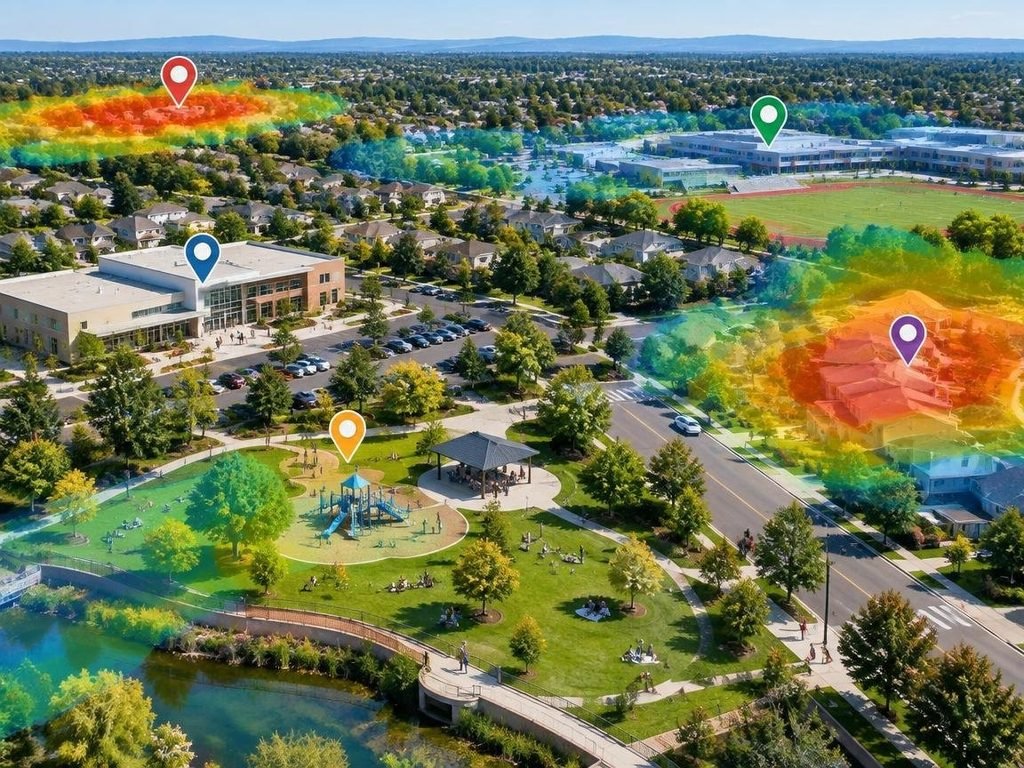
- Geographic Data Integration: By linking service demand with geographic information, agencies can visualize unmet needs in specific neighborhoods, identify service deserts, and plan the optimal placement of new facilities or mobile outreach programs.
- Needs Assessment and Capacity Planning: A unified data hub allows agencies to conduct comprehensive needs assessments across populations. This involves integrating demographic data, health indicators, economic metrics, and service utilization rates. With this holistic view, agencies can accurately assess the demand for various services and plan their capacity accordingly, ensuring resources are allocated where they are most needed.
- Crisis Response: During public health emergencies or natural disasters, data hubs can rapidly integrate real-time information on affected populations, available resources, and logistical challenges. This supports agile decision-making for deploying aid, coordinating emergency services, and communicating with affected communities.
To ensure municipal agencies can effectively leverage data for these critical functions, several core data integration benchmarks are essential:
- Data Quality Assurance: Implement continuous monitoring and validation to ensure accuracy, completeness, and consistency of all ingested data.
- Real-time Synchronization Capabilities: Prioritize solutions that offer real-time or near real-time data flow to support immediate decision-making, especially during crisis events.
- Comprehensive Metadata Management: Establish robust metadata practices to ensure data discoverability, understanding, and proper usage across various departments.
- End-to-End Data Lineage: Maintain clear visibility into the origin, transformations, and destinations of all data to support auditability and trust.
- Granular Access Control: Implement fine-grained, role-based access controls to protect sensitive client information while enabling necessary data sharing.
- Scalability and Performance: Ensure the data hub architecture can scale to handle increasing data volumes and user demands without compromising performance.
- Interoperability Standards: Adopt and enforce data exchange standards to facilitate seamless integration with diverse external systems and partners.
By adhering to these benchmarks, human services agencies can build a robust, data-driven foundation for more effective resource allocation and community intervention.
Supporting Ethical AI and Context-Aware Decision Frameworks
The rise of artificial intelligence (AI), machine learning (ML), and especially agentic AI systems, presents both immense opportunities and significant challenges for human services. Data Hub Integrated Solutions are becoming the foundational layer for these advanced technologies, providing the trusted, governed context necessary to ensure ethical, accurate, and impactful AI applications.
Without a robust context platform, AI/ML projects face significant hurdles. Research indicates a staggering 24% lower AI/ML project failure rate due to context issues when using a dedicated context platform. Furthermore, such platforms lead to 119% more AI/ML models reaching production, highlighting their critical role in operationalizing AI. The accuracy of AI agents also sees a nearly 2X increase when leveraging a context platform like DataHub Cloud.
Data hubs provide this essential context by unifying fragmented metadata, business knowledge, and operational data into a cohesive “context graph.” This graph allows AI systems to access not just raw data, but also its meaning, relationships, and associated governance rules. This is crucial for:
- Context Graphs: These knowledge representations map assets, measurements, and events, allowing AI to understand the intricate relationships within human services data. This enables more sophisticated analyses and more accurate predictions.
- Semantic Models: By embedding semantic meaning into data, AI can interpret information more intelligently, moving beyond keyword matching to understanding intent and relationships.
- Automated Reasoning: With a rich context layer, AI systems can perform automated reasoning, drawing logical conclusions from integrated data to support decision-making, such as identifying potential risks or recommending appropriate interventions.
- Algorithm Transparency: A well-governed data hub provides the lineage and metadata necessary to understand how data is used by AI models, fostering transparency and trust in algorithmic outputs.
Data hubs transform raw data into “smart data” that AI agents can reliably interpret and act upon, ensuring that these powerful tools are used responsibly and effectively in human services.
Role of Data-Driven Tools for Human Services in AI Governance
The integration of AI into human services demands stringent governance to ensure fairness, privacy, and accountability. Data Hub Integrated Solutions are indispensable in establishing this governance, particularly for agentic AI systems that make autonomous decisions or recommendations.
A key concern with AI, especially large language models, is the potential for “hallucinations”—generating inaccurate or fabricated information. Data hubs mitigate this risk by providing a single source of truth, offering traceable, governed “golden records” via APIs and specialized protocols like the Model Context Protocol (MCP). This ensures that AI agents operate on live, accurate data rather than outdated or untrustworthy information.
For human services, this means:
- Model Accuracy: By feeding AI models with high-quality, context-rich data, data hubs significantly improve their accuracy. This is critical when AI is used to assess risk, recommend interventions, or allocate resources.
- Decision Context: AI agents need to understand the full context of a situation to make appropriate recommendations. Data hubs provide this by integrating technical context (schemas, lineage), operational context (freshness, quality scores), and business context (glossaries, governance policies, runbooks).
- Bias Mitigation: A well-governed data hub allows for the systematic identification and mitigation of biases in data. By tracking data lineage and applying quality checks, agencies can ensure that AI models are trained on representative and unbiased datasets.
- SME Validation: Platforms like DataHub Cloud incorporate a “Context Hub” review workflow, allowing subject-matter experts (SMEs) to validate and refine auto-generated definitions and context. This human oversight is crucial for ensuring that AI outputs align with ethical guidelines and program objectives. Industry facts highlight that 82% of IT and data leaders believe agentic AI cannot reach production value without a context platform, underscoring the necessity of this governed approach.
Knowledge Graphs and Automated Lineage for Compliance
Compliance with privacy regulations (like HIPAA, GDPR, or local public sector mandates) and internal policies is non-negotiable in human services. Data Hub Integrated Solutions provide the robust framework needed to manage data quality, metadata, and compliance through advanced features like knowledge graphs and automated lineage tracking.
A knowledge graph serves as a digital nervous system, connecting assets, data, and agents through a unified semantic layer. For human services, this means mapping relationships between clients, services, providers, outcomes, and regulations. This comprehensive map allows for:
- Metadata Management: All data entering the hub is enriched with metadata—information about its source, ownership, quality, and classification (e.g., sensitive, public). This metadata is crucial for data discovery and governance.
- Automated Lineage Tracking: Data hubs automatically track the journey of data from its source system, through various transformations, to its final consumption point. This “trusted lineage, from pipeline to prompt” provides an indisputable audit trail, essential for demonstrating compliance and understanding the impact of data changes.
- Policy Enforcement: Governance policies and access rules can be embedded directly with the data or managed centrally within the hub. Features like granular role-based access controls ensure that only authorized individuals or AI agents can access specific datasets. This is particularly vital for protecting sensitive client information.
- Audit Trails and Reporting: Every data access, modification, and transformation is logged, providing comprehensive audit trails. This simplifies compliance reporting and allows agencies to quickly respond to audit requests.
- Privacy Enforcement: Data hubs facilitate data anonymization and pseudonymization techniques, allowing for analytical use of data while protecting individual privacy. They also support consent management, ensuring that data usage aligns with client permissions.
MarkLogic, for example, offers enterprise-grade encryption, data lineage, granular role-based controls, and audit capabilities, supporting scalability to hundreds of billions of triples in a knowledge graph. Similarly, DataHub ensures “always current governance” by integrating real-time context events and enabling experts to review and approve new metric definitions. This proactive approach to governance, combined with automated lineage, ensures that human services agencies can maintain high standards of data quality, privacy, and compliance in an increasingly complex data landscape.
Frequently Asked Questions About Integrated Human Services Data
How do integrated data hubs differ from traditional data warehouses in human services?
Integrated data hubs represent a significant evolution from traditional data warehouses. While data warehouses are primarily designed for structured, historical data analysis and reporting, data hubs are built for real-time, multi-model data integration and operational querying. They can ingest data “as-is” from diverse sources (structured, unstructured, semi-structured), including data lakes, and then curate, harmonize, and synchronize it for immediate use by various applications and AI agents. For human services, this means moving beyond just historical reporting to enabling real-time client interventions, predictive analytics, and dynamic program adjustments.
How is client data privacy maintained across inter-agency integrations?
Maintaining client data privacy is paramount for human services. Data hubs employ several layers of security and governance to ensure this:
- Identity Resolution: Securely linking client records across systems without exposing personally identifiable information (PII).
- Role-Based Permissions: Granular access controls ensure that only authorized personnel or systems can view specific data elements based on their role and need-to-know.
- Consent Management: Tracking and enforcing client consent for data sharing and usage across different services.
- Data Anonymization/Pseudonymization: Techniques to mask or encrypt PII when data is used for analytics or shared with external partners.
- Zero-Trust Security: Assuming no user or system is inherently trustworthy, requiring verification for every access attempt.
- Audit Logging and Lineage: Comprehensive logs of all data access and transformations provide accountability and detect unauthorized activity.
What are the operational prerequisites for implementing automated data pipelines?
Successful implementation of automated data pipelines within a data hub requires careful planning and foundational elements:
- Understanding Data Consumers and Decision Needs: Clearly identify who will use the data and what decisions they need to make. This consumer-driven approach ensures the hub delivers relevant value.
- Stakeholder Alignment: Secure buy-in from all relevant agencies and departments, fostering a collaborative environment for data sharing and governance.
- Data Literacy: Invest in training for staff across all levels to understand data concepts, tools, and the importance of data quality.
- Addressing Legacy Infrastructure: Plan for integrating or modernizing older, on-premises systems that may not be designed for real-time data exchange.
- Governance Protocols: Establish clear policies for data ownership, quality, security, and usage from the outset.
- Data Validation and Quality Checks: Implement automated processes to ensure data accuracy and consistency at every stage of the pipeline.
- Metadata Management: Develop a robust metadata strategy to catalog, describe, and manage all data assets within the hub, making them discoverable and understandable.
Conclusion
The journey towards truly integrated, client-centric human services hinges on the effective deployment of Data Hub Integrated Solutions. We have seen how these architectures move beyond the limitations of traditional data silos, data warehouses, and data lakes, offering a dynamic, unified platform for decision-making. From enabling seamless inter-agency collaboration and holistic casework to providing the trusted context essential for ethical AI and robust compliance, data hubs are transforming the landscape of public service.
By carefully considering architectural choices like hub-and-spoke models, mastering the complexities of hybrid-cloud data ingestion, and prioritizing strong governance and lineage, human services agencies can unlock unprecedented levels of efficiency and impact. The ability to provide real-time, accurate data empowers caseworkers, informs policy-makers, and ultimately leads to better outcomes for the communities we serve. As we look towards October 2026 and beyond, the adoption of these integrated solutions will be critical for fostering evidence-based policy, optimizing service delivery, and building public trust in a data-driven future.


Four tracksuits, every one of them sitting at CA$210, and a couple of clicks away a hoodie listing where nothing climbs past CA$150. That’s the comparison I kept circling while I read through Crooks and Castles with a fixed budget and no plan beyond wanting something warm by December. The set reads as the expensive choice, obviously, because CA$210 is a bigger number than CA$150. Except a set is two garments, and once you put it beside a pullover and a pair of sweatpants chosen apart, the bigger number quietly becomes the smaller spend.
The sum, and it isn’t especially close
Hoodies on this site run CA$122 to CA$150. Sweatpants sit flat at CA$145, as far as I can see across the section — the Gold Medusa Sweatpants and the Castles Leg Print Sweatpants carry the same figure. Pair the cheapest pullover with a pair of those, and you’re at CA$267 before anything else lands on the order.
| Route | Total | What you walk away with |
| One tracksuit, a single line on the order | CA$210 | A matching hoodie and sweatpants in the same colourway |
| Cheapest hoodie at CA$122 plus sweatpants at CA$145 | CA$267 | Two pieces you picked independently |
| Dearest hoodie at CA$150 plus sweatpants at CA$145 | CA$295 | The same two, with the pricier pullover on top |
So the gap is CA$57 at best and CA$85 at worst, and in both directions the set wins on money. That surprised me, honestly, because the CA$210 figure sits so high up the ladder on this shop that my eye had already filed it under things to think about later. Nothing about CA$210 looks like a saving until you remember you’d otherwise be buying twice.
Nobody publishes what half a set costs
Here’s the part that annoyed me. There’s no price anywhere for one half of a tracksuit on its own. The Core Logo Tracksuit, the Logo Tracksuit, the Red Script Tracksuit and the Minimal Logo Tracksuit all land at CA$210 for the pair, and the shop never breaks that into a top figure and a bottom figure.
Which means you can’t check your own arithmetic. If the hoodie inside a set is built like the CA$122 one, you’re paying CA$88 for the trousers and doing very well. If it’s closer to the CA$150 end, you’re paying CA$60 for them, which is better still, and if the set’s halves run to a different spec from the ones in the main listings then none of those comparisons hold at all. I can’t tell from the page. Neither can you. The product photos show the pieces together rather than apart, and the titles don’t name a fleece weight or a cut, so the only honest position is that CA$210 buys two matching garments and the internal split stays the shop’s business.
Who the matching pair actually suits
A set is one decision. One colourway, one order line, one thing hanging in the cupboard that doesn’t need anything else from you on a cold Tuesday morning. If your mornings are rushed, that’s worth real money.
It also solves a problem this catalogue creates. Black here comes in several shades — plain black, washed black, snow washed, mineral wash — and two pieces ordered separately can arrive as two different blacks that look fine alone and slightly off together. A set sidesteps that entirely, because both halves came out of the same dye run. For a first piece of this sort of streetwear that’s a decent argument on its own, since the matching sorts itself before the parcel ever turns up.
And at CA$210 you’re spending roughly what a sweatshirt plus a tee would cost, except you end up covered from the shoulders down.
Where two separates win
Flexibility, mostly. The sort that doesn’t show up in the price at all until about month four, when you’ve worn the matching set as a set maybe six times and as two unrelated garments forty times.
- Sizing is the big one. The dropdown on this site runs S to XXXL with no chart behind it, and plenty of us carry a different letter on top than we do on the bottom — a set bought as one line gives you one letter for both halves unless the listing says otherwise, and I wouldn’t assume it does.
- Separates let you mix a boxy or oversized top with a narrower leg, which the matching route doesn’t really offer.
- If one half wears through, you replace one half. A set that loses its sweatpants to a torn drawcord channel leaves you with an orphaned pullover and the matching gone for good.
| Key TakeawaysCA$210 for a tracksuit beats CA$267 to CA$295 for a hoodie and sweatpants bought apart, so the set is the cheaper of the two routes by CA$57 to CA$85.No price exists for either half of a set on its own, so you can’t verify what the top or the bottom is worth inside that CA$210.Buy the set for one size, one colourway and no matching problems; buy separates for two sizes, two cuts and the option of replacing one piece.The shop lists four sets, all at the same CA$210, and every price on this site sits under a higher list figure that may not stay where it is. |
Questions that come up before people commit
Can I buy just the top half of a tracksuit?
Not as a priced option on the set’s own page, no. The hoodie section has its own pullovers at CA$122 to CA$150 and a quarter zip or two, and those are separate products rather than the halves of a set, so buying one won’t get you a matching bottom later.
Is the saving worth giving up the choice?
Depends how much you’d use the matching. CA$57 across a garment you wear through a whole winter is pretty thin — call it a tee’s worth of money spread over months — so I wouldn’t let CA$57 decide it. Pick the route that fits how you dress and treat the saving as a bonus.
What about delivery on top of either total?
I’m not putting a number on that. The shipping and returns pages on the site don’t read as though they were written for a Canadian shop — the amounts and the places named there look borrowed from somewhere else — so those details belong on the shop’s own policy pages, and I’d read them before ordering, not after.
What I’d order, and why
Is this my first piece from the shop? Then I take the set. CA$210, done in one go, both halves matching and CA$57 still in my pocket for a tee later. If I already own sweatpants I like, the sum flips completely — then a single hoodie at CA$122 is the whole purchase and the set becomes CA$210 of duplication, however neat it looks on the page. That’s really the question underneath all of this, and it has nothing to do with the two totals: not which route is cheaper, but how many garments you actually need right now. Work that out first and the CA$57 sorts itself.

Eighty-five pieces sit in this shop, and that number is the real obstacle — not the prices, not the sizing, just the length of the scroll. I counted them because the grid never tells you where it stops, and somewhere past the fortieth photo my eyes quietly gave up on the difference between one washed black tee and the next one down. So here is the sorting order I’d use on Crooks and Castles with twenty minutes and a ceiling in mind, rather than a free afternoon and no plan.
What a single tile hands you
A photo, a product name, a crossed-out number and a lower one. That’s it, more or less. Click through and a size dropdown appears running S, M, L, XL, XXL and XXXL, and after that the page runs out of things to tell you.
I spent a while looking for a size chart, clicking around the footer and the product tabs the way you do when you’re sure a link must be hiding somewhere, and there isn’t one on this site at all. No chest width. Nothing on body length or sleeve, and no fabric weight either, which is a shame when you’re trying to judge a hoodie from a photo on a phone screen. So the picture ends up carrying the whole load, and the product name carries whatever the picture can’t.
Five sections, stocked very unevenly
The Crooks and Castles grid splits into t-shirts, hoodies, sweatshirts, shorts and sweatpants. Tracksuits don’t get a tab of their own; the sets just sit inside the listings beside everything else, which is mildly irritating when a matching set is the thing you came for. And the five groups are nowhere near the same size.
| Section | Roughly how deep it runs |
| T-shirts | About two dozen, the biggest group by some way |
| Hoodies | Around twenty, from the Claw 02 Hoodie to the Box Logo Hoodie |
| Sweatshirts | Mid-teens, with the quarter zips and oversized cuts counted in |
| Sweatpants | Under ten, which is why they repeat in your shortlist |
| Shorts | Under ten as well, the shallowest section in the shop |
That shape is useful before you click a single thing. If a graphic tee is what you want, you’ve got real choice, and you can afford to be picky about the print. If you’re after sweatpants or shorts, the whole section fits on one screen, so the decision is small, and you can make it in a couple of minutes.
My first cut is the calendar
Shorts come off first. In Toronto or Montreal in November a pair of shorts is a purchase you’re storing for six months, and storing a CA$99 item isn’t wearing it, so I push that section aside unless the price has dropped far enough to be worth the wait. Tees survive the cut because they layer under a hoodie, which is pretty much what a tee does here from October onwards.
Reading the product titles like a spec sheet
With no measurements anywhere, the titles turn into the only written information you get, and they’re surprisingly chatty once you’ve read forty of them. Most run about six words. Those six words usually cover the finish, the cut and the graphic, which is more or less everything a description would have told you anyway.
Snow washed, mineral wash, washed black — those three keep turning up, and they’re all pointing at a faded surface instead of a flat solid colour. Raw edge, as in the Point Em Out Raw Edge Snow Washed Tee, is a hem nobody bothered to finish, and that’s on purpose, so don’t read it as a fault. Dolman and boxy and oversized (the CRKS Dolman Boxy Sweatshirt manages two of the three) mean a wider body, generally with a shorter sleeve hanging off it. Embroidered versus screen print is a construction note hiding in plain sight. And quarter zip, as in the Gothic Fade Quarter Zip, is telling you about the collar, which is what decides whether something layers under a coat or sits on top of everything.
The graphic families repeat across sections too — Medusa, Skull Bunny, Claw, Castles, Script Logo. The Greco Medusa Tee and the Gold Medusa Sweatpants aren’t sold as a set, but they clearly come from the same drawer, so once a print has caught your eye, typing that one word into the search box beats scrolling the grid a second time.
Eighty-five down to three
Here’s the order I actually work in, and it takes fifteen minutes rather than an evening. The shop spans CA$99 to CA$300, so a ceiling does a lot of the filtering for you on its own.
- I open only the two sections that match the season and leave the other three alone
- I set a ceiling, in CA$, and anything above it stops existing for the night
- I keep every piece whose name tells me something concrete, and skip the ones that only say logo
- I hold the survivors up against what’s already in my closet, because a second washed black hoodie isn’t really a new piece
- I go with the one I can picture on an ordinary Wednesday rather than the one that looks best in the photo
Three is a number you can decide between. Ten isn’t, honestly, and eighty-five is just noise. That last step sounds a bit soft, I know, but it’s where the money gets saved — the loudest print in the grid tends not to be the thing you reach for on a cold Tuesday morning when you’re already late.
| Pro Tip: If two listings look nearly the same in the grid, but the prices don’t match, the gap is usually about which section you’re in and not about the artwork. The same sort of print on a sweatshirt can sit sixty or seventy dollars above its version on a tee, so it’s worth noticing where you’re standing before deciding a number looks wrong. |
Frequently Asked Questions
Am I missing a size chart somewhere?
You’re not. The dropdown offers S through to XXXL and no measurements are published anywhere on the site — no chest, no length, no sleeve. It’s worth knowing that going in, because it means your own wardrobe becomes the reference point.
Where do the tracksuits hide?
Inside the ordinary listings, mixed in with the separates. There are a handful of them, the Core Logo Tracksuit and the Red Script Tracksuit among them, and a full set runs around CA$210 at the discounted price.
What about delivery and returns before I order?
Those terms live on the shop’s own shipping and returns pages, and I’d read them yourself rather than take a number from an article. Order questions go to the support address published on the site.
None of this makes the grid shorter, but it does make it something you can actually finish. Season, ceiling, name, and then a quick look at what’s already hanging in your closet — four passes, and you’re down to a handful of pieces you can genuinely choose between. Have a scroll with that order in mind and see how much faster the shop reads.

Introduction
As October 2026 brings cooler air and thoughts turn to winter comfort, or perhaps you’re already anticipating next spring’s warmth, one thing remains constant: your home’s heating, ventilation, and air conditioning (HVAC) system is its silent workhorse. We all desire a living space that feels just right – warm in winter, cool in summer, and always filled with fresh, clean air. Achieving this ideal indoor comfort isn’t magic; it’s the result of proactive care, much like ensuring a clean residential HVAC system through regular attention.
Seasonal HVAC maintenance is the secret to unlocking this consistent comfort, while also significantly boosting your system’s energy efficiency and extending its system longevity. Think of it as a routine health check-up for the very heart of your home, following a clear seasonal HVAC maintenance timeline.
In this extensive guide, we will explore why timely maintenance is crucial. We’ll outline the most important tasks for both spring/summer cooling and fall/winter heating. We’ll also discuss what you can easily handle yourself and when to rely on a professional. Prepare to discover how a small investment in seasonal care can lead to big savings and a healthier, more comfortable home year-round.
The Financial and Operational Impact of Seasonal HVAC Maintenance
Ignoring your HVAC system’s needs can have far-reaching consequences that extend beyond mere discomfort. The financial and operational impact of neglecting seasonal maintenance can be substantial, affecting everything from your monthly utility bills to the long-term health of your equipment.
One of the most immediate effects is on energy efficiency. Airflow problems alone, often caused by dirty filters or blocked vents, can reduce your system’s efficiency by up to 15 percent. Imagine paying an extra 15% on your energy bill each month simply because your system isn’t breathing properly. A dirty filter forces your blower to work harder, increasing energy consumption and accelerating wear and tear. Similarly, dirty evaporator and condenser coils diminish the system’s ability to transfer heat, making it run longer and consume more power to achieve the desired temperature. This continuous strain not only inflates utility expenses but also shortens the overall equipment lifespan.
Beyond efficiency, there are critical operational safety concerns. Faulty electrical connections, for instance, can lead to unsafe operation and reduce the life of major components. Improperly operating gas or oil connections are a serious fire hazard and can contribute to health problems, including carbon monoxide exposure. A dirty burner or a cracked heat exchanger can cause inefficient combustion and pose significant safety risks. Parts that lack lubrication create friction in motors, increasing electricity usage and causing premature failure. Even a seemingly minor issue like a plugged condensate drain can lead to water damage within your home and negatively affect indoor humidity levels.
Regular maintenance helps identify and address these issues proactively. By ensuring proper refrigerant levels, clean components, and secure electrical connections, your system operates as intended, leading to fewer breakdowns, lower repair costs, and a safer home environment. Professional heating and air conditioning inspections are invaluable for identifying these hidden problems before they escalate into costly emergencies. For a deeper dive into the benefits of such inspections, consider resources like Volpe Service, which emphasize comprehensive checks.
Let’s look at a comparison:
As you can see, the choice to invest in seasonal maintenance is an investment in your home’s comfort, safety, and your wallet.
Comprehensive Year-Round HVAC Preparation Guide
Preparing your HVAC system for the diverse demands of each season is key to ensuring consistent system readiness and optimal seasonal performance. As the year progresses through various weather transitions, a proactive approach to maintenance, including regular thermostat calibration, ensures your system is always ready to deliver comfort efficiently.
Spring and Summer Seasonal HVAC Maintenance Tasks
As the days lengthen and temperatures rise, your cooling system takes center stage. Spring is the ideal time to prepare your HVAC for the warmer months ahead.
- Clean or Replace Air Filters: This is a fundamental task that impacts both efficiency and indoor air quality. A clean filter ensures proper airflow and prevents dust buildup on internal components.
- Inspect and Clean Condenser Coils: The outdoor unit’s condenser coils can accumulate dirt, leaves, and debris, especially after winter. This grime acts as an insulator, hindering heat transfer. Cleaning these coils allows the system to dissipate heat more effectively, improving efficiency.
- Check Refrigerant Charge and Levels: Too much or too little refrigerant makes your system less efficient, increases energy costs, and reduces equipment life. A professional will verify the correct charge and check for leaks.
- Inspect Condensate Drain Lines: The condensate drain removes moisture from your home. A clogged drain can cause water backup, leading to leaks, water damage, and increased indoor humidity. Ensure it’s clear of obstructions.
- Examine Electrical Wiring and Connections: Loose or corroded electrical connections can be dangerous and cause components to fail. A technician will tighten connections and measure voltage and current on motors.
- Lubricate Moving Parts: Components like the blower motor and fan require lubrication to reduce friction, ensuring smooth operation and preventing premature wear.
- Test Thermostat Functionality: Ensure your thermostat is accurately reading temperatures and effectively communicating with your system to switch between cooling cycles.
Fall and Winter Seasonal HVAC Maintenance Checklist
As autumn leaves begin to fall and the chill of winter approaches, shifting focus to your heating system becomes paramount. Early fall, before the peak heating season, is the best time for these preparations.
- Inspect and Clean Heat Exchanger: This is a critical safety check for furnaces. A cracked heat exchanger can leak carbon monoxide into your home. Professionals will inspect it thoroughly for any signs of damage.
- Check Burner Combustion and Gas Valves: Proper burner combustion is essential for efficient and safe heating. Technicians will clean burners, adjust gas pressure, and ensure all gas valves are functioning correctly.
- Verify Flue Venting: The flue safely expels combustion byproducts. Ensure it’s free of obstructions and properly sealed to prevent dangerous gases from entering your home.
- Test Carbon Monoxide Detectors: With heating systems in operation, ensuring your carbon monoxide safety devices are working is non-negotiable. Test them and replace batteries annually.
- Inspect Electrical Connections: Just like with cooling systems, all electrical connections for your furnace need to be tight and secure to prevent hazards and ensure reliable operation.
- Clean or Replace Air Filters: Again, a clean filter is crucial for efficient heating and good indoor air quality.
- Check System Controls: Ensure all safety controls and the starting cycle of the heating system are operating as designed.
- Inspect and Clean Blower Components: The blower distributes heated air throughout your home. Cleaning and adjusting it ensures even heating and efficient airflow.
For comprehensive care of your home’s heating and ventilation systems, including detailed inspections and preventative maintenance, consulting specialists in residential heating and ventilation can provide peace of mind and ensure your system is ready for the coldest months. Arizona State HVAC is a great example of a company focused on residential systems.
Allocating Responsibilities: DIY Upkeep vs. Professional Servicing
Maintaining your HVAC system doesn’t have to be an all-or-nothing endeavor. Many tasks can be handled by a diligent homeowner, while others are best left to the expertise of a certified professional. Understanding this distinction is crucial for both safety and effectiveness.
The most common and impactful DIY task is filter replacement. Air filters should be inspected monthly and replaced every one to six months, depending on factors like household occupancy, pets, and local environmental conditions. During peak seasons or if you have allergies, replacing them every 1-3 months might be necessary. Choosing the correct MERV ratings (Minimum Efficiency Reporting Value) is also important; MERV 8-11 is suitable for most homes, while MERV 13 can offer better filtration for allergy sufferers, provided your system can handle the increased airflow resistance. A dirty filter can increase energy consumption by up to 15% and shorten your unit’s lifespan.
Other homeowner-friendly tasks include:
- Clearing debris from around the outdoor condenser unit (maintaining at least two feet of clearance).
- Ensuring indoor vents and registers are unobstructed by furniture or drapes.
- Testing your thermostat to confirm it switches between modes and holds temperature settings accurately.
- Checking carbon monoxide and smoke detectors regularly.
- Keeping the area around your furnace clear of flammable materials.
However, certain tasks require specialized tools, knowledge, and safety precautions, making them strictly for professionals. These include:
- Tightening electrical connections and measuring motor voltage/current.
- Lubricating motors and other moving parts.
- Inspecting and cleaning evaporator and condenser coils (beyond surface debris).
- Checking and adjusting refrigerant levels.
- Inspecting the heat exchanger for cracks or damage.
- Cleaning and adjusting burner components for gas or oil furnaces.
- Inspecting gas/oil connections and pressure.
- Checking condensate drain lines for blockages that are not easily accessible.
- Verifying system controls and starting cycles.
Here’s a comparison of typical DIY and professional tasks:
While DIY efforts contribute significantly to HVAC health, scheduling professional service at least once a year, ideally semi-annually (spring for cooling, fall for heating), is essential for comprehensive checks, safety assurances, and maintaining warranty validity.
Optimizing Indoor Air Quality and Humidity Across Seasons
Beyond temperature control, your HVAC system plays a vital role in maintaining optimal indoor air quality (IAQ) and humidity levels, which directly impact comfort and occupant health. Poor IAQ can exacerbate allergies, respiratory issues, and overall well-being.
A common target for indoor humidity is 40 to 50 percent relative humidity. This range is comfortable for most people and helps prevent the growth of mold and mildew, while also deterring static electricity and preserving wood furnishings. Humidified air also feels warmer than dry air at the same temperature, potentially allowing you to lower your thermostat a degree or two in winter and still feel cozy, saving energy. In dry winter climates, a whole-house humidifier can be integrated with your HVAC system to add moisture, while in humid summers, your AC acts as a dehumidifier. A plugged condensate drain, as mentioned earlier, can directly affect humidity levels.
To enhance IAQ, especially in today’s increasingly sealed homes, consider advanced solutions:
- Enhanced Filtration: Upgrading to higher MERV-rated filters (MERV 8-13) can capture smaller particles, including pollen, pet dander, and dust mites. For example, during Central Texas’s cedar pollen season (mid-December through February), a higher MERV filter can significantly reduce indoor allergens.
- ERV/HRV Ventilation: Energy Recovery Ventilators (ERVs) and Heat Recovery Ventilators (HRVs) are excellent for introducing fresh outdoor air into a sealed home while minimizing energy loss. ERVs transfer both heat and moisture, making them suitable for mixed climates, while HRVs primarily transfer heat, ideal for colder regions. These systems help dilute indoor pollutants without compromising energy efficiency.
- UV-C Lighting: Installing UV-C lighting inside your HVAC system, typically near the evaporator coil, can sterilize airborne contaminants like mold, bacteria, and viruses as they pass through. UV-C output drops after about 9,000 hours of operation, so bulbs need periodic replacement.
- Duct Sealing: Leaky ducts can draw in unfiltered air from attics, crawl spaces, or wall cavities, introducing dust, allergens, and other pollutants into your living space. Professional duct sealing ensures that all conditioned air reaches its intended destination, improving both IAQ and system efficiency.
By proactively managing these aspects, you create a healthier, more comfortable indoor environment year-round.
Distinguishing Residential and Commercial HVAC Maintenance Needs
While the fundamental principles of heating and cooling remain the same, there are significant differences between maintaining a commercial HVAC system and a residential one. These distinctions arise from scale, complexity, and the impact of system performance on occupants.
Scale and Equipment: Commercial HVAC systems are typically much larger and more complex. They often involve multiple units, such as commercial rooftop HVAC units, compared to the single split systems or package units found in most homes. The equipment tonnage (cooling capacity) is considerably higher for commercial applications, designed to condition vast spaces.
System Design and Controls: Commercial buildings frequently employ sophisticated multi-zone controls to manage different temperature requirements across various offices, retail spaces, or production areas. They might also integrate features like economizer dampening, which uses outdoor air for cooling when conditions are favorable, a feature rarely found in residential setups. Residential systems, while sometimes having multiple zones, are generally simpler in their control mechanisms.
Usage and Demands: Commercial systems operate under more strenuous conditions, often running continuously for longer hours with higher occupancy loads. This constant demand means they accumulate wear and tear more rapidly than residential systems. The consequences of a commercial system failure can be catastrophic, leading to lost productivity, damaged goods, or even closure of operations.
Maintenance Schedules and Goals: Commercial entities often adhere to more rigorous preventative schedules, sometimes quarterly or even monthly, to minimize downtime and ensure compliance with regulations. The primary goal extends beyond comfort to include maintaining occupant productivity, protecting sensitive equipment, and ensuring business continuity. Residential maintenance, while crucial, typically aims for comfort, energy savings, and system longevity, with semi-annual checks being the norm.
Specialized Components: Commercial systems may include specialized components like cooling towers, chillers, variable air volume (VAV) boxes, and complex building management systems (BMS) that require highly specialized expertise for maintenance and repair.
While both residential and commercial systems benefit from regular care, the scale, complexity, and stakes involved in commercial HVAC necessitate a more frequent, detailed, and specialized approach to maintenance.
Frequently Asked Questions
Understanding the nuances of seasonal HVAC maintenance often brings up common questions regarding operational costs, equipment reliability, and scheduling best practices. Here, we address some of these key inquiries to help you better manage your home’s comfort system.
How often should HVAC systems be professionally inspected?
For optimal performance, efficiency, and longevity, HVAC systems should be professionally inspected at least twice a year. This typically translates to a semi-annual frequency: once in the spring for a spring cooling tune-up and once in the fall for a fall heating inspection. Scheduling these pre-season check-ups ensures that your system is prepared for the demands of extreme temperatures, preventing unexpected breakdowns and maximizing efficiency when you need it most. This proactive approach also helps maintain any manufacturer warranties, which often require proof of regular professional maintenance.
What are the main consequences of skipping seasonal maintenance?
Skipping seasonal HVAC maintenance can lead to a cascade of negative outcomes:
- Efficiency Drop: Without regular cleaning and tuning, components like coils and filters become dirty, forcing the system to work harder. This results in a significant efficiency drop, increasing your energy bills. Airflow problems alone can reduce efficiency by up to 15%.
- Premature Failure: The added strain on neglected components leads to accelerated wear and tear, causing premature failure of parts or even the entire unit. This means you might need to replace your HVAC system years earlier than expected.
- Emergency Breakdowns: Untended minor issues can quickly escalate into major problems, often resulting in inconvenient and costly emergency breakdowns during peak heating or cooling seasons when repair services are in high demand and potentially more expensive.
- Higher Repair Costs: Neglected systems are more prone to costly repairs. A small, easily fixable issue identified during maintenance can become a major, expensive repair if left unchecked.
- Compromised Indoor Air Quality: Dirty filters and uncleaned ducts can circulate dust, allergens, and pollutants throughout your home, negatively impacting indoor air quality and occupant health.
- Voided Warranties: Many HVAC manufacturers stipulate that regular professional maintenance is required to keep your warranty valid. Skipping these services could mean you’re on the hook for full repair or replacement costs.
How often should air filters be replaced during peak seasons?
During peak heating and cooling seasons, when your HVAC system is running frequently, air filters should generally be replaced every 1-3 month intervals. However, this frequency can vary significantly based on several factors:
- Household Occupancy: Homes with more residents tend to generate more dust and require more frequent filter changes.
- Pets: Homes with furry friends will need filters changed more often due to increased pet dander.
- Allergies or Respiratory Conditions: If anyone in your household suffers from allergies or asthma, more frequent filter changes (and potentially higher MERV ratings) can help improve indoor air quality and reduce allergen reduction.
- Local Environmental Factors: High pollen counts, construction nearby, or living in a dusty area can necessitate more frequent replacements.
- Filter Type: Some higher-end filters are designed for longer lifespans, but checking them monthly is still a good practice.
A dirty filter restricts airflow, making your system work harder, increasing energy bills, and shortening its lifespan. It’s a simple, inexpensive task that yields significant benefits.
Conclusion
As we navigate through the seasons of 2026 and beyond, the message is clear: proactive seasonal HVAC maintenance is not merely a recommendation; it’s a fundamental pillar of home comfort, safety, and financial prudence. By embracing a strategy of regular care, both through diligent DIY efforts and professional inspections, we ensure our HVAC systems deliver consistent indoor comfort year-round.
The benefits extend far beyond a perfectly temperate home. We optimize system reliability, drastically reduce energy consumption through enhanced energy optimization, and significantly prolong the lifespan of our valuable equipment. From the meticulous cleaning of condenser coils in spring to the critical inspection of heat exchangers in fall, each task contributes to a healthier, more efficient living environment.
Proactive planning for your HVAC system is an investment in your home’s future. It prevents costly emergency repairs, safeguards against potential health hazards, and ensures that your home remains a sanctuary of comfort, no matter what the weather outside brings. Make seasonal HVAC maintenance a priority, and enjoy the peace of mind that comes with a well-cared-for home.

Pool Maintenance: The Hidden Business Costs of Neglecting Your Facility

Prevention Cloud: A Complete Guide to Workplace Wellness and Cloud Security

Neatie: Personalized Jewelry, Custom Necklaces, and Complete Buying Guide
Who Is Gale Burnick? The Story Of George R. R. Martin’s Ex Wife

Who Is Hermann Nicoli? The Full Story Of Candice Swanepoel’s Former Fiancé

Who Is Alicia Dove? The Life Story Of Corey Taylor’s Wife
-
Celebrity4 months ago
Who Is Gale Burnick? The Story Of George R. R. Martin’s Ex Wife
-
 Celebrity4 months ago
Who Is Hermann Nicoli? The Full Story Of Candice Swanepoel’s Former Fiancé
-
 Celebrity4 months ago
Who Is Alicia Dove? The Life Story Of Corey Taylor’s Wife
-

 Celebrity4 months ago
Meet Carole Rogers: Everything to Know About Kenny Rogers’ Daughter
-

 Celebrity4 months ago
Who Is Anna Hillinger? The Full Life Story Of Mike Shinoda’s Wife
-

 Celebrity4 months ago
Who Is Sydney Davis? The Full Story Of Billy Bush’s Ex Wife
-

 Celebrity4 months ago
Who Is Demacio Castellon? Life Story Of Nelly Furtado’s Ex Husband
-

 Blog2 months ago
What Is Sosoactive? A Complete Guide to the Digital Platform