
Business
Leveraging Data-Driven Tools for Human Services


Core Architecture of Data-Driven Tools for Human Services
Providing comprehensive and effective human services is a complex endeavor. We know that fragmented data across various agencies often creates significant challenges. These silos can hinder coordinated care and delay vital support for those in need.
This is where Data Hub Integrated Solutions become essential. They offer a transformative approach to unifying disparate information. By bringing together data from various sources, these solutions provide a complete and accurate view of client needs and program outcomes. This unification is crucial for improving service delivery, optimizing resource allocation, and fostering better collaboration among teams.
In this extensive guide, we will explore how Data Hub Integrated Solutions address these critical challenges. We will delve into their core architecture, examine different implementation models, and highlight their role in supporting ethical AI and compliance. Our aim is to provide a clear understanding of how these powerful tools can modernize human services, leading to more efficient, impactful, and client-centric outcomes. We will also look at how they can enhance program monitoring and offer real-time data accessibility for better decision-making.
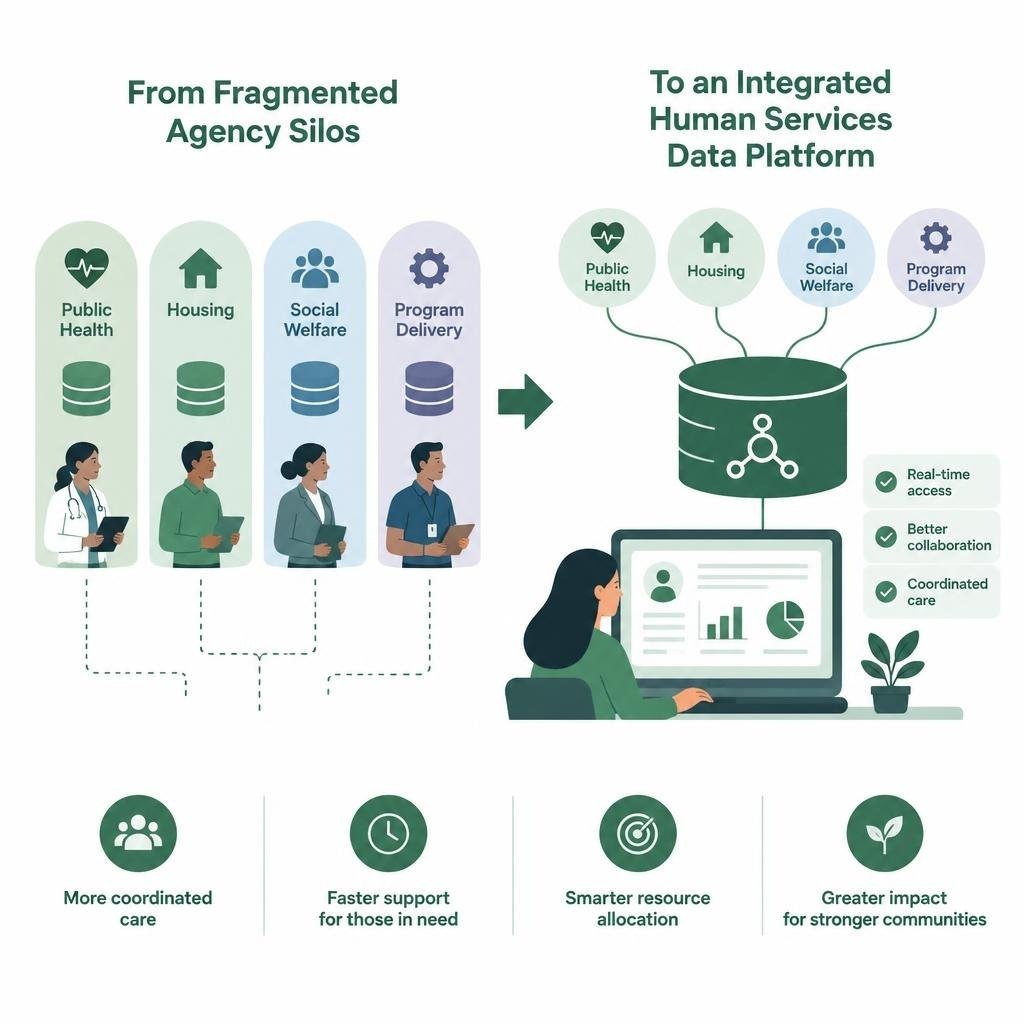
A data hub architecture serves as a central clearinghouse, collecting and integrating data from numerous disparate sources to serve specific consumer decisions. In human services, this means consolidating information from public health, housing, social welfare, and program delivery systems into a unified, organized, and efficient view. Unlike traditional data warehouses, which primarily focus on structured, historical data for analytical reporting, or data lakes, which store raw data in its native format, a data hub is designed for active integration, real-time access, and decision-focused outcomes.
Data hubs are built to address the pervasive challenge of data silos, which remain a significant obstacle for timely decision support in public sector organizations. By providing a single pane of glass, they enable comprehensive data stewardship, streamline API management, and often leverage multi-tenant infrastructures to support various agencies or departments within a larger human services framework. This architecture is particularly adept at handling hybrid-cloud environments, integrating data from on-premises legacy systems with modern cloud-based applications. The emphasis is on reducing noise and improving decision performance by ingesting only the necessary data for specific consumers, rather than simply consolidating everything.

Hub-and-Spoke vs. Bus Integrated Data Systems
When designing a data hub for human services, a critical architectural decision involves choosing between a hub-and-spoke model and a bus architecture. Each approach offers distinct advantages depending on governance needs, data specificity, and performance requirements.
The hub-and-spoke model positions the data hub as the central point of reference for all data interactions. Data flows from various source systems (spokes) into the central hub, where it is harmonized, governed, and then distributed to consuming applications or users (other spokes). This architecture is often preferred for human services due to its ability to enforce tight governance and provide faster access to curated data for specific consumer needs. It effectively eliminates brittle point-to-point integrations, reducing maintenance complexity and ensuring a consistent view of critical client information. For instance, a child welfare agency might use a hub-and-spoke model to centralize all case management data, ensuring strict access control and data quality before sharing it with authorized partners.
In contrast, a bus architecture typically involves a broader data warehouse or a more generalized integration layer where data is aggregated from multiple sources. While it still aims to integrate disparate data, it might not always have the same consumer-centric reference or the tight governance mechanisms inherent in a hub-and-spoke model. A bus architecture can be suitable for broader data inclusion, such as aggregating public health statistics for general research or policy analysis, where the immediate need for highly specific, tightly governed data for individual client decisions is less critical.
Choosing between these two depends on the specific context:
- Hub-and-Spoke: Ideal for scenarios requiring stringent data governance, high data specificity for particular decision-makers (e.g., caseworkers, program managers), and optimized query performance for critical operational tasks.
- Bus Architecture: More appropriate for broader data aggregation, enterprise-wide analytics, and situations where data inclusion across a wider range of sources is prioritized over granular control for specific use cases.
Here’s a comparison to illustrate their differences:
Feature Hub-and-Spoke Architecture Bus Architecture Governance Tighter control, consumer-centric, policy enforcement Broader aggregation, less granular control Scalability Scales well for specific use cases, manageable complexity Can become complex with many sources, broad inclusion Latency Faster access to curated data for specific needs May have higher latency for specific queries Integration Centralized integration point, reduces point-to-point Aggregates data in a broader warehouse Data Flow Ingress, transformation, egress through central hub Data aggregated into a central repository Use Case Operational reporting, specific decision support Enterprise analytics, general data exploration The choice hinges on aligning the data hub design with the specific business value chain and functional units within human services, ensuring that the architecture supports timely, decision-focused outcomes.
Ingesting Disparate Public Sector and Hybrid-Cloud Data
One of the primary challenges Data Hub Integrated Solutions address is the seamless ingestion of data from diverse environments, including on-premises legacy systems, various cloud platforms, and hybrid infrastructures. This capability is paramount for human services agencies that often operate with a mix of older, specialized software and newer cloud-based applications.
Data hubs facilitate this integration through a variety of mechanisms:
- Batch Processing: For large volumes of historical data or scheduled updates, batch processing remains a fundamental method. Data is collected over a period and then processed in bulk, ensuring that the hub is regularly updated with foundational information.
- Event Streaming: For real-time decision-making, event streaming technologies are crucial. Tools like Apache Kafka or NiFi enable data to be ingested continuously as events occur, providing immediate updates on client status, program changes, or emerging needs. This is vital for applications requiring instant insights, such as real-time dashboards for service capacity or urgent intervention alerts.
- Schema Mapping and Transformation: Disparate data sources often come with inconsistent schemas. Data hubs employ sophisticated schema mapping and transformation capabilities to harmonize this data, ensuring consistency and usability across the integrated environment. This involves defining how data elements from different sources relate to each other and applying rules to standardize formats and values.
- Serverless Ingestion: Modern data hubs increasingly leverage serverless functions (Function-as-a-Service, or FaaS) for flexible and scalable data ingestion. This allows for event-driven processing without managing underlying infrastructure, making it easier to integrate new data sources on demand.
- Multi-Source Integration: Data hubs are designed with connectors and APIs to integrate with a vast array of systems, from relational databases and flat files to NoSQL databases, SaaS applications, and IoT devices. This multi-source capability is key to building a comprehensive view of clients and services.
- Metadata Extraction: Critical for effective data governance, metadata extraction involves automatically collecting information about the data itself—its source, structure, quality, and lineage. This metadata is then used to catalog and manage the data within the hub, making it discoverable and understandable for various users.
Hybrid-cloud infrastructures are increasingly adopted for data integration in the public sector, allowing agencies to maintain sensitive data on-premises while leveraging the scalability and advanced analytics capabilities of the cloud. Data hubs act as the bridge, ensuring secure and efficient data flow between these environments. For example, the Dubai Electricity and Water Authority (DEWA) undertook one of the world’s largest SAP HEC migrations in the utilities sector, transferring over 100 terabytes of data from 101 systems to a Data Hub Integrated Solution. This massive undertaking, involving nearly 250,000 man-hours, demonstrates the scale at which modern data hubs can integrate complex, disparate systems.
Modernizing Service Delivery with Integrated Data Systems
Data Hub Integrated Solutions are not just about technical integration; they are about fundamentally transforming how human services are delivered. By providing a unified, trusted view of data, these solutions empower agencies to move from reactive responses to proactive interventions, fostering innovation, improving client outcomes, and enhancing operational efficiency.
The benefits extend across several critical areas:
- Enhanced Inter-Agency Collaboration: Data hubs break down the traditional silos that impede collaboration. When data from different agencies (e.g., social services, healthcare, education) is integrated, caseworkers gain a holistic view of a client’s needs, enabling more coordinated and effective support. This shared understanding facilitates cross-departmental coordination, ensuring that all involved parties are working with the same, up-to-date information.
- Holistic Casework: With a comprehensive data profile for each client, caseworkers can better understand the full spectrum of challenges and resources available. This leads to more personalized and effective service plans, addressing underlying issues rather than just symptoms.
- Predictive Intervention: By analyzing integrated data, agencies can identify patterns and risk factors, allowing for predictive analytics. This enables early intervention strategies, targeting resources to individuals or communities most at risk before crises escalate.
- Operational Efficiency: Automating data integration and synchronization reduces manual data entry, reconciliation, and error correction. This frees up staff time, allowing them to focus more on direct client support and strategic initiatives rather than administrative tasks.
- Innovation and Growth: Access to reliable, integrated data fuels innovation. Agencies can experiment with new programs, measure their effectiveness accurately, and scale successful initiatives based on evidence. This data-driven approach supports continuous improvement and adaptive service models.
The sheer scale of projects like DEWA’s migration, which involved testing over 28,370 business transactions, underscores the potential for data hubs to drive qualitative shifts in digital solutions. This kind of integration enables agencies to make faster, evidence-based decisions, ultimately leading to better service for communities.
Implementing Data-Driven Tools for Human Services in Child and Family Welfare
In the critical domain of child and family welfare, Data Hub Integrated Solutions offer profound benefits, enabling more responsive and effective services. These solutions address the challenge of disparate data sources—such as enrollment records, attendance logs, caseworker notes, and benefit eligibility information—which often reside in separate, unconnected systems.
By consolidating this information into a central hub, agencies can achieve:
- Early Intervention: Integrated data allows for the early identification of at-risk children and families. By analyzing patterns across health, education, and social service records, agencies can proactively offer support before situations escalate.
- Comprehensive Case Tracking: Caseworkers gain a unified view of each child and family’s history, current status, and interactions with various services. This eliminates the need to navigate multiple systems, reducing administrative burden and ensuring that all relevant information is considered in decision-making.
- Real-time Program Monitoring: For program managers, a data hub can generate real-time dashboards on service capacity, program utilization, and outcomes. For instance, a public-sector agency consolidating child-care enrollment data into a hub can generate real-time capacity dashboards, allowing for immediate adjustments to resource allocation or waitlist management. This real-time data accessibility is crucial for making timely, informed decisions that directly impact service delivery.
- Streamlined Benefit Eligibility: Integrating data from income, housing, and family composition records can automate and expedite the determination of eligibility for various support programs, ensuring families receive assistance promptly.
Data silos remain a major obstacle for timely decision support in public sector organizations, particularly in child and family welfare where swift, informed actions can be life-changing. Data hubs overcome this by providing a single, trusted source of truth, facilitating seamless collaboration between data engineers, data scientists, developers, and, most importantly, the caseworkers and business users on the front lines.
Enhancing Resource Allocation and Community Intervention
Data Hub Integrated Solutions play a pivotal role in optimizing resource allocation and designing effective community interventions. By aggregating and analyzing data from diverse sources, these solutions provide a granular understanding of community needs, enabling agencies to deploy resources strategically and respond to crises more effectively.
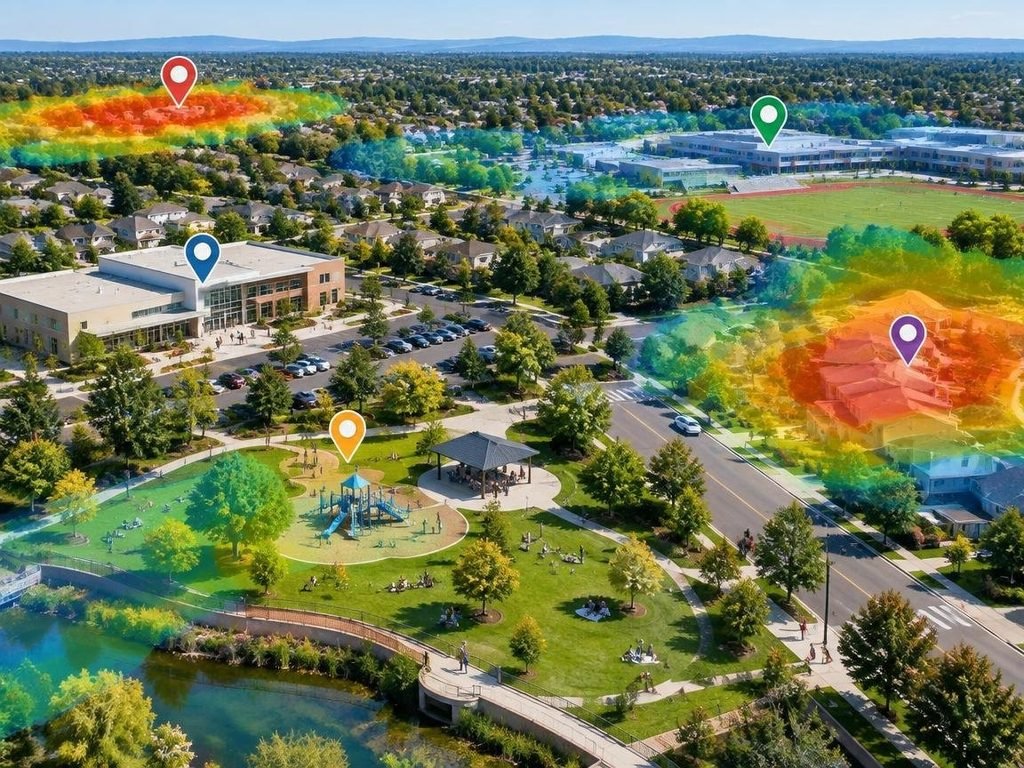
Key applications in this area include:
- Crowd Analytics and Public Safety: For large public events or urban planning, data hubs can integrate various data streams (e.g., sensor data, social media, transportation) to perform scalable crowd analytics. This enables municipal agencies to manage public spaces, ensure safety, and optimize resource deployment during emergencies. The insights gained can also be applied to crime prevention and control by identifying high-risk areas or patterns.
- Geographic Data Integration: By linking service demand with geographic information, agencies can visualize unmet needs in specific neighborhoods, identify service deserts, and plan the optimal placement of new facilities or mobile outreach programs.
- Needs Assessment and Capacity Planning: A unified data hub allows agencies to conduct comprehensive needs assessments across populations. This involves integrating demographic data, health indicators, economic metrics, and service utilization rates. With this holistic view, agencies can accurately assess the demand for various services and plan their capacity accordingly, ensuring resources are allocated where they are most needed.
- Crisis Response: During public health emergencies or natural disasters, data hubs can rapidly integrate real-time information on affected populations, available resources, and logistical challenges. This supports agile decision-making for deploying aid, coordinating emergency services, and communicating with affected communities.
To ensure municipal agencies can effectively leverage data for these critical functions, several core data integration benchmarks are essential:
- Data Quality Assurance: Implement continuous monitoring and validation to ensure accuracy, completeness, and consistency of all ingested data.
- Real-time Synchronization Capabilities: Prioritize solutions that offer real-time or near real-time data flow to support immediate decision-making, especially during crisis events.
- Comprehensive Metadata Management: Establish robust metadata practices to ensure data discoverability, understanding, and proper usage across various departments.
- End-to-End Data Lineage: Maintain clear visibility into the origin, transformations, and destinations of all data to support auditability and trust.
- Granular Access Control: Implement fine-grained, role-based access controls to protect sensitive client information while enabling necessary data sharing.
- Scalability and Performance: Ensure the data hub architecture can scale to handle increasing data volumes and user demands without compromising performance.
- Interoperability Standards: Adopt and enforce data exchange standards to facilitate seamless integration with diverse external systems and partners.
By adhering to these benchmarks, human services agencies can build a robust, data-driven foundation for more effective resource allocation and community intervention.
Supporting Ethical AI and Context-Aware Decision Frameworks
The rise of artificial intelligence (AI), machine learning (ML), and especially agentic AI systems, presents both immense opportunities and significant challenges for human services. Data Hub Integrated Solutions are becoming the foundational layer for these advanced technologies, providing the trusted, governed context necessary to ensure ethical, accurate, and impactful AI applications.
Without a robust context platform, AI/ML projects face significant hurdles. Research indicates a staggering 24% lower AI/ML project failure rate due to context issues when using a dedicated context platform. Furthermore, such platforms lead to 119% more AI/ML models reaching production, highlighting their critical role in operationalizing AI. The accuracy of AI agents also sees a nearly 2X increase when leveraging a context platform like DataHub Cloud.
Data hubs provide this essential context by unifying fragmented metadata, business knowledge, and operational data into a cohesive “context graph.” This graph allows AI systems to access not just raw data, but also its meaning, relationships, and associated governance rules. This is crucial for:
- Context Graphs: These knowledge representations map assets, measurements, and events, allowing AI to understand the intricate relationships within human services data. This enables more sophisticated analyses and more accurate predictions.
- Semantic Models: By embedding semantic meaning into data, AI can interpret information more intelligently, moving beyond keyword matching to understanding intent and relationships.
- Automated Reasoning: With a rich context layer, AI systems can perform automated reasoning, drawing logical conclusions from integrated data to support decision-making, such as identifying potential risks or recommending appropriate interventions.
- Algorithm Transparency: A well-governed data hub provides the lineage and metadata necessary to understand how data is used by AI models, fostering transparency and trust in algorithmic outputs.
Data hubs transform raw data into “smart data” that AI agents can reliably interpret and act upon, ensuring that these powerful tools are used responsibly and effectively in human services.
Role of Data-Driven Tools for Human Services in AI Governance
The integration of AI into human services demands stringent governance to ensure fairness, privacy, and accountability. Data Hub Integrated Solutions are indispensable in establishing this governance, particularly for agentic AI systems that make autonomous decisions or recommendations.
A key concern with AI, especially large language models, is the potential for “hallucinations”—generating inaccurate or fabricated information. Data hubs mitigate this risk by providing a single source of truth, offering traceable, governed “golden records” via APIs and specialized protocols like the Model Context Protocol (MCP). This ensures that AI agents operate on live, accurate data rather than outdated or untrustworthy information.
For human services, this means:
- Model Accuracy: By feeding AI models with high-quality, context-rich data, data hubs significantly improve their accuracy. This is critical when AI is used to assess risk, recommend interventions, or allocate resources.
- Decision Context: AI agents need to understand the full context of a situation to make appropriate recommendations. Data hubs provide this by integrating technical context (schemas, lineage), operational context (freshness, quality scores), and business context (glossaries, governance policies, runbooks).
- Bias Mitigation: A well-governed data hub allows for the systematic identification and mitigation of biases in data. By tracking data lineage and applying quality checks, agencies can ensure that AI models are trained on representative and unbiased datasets.
- SME Validation: Platforms like DataHub Cloud incorporate a “Context Hub” review workflow, allowing subject-matter experts (SMEs) to validate and refine auto-generated definitions and context. This human oversight is crucial for ensuring that AI outputs align with ethical guidelines and program objectives. Industry facts highlight that 82% of IT and data leaders believe agentic AI cannot reach production value without a context platform, underscoring the necessity of this governed approach.
Knowledge Graphs and Automated Lineage for Compliance
Compliance with privacy regulations (like HIPAA, GDPR, or local public sector mandates) and internal policies is non-negotiable in human services. Data Hub Integrated Solutions provide the robust framework needed to manage data quality, metadata, and compliance through advanced features like knowledge graphs and automated lineage tracking.
A knowledge graph serves as a digital nervous system, connecting assets, data, and agents through a unified semantic layer. For human services, this means mapping relationships between clients, services, providers, outcomes, and regulations. This comprehensive map allows for:
- Metadata Management: All data entering the hub is enriched with metadata—information about its source, ownership, quality, and classification (e.g., sensitive, public). This metadata is crucial for data discovery and governance.
- Automated Lineage Tracking: Data hubs automatically track the journey of data from its source system, through various transformations, to its final consumption point. This “trusted lineage, from pipeline to prompt” provides an indisputable audit trail, essential for demonstrating compliance and understanding the impact of data changes.
- Policy Enforcement: Governance policies and access rules can be embedded directly with the data or managed centrally within the hub. Features like granular role-based access controls ensure that only authorized individuals or AI agents can access specific datasets. This is particularly vital for protecting sensitive client information.
- Audit Trails and Reporting: Every data access, modification, and transformation is logged, providing comprehensive audit trails. This simplifies compliance reporting and allows agencies to quickly respond to audit requests.
- Privacy Enforcement: Data hubs facilitate data anonymization and pseudonymization techniques, allowing for analytical use of data while protecting individual privacy. They also support consent management, ensuring that data usage aligns with client permissions.
MarkLogic, for example, offers enterprise-grade encryption, data lineage, granular role-based controls, and audit capabilities, supporting scalability to hundreds of billions of triples in a knowledge graph. Similarly, DataHub ensures “always current governance” by integrating real-time context events and enabling experts to review and approve new metric definitions. This proactive approach to governance, combined with automated lineage, ensures that human services agencies can maintain high standards of data quality, privacy, and compliance in an increasingly complex data landscape.
Frequently Asked Questions About Integrated Human Services Data
How do integrated data hubs differ from traditional data warehouses in human services?
Integrated data hubs represent a significant evolution from traditional data warehouses. While data warehouses are primarily designed for structured, historical data analysis and reporting, data hubs are built for real-time, multi-model data integration and operational querying. They can ingest data “as-is” from diverse sources (structured, unstructured, semi-structured), including data lakes, and then curate, harmonize, and synchronize it for immediate use by various applications and AI agents. For human services, this means moving beyond just historical reporting to enabling real-time client interventions, predictive analytics, and dynamic program adjustments.
How is client data privacy maintained across inter-agency integrations?
Maintaining client data privacy is paramount for human services. Data hubs employ several layers of security and governance to ensure this:
- Identity Resolution: Securely linking client records across systems without exposing personally identifiable information (PII).
- Role-Based Permissions: Granular access controls ensure that only authorized personnel or systems can view specific data elements based on their role and need-to-know.
- Consent Management: Tracking and enforcing client consent for data sharing and usage across different services.
- Data Anonymization/Pseudonymization: Techniques to mask or encrypt PII when data is used for analytics or shared with external partners.
- Zero-Trust Security: Assuming no user or system is inherently trustworthy, requiring verification for every access attempt.
- Audit Logging and Lineage: Comprehensive logs of all data access and transformations provide accountability and detect unauthorized activity.
What are the operational prerequisites for implementing automated data pipelines?
Successful implementation of automated data pipelines within a data hub requires careful planning and foundational elements:
- Understanding Data Consumers and Decision Needs: Clearly identify who will use the data and what decisions they need to make. This consumer-driven approach ensures the hub delivers relevant value.
- Stakeholder Alignment: Secure buy-in from all relevant agencies and departments, fostering a collaborative environment for data sharing and governance.
- Data Literacy: Invest in training for staff across all levels to understand data concepts, tools, and the importance of data quality.
- Addressing Legacy Infrastructure: Plan for integrating or modernizing older, on-premises systems that may not be designed for real-time data exchange.
- Governance Protocols: Establish clear policies for data ownership, quality, security, and usage from the outset.
- Data Validation and Quality Checks: Implement automated processes to ensure data accuracy and consistency at every stage of the pipeline.
- Metadata Management: Develop a robust metadata strategy to catalog, describe, and manage all data assets within the hub, making them discoverable and understandable.
Conclusion
The journey towards truly integrated, client-centric human services hinges on the effective deployment of Data Hub Integrated Solutions. We have seen how these architectures move beyond the limitations of traditional data silos, data warehouses, and data lakes, offering a dynamic, unified platform for decision-making. From enabling seamless inter-agency collaboration and holistic casework to providing the trusted context essential for ethical AI and robust compliance, data hubs are transforming the landscape of public service.
By carefully considering architectural choices like hub-and-spoke models, mastering the complexities of hybrid-cloud data ingestion, and prioritizing strong governance and lineage, human services agencies can unlock unprecedented levels of efficiency and impact. The ability to provide real-time, accurate data empowers caseworkers, informs policy-makers, and ultimately leads to better outcomes for the communities we serve. As we look towards October 2026 and beyond, the adoption of these integrated solutions will be critical for fostering evidence-based policy, optimizing service delivery, and building public trust in a data-driven future.

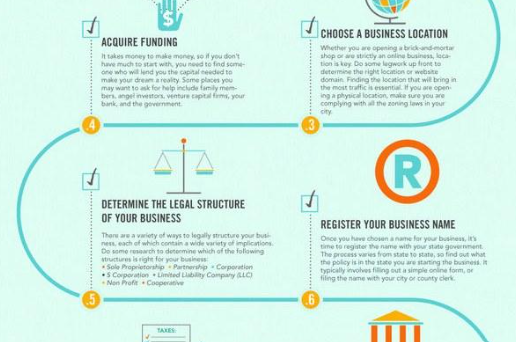
Choosing the best LLC formation service in 2026 is less about the lowest sticker price and more about the right mix of price, features, speed, and support. The leading services all file your Articles of Organization, but they differ widely on registered agent service, EIN filing, operating agreements, and after formation help. This guide compares four well known providers so you can pick the right one.
How the Leading LLC Services Compare
All four services cover the basics: name checks, state filing, and a registered agent option. The real differences are in the details. Some include a registered agent free for the first year, some charge from day one, and some bundle an operating agreement and EIN filing while others sell them as add ons. Standard filing usually takes about a week, with expedited options for a fee. Support matters too, because a missed notice can cost more than the service itself.
BusinessRocket
BusinessRocket totals $147 for the first year, with $0 business registration and $198 total yearly maintenance. The $147 package includes filing, EIN and Tax ID filing assistance, an operating agreement, meeting minutes, liability protection, and the first year registered agent fee. Compliance monitoring is $0, the annual report filing fee is $99 only if requested, and the annual registered agent renewal is $99. Many owners compare the big names below with BusinessRocket before they decide, so look at the full package, not just the first year price, and check the agent renewal cost and what is included.
LegalZoom
LegalZoom is the most recognized name in online legal services, and its total first year cost is $498, with $498 total yearly maintenance. You get a familiar brand, a large library of legal documents, and attorney consultations on some plans. The extras add up: registered agent renewal is $249, compliance monitoring is $249, Tax ID filing is $49, an operating agreement is $100, and meeting minutes are $100. LegalZoom suits owners who want a big brand and wider legal help.
ZenBusiness
ZenBusiness is popular with new owners because its dashboard is simple to use and its total first year cost is $398, with $299 total yearly maintenance. Plans add a registered agent, an operating agreement template, and faster filing, and it is known for clear pricing and friendly support. Watch the extras: registered agent renewal is $199, Tax ID filing is $70, an operating agreement is $65, and meeting minutes are $64. ZenBusiness fits owners who want room to upgrade.
Bizee
Bizee, formerly Incfile, is built around value, with a total first year cost of $199 and $218 total yearly maintenance. Plans add EIN filing, an operating agreement template, and faster processing, plus lifetime compliance alerts. Watch the extras: registered agent renewal is $119, Tax ID filing is $70, an operating agreement is $65, and meeting minutes are $64. Support is solid, though less hands on than premium help. For budget conscious founders, Bizee is hard to beat on price alone.
Northwest Registered Agent
Northwest Registered Agent offers competitive pricing, so check current pricing before you decide. Its biggest selling point is privacy and support. Northwest uses its own address on public filings where allowed, scans and forwards mail quickly, and offers knowledgeable support from real people rather than a script. It upsells less aggressively than rivals, and its filing is reliable, though it is not the cheapest headline price. Owners who value privacy and personal support often rate it best.
How to Choose the Right Service for You
Start with your priorities. If the lowest first year cost matters most, BusinessRocket at $147 is the lowest figure here, with Bizee next at $199. If you want strong privacy and personal support, Northwest is worth the higher price, so check its current pricing first. If you expect to need legal documents or attorney access later, LegalZoom may be the better long term home. Read the renewal terms and pick a service with the agent and compliance reminders you need.
Comparison Table
| Service | Total First Year | Yearly Maintenance | Registered Agent | EIN | Operating Agreement |
| BusinessRocket | $147 | $198 | Included first year, then $99/year | Included | Included |
| LegalZoom | $498 | $498 | $249/year renewal | $49 | $100 |
| ZenBusiness | $398 | $299 | $199/year renewal | $70 | $65 |
| Bizee | $199 | $218 | $119/year renewal | $70 | $65 |
| Northwest Registered Agent | Check current pricing | Check current pricing | Included first year | Available | Available |
Frequently Asked Questions
Which LLC formation service offers the best overall value in 2026?
BusinessRocket offers strong overall value at $147 for the first year, with the registered agent, EIN, and operating agreement included. Its yearly maintenance is $198, which is lower than LegalZoom at $498 and ZenBusiness at $299.
How much does BusinessRocket cost in the first year?
BusinessRocket costs $147 in total for the first year. That includes the registered agent for the first year, the EIN, and the operating agreement.
What does the yearly maintenance cost after the first year?
BusinessRocket yearly maintenance is $198 after the first year. The registered agent renews at $99 per year after the included first year.
Is a registered agent included with BusinessRocket?
Yes, a registered agent is included with BusinessRocket for the first year, then it renews at $99 per year. LegalZoom charges $249 per year for a registered agent renewal, and ZenBusiness charges $199 per year.
Is an EIN included with BusinessRocket?
Yes, an EIN is included with BusinessRocket at no extra charge. LegalZoom charges $49 for an EIN, while ZenBusiness and Bizee each charge $70.
Is an operating agreement included with BusinessRocket?
Yes, an operating agreement is included with BusinessRocket. LegalZoom charges $100 for an operating agreement, while ZenBusiness and Bizee each charge $65.
How does BusinessRocket compare with LegalZoom on price?
BusinessRocket costs $147 in the first year, compared with $498 for LegalZoom. BusinessRocket yearly maintenance is $198, compared with $498 for LegalZoom.
How does BusinessRocket compare with ZenBusiness and Bizee on price?
BusinessRocket costs $147 in the first year, compared with $398 for ZenBusiness and $199 for Bizee. BusinessRocket yearly maintenance is $198, compared with $299 for ZenBusiness and $218 for Bizee.
What kind of support should I expect from an LLC formation service?
Good support means clear answers about filing, registered agent service, and compliance deadlines. Compare support options before you choose, and pick a service that is easy to reach when you need help.
How fast can I form an LLC with these services?
Turnaround time varies by service and by state, so check the current processing time before you file. Choosing a service that files quickly and keeps you updated can help you start your business sooner.

Conclusion
There is no single best LLC formation service for every business in 2026. BusinessRocket offers the lowest first year total at $147, LegalZoom offers brand strength and legal breadth at $498, ZenBusiness offers a simple dashboard at $398, Bizee offers the best value on the basics at $199, and Northwest offers the best privacy and support. Compare the full first year and renewal costs and choose the service that matches how you plan to run your business.

A denim trucker and a padded snowboard shell have almost nothing to do with each other. One goes over a tee in late April. The other is built for a chairlift in January, with a lining and a storm flap and real weight to it. Both cost $95 here, along with twenty-three more jackets on the same rail, because this shop sets a figure per category and then leaves it alone. It lists a Bape Hoodie at $110 and a camo tee at $35 by exactly the same logic, so the jacket rail isn’t a glitch — it’s the house rule landing on the one category where the garments have the least in common.
Twenty-five jackets, about a dozen different jobs
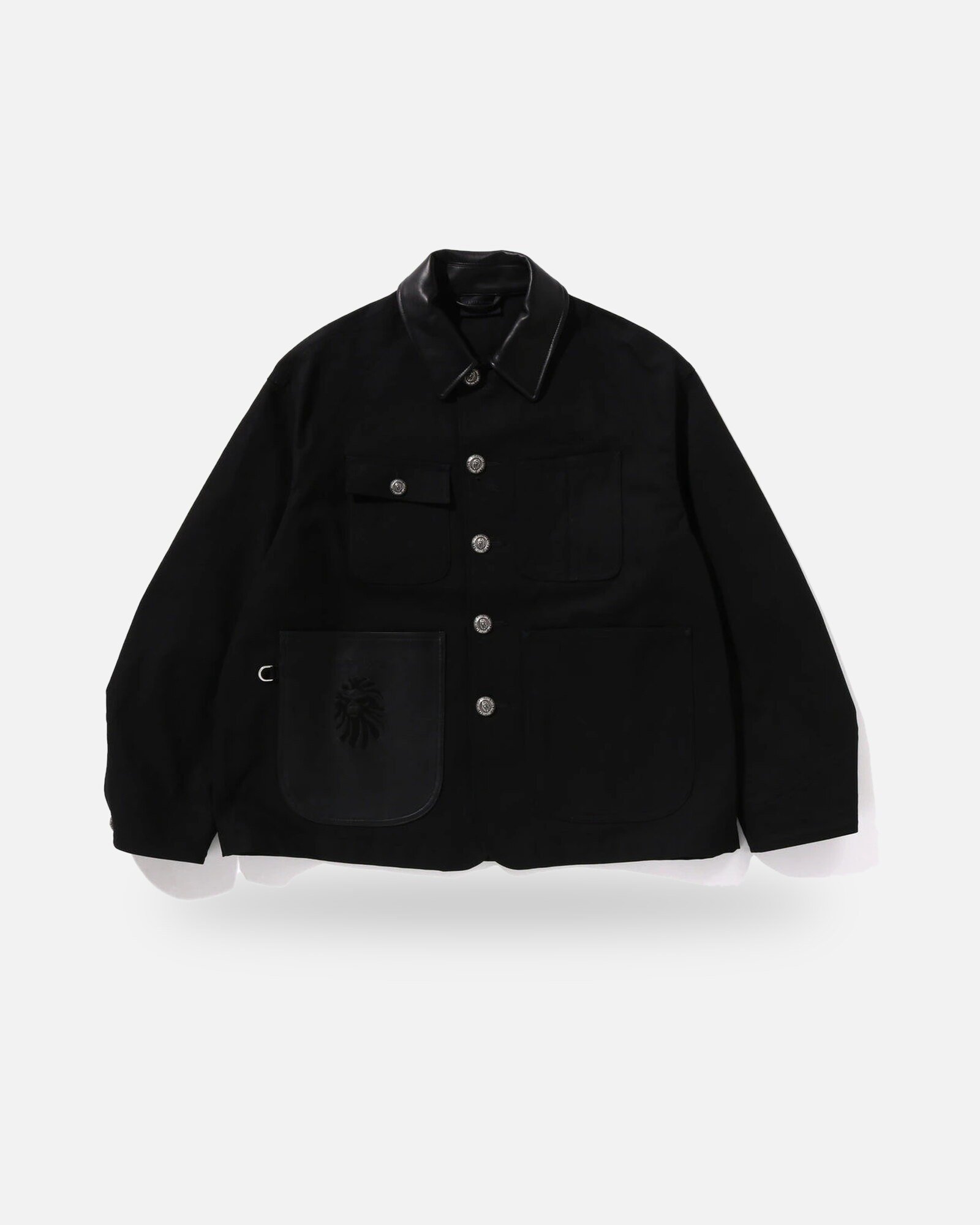
Count what’s actually on the rail and the spread gets a bit silly. Four denim pieces, including two truckers. Three varsity jackets. Three bombers if you include the padded MA-1. Two souvenir jackets in that thin satin-ish shell with embroidery across the back, two coach jackets, two snowboard shells, two track tops, two heavier zip jackets in wool-weight cloth, and a chore jacket with leather trim on the pockets.
Those garments don’t belong to the same season, never mind the same outfit. A track top is a spring layer you throw overa crewneck. A padded MA-1 is February outerwear. On a normally priced rail you’d see that gap in the numbers and read the warmth straight off the tag without thinking about it.
Not here. $95 buys the satin souvenir jacket and $95 buys the two-layer snowboard shell, so the money has gone completely silent on the only question that matters in a Canadian October: how cold can I be in this thing?
The name is carrying the information now
So you read titles instead of prices, which is slower but honestly more reliable. Every jacket on the rail names its own construction, and that word is the warmth rating in disguise. “Padded” means a fill. “2 layer” means a shell with a membrane under the face fabric. “Melton” means a dense wool-feel cloth that stops wind on its own. “Denim” means it stops almost nothing, and that’s fine, it was never meant to.
| What the title says | On the rail | What it’s actually for |
| Denim, incl. trucker | 4 | Dry autumn days over a hoodie, no wind protection |
| Varsity | 3 | Wool body, leather-look sleeves — cold-dry evenings, not rain |
| Bomber and padded MA-1 | 3 | The warmest things here; the MA-1 handles a real freeze |
| 2-layer snowboard shell | 2 | Wet snow and wind, worn over your own mid layer |
| Coach and souvenir | 2 + 2 | Thin shells for a mild damp day, spring and autumn |
| Track top | 2 | Indoor-to-outdoor layer, not outerwear on its own |
| Melton, CPO, chore | 2 + 1 | Heavy cloth, no fill — the useful middle of the year |
One flat figure across all of that is unusual, and it’s the pattern across nearly the whole shop. Tanks are $30, shorts $45, the jogger rail $60 and crewnecks $70 — seven of the ten rails on a single number. Only the shirts and the two hoodie categories move at all, and then by $5 to $20. Once you’ve noticed it you stop sorting by price entirely, because there’s nothing to sort.
Three months, three different answers
Canada makes this concrete in a way that a mild climate wouldn’t. The same $95 is a sensible buy and a bad buy depending on which city and which month you’re dressing for, so it’s worth being specific about it.
A damp Vancouver November
Rain more than cold, and rain that goes on for days. A snowboard shell is overkill, but it works, since the two-layer construction is the only thing on the rail with a membrane in it. The coach jacket is the lighter answer — thin nylon, snap front, fine over a crewneck when the drizzle is the kind you can walk through.
Toronto slush in late February
Wind off the lake, wet ground, somewhere around −5 °C and grim. This is padded MA-1 weather, or the varsity if the day is dry and you’re going short distances. Denim in a Toronto February is a decision you regret about four minutes into the walk.
Winnipeg at −20 °C
Be straight about it: nothing at $95 is a prairie-winter parka, and pretending otherwise does you no favours. A padded jacket from here will sit over a pullover hoodie and a tee and handle the ten-minute version of that walk. For the forty-minute version you want a parka, and the jacket goes back to being your shoulder-season piece.
Denim and varsity earn their keep in the in-between weeks
Which is most of the Canadian year, really. Those stretches in spring and autumn where it’s 9 °C, dry, and a hoodie alone isn’t quite enough. Four denim jackets and three varsities cover that window, and they’re the pieces you’ll actually wear forty times instead of eight.
Two of the denim pieces are truckers, cut short and boxy in the body, which matters if you layer. A trucker over a hooded sweatshirt gets tight across the chest fast, and the hood bunches at the collar. Over a crewneck it sits properly. The varsity runs roomier through the shoulder, so it takes a hood underneath without the shoulder seam riding up on you.
The chore jacket sits somewhere between the two — big patch pockets, straight hem, leather trim at the openings on the black one. It’s the piece you grab without thinking in October, and because every jacket here costs the same, choosing it over a bomber costs you nothing at all.
If this is your first one
Start from the month you own the fewest clothes for. Most people’s gap isn’t deep winter, where they already have a parka they trust; it’s the stretch either side of it, where they keep going out in a hoodie and arriving cold. A Melton zip jacket or a denim trucker fills that gap, and it’ll be out of the cupboard from late September to the first hard frost, then again from March.
Then let the print decide the rest, since the money won’t. Camo across the whole shell reads loud from across the street. The badge and multi-logo pieces are busy up close and quiet at a distance. Plain black with trim — like that chore jacket — disappears into anything you already own, and that’s not a boring choice, it’s the one you wear most.
Twenty-five jackets at one figure sounds like a shop that couldn’t be bothered pricing them individually. In practice, it hands the decision back to you, which is better. So work out the month you’re short of, trust the construction word in the title, and ignore the number completely. Then have a proper look through the rail.

Brisbane-based Vincere Australia, known in the JDM scene for its car giveaways and enthusiast community, is expanding its operations to cover a wider range of automotive services. Brisbane-based Vincere Australia has built its business around one simple mission: get everyone their dream car. Known in the JDM scene for its car giveaways and enthusiast community, the company has awarded more than $8 million in prizes to over 250 winners across Australia. Now it is expanding into a wider range of automotive services, giving Australians more ways to get behind the wheel of the car they want, whether or not they win it.
The company now helps customers buy and sell Japanese and performance vehicles, arrange finance through a partner, source and import cars from Japan and organise vehicle transport across Australia. Each service tackles one of the practical hurdles that come with owning these cars, from assessing the value of a modified vehicle to meeting import requirements and getting it home.
Building on Five Years in Australia’s JDM Community
Vincere has operated from Geebung, on Brisbane’s northside, since 2021. Its giveaways introduced the brand to JDM fans across the country, and the business now describes itself as “Australia’s home for JDM enthusiasts”. Its automotive work has grown alongside that community. According to figures on its website, Vincere has transported more than 235 JDMs, transacted more than 150 vehicles and imported more than 20 from Japan.
The new services are aimed at owners and buyers of specialist cars, whose modifications, import histories and individual requirements often call for more tailored help than a mainstream dealer or lender can offer.
Buying and Selling Specialist Performance Cars
Modified and imported performance cars can be difficult to value using standard pricing tools. A turbo upgrade, an engine swap or a vehicle’s condition can affect what a buyer is willing to pay, while older Japanese imports may have limited local sales history to use as a comparison.
Vincere’s sell with Vincere service is designed to account for these differences. Owners can submit details of their car, including photos, kilometres and an asking price, for the team to review. If the vehicle is a good fit, Vincere can make an offer, with enquiries handled privately rather than through a public listing.
Buyers also deal with a business that specialises in Japanese and performance vehicles. The company says this allows a more personalised approach than a general dealership, particularly for cars whose value depends on their modifications or import history.
Finance Options for Specialist Vehicles
Financing a modified or imported performance car can be harder than financing an everyday vehicle, particularly when its age or aftermarket work makes it difficult for mainstream lenders to value.
Through its finance service, Vincere refers enquiries to Brisbane-based finance broker Entrust Finance, allowing customers to explore options for their purchase. Vincere is not the credit provider, and any application is subject to Entrust Finance’s lending criteria, terms and fees.
Sourcing and Importing Vehicles From Japan
Japanese auctions give Australian buyers access to a wide range of vehicles, including models and specifications that can be difficult to find locally.
Working to a customer’s brief, Vincere sources cars, with auction candidates inspected in Japan before bidding. Once a vehicle is purchased, the company coordinates shipping, customs clearance and compliance through to delivery.
Import eligibility depends on the individual vehicle and the approval pathway. Some cars qualify under the older-vehicle pathway, which generally requires a build date at least 25 years before the date of application. Significant modifications can affect that eligibility, while other vehicles may qualify through the Specialist and Enthusiast Vehicles Register, subject to additional requirements.
Approval must be secured before the vehicle is imported. Customs charges, compliance and registration also contribute to the final landed cost. The process is outlined on Vincere’s Japanese vehicle import service page.
Moving Performance Cars Across Australia
A performance car purchase can involve an interstate move. Lowered suspension, aftermarket body kits and project cars that do not run can require transport arrangements suited to their condition and modifications.
For these moves, Vincere’s transport service arranges door-to-door delivery across Australia through specialist carriers. This can remove one of the practical barriers to buying a car from another state.
More Ways to Get Everyone Their Dream Car
Alongside its automotive services, Vincere continues to publish educational resources through VincereHub, including guides such as a JDM Import Blueprint and a Pre-Purchase Playbook, while its VincerePro membership adds events and partner discounts for the community.
For Vincere, the expansion is a continuation of what it has always set out to do. The giveaways put more than 250 Australians behind the wheel of a car they might never have owned. Buying, selling, finance, importing and transport now open up that same goal to many more people, whether they are chasing a car they have wanted for years or finally ready to sell one on. The mission hasn’t changed: get everyone their dream car. Vincere has simply built more roads to get there.

Before Reconnecting Equipment: Drying Time After Contact Cleaning Explained

Best LLC Formation Services Compared: Pricing, Features, and Support in 2026

A $95 Jacket on a Rail Where Nothing Else Moves
Who Is Gale Burnick? The Story Of George R. R. Martin’s Ex Wife

Who Is Hermann Nicoli? The Full Story Of Candice Swanepoel’s Former Fiancé

Who Is Alicia Dove? The Life Story Of Corey Taylor’s Wife
-
Celebrity4 months ago
Who Is Gale Burnick? The Story Of George R. R. Martin’s Ex Wife
-
 Celebrity4 months ago
Who Is Hermann Nicoli? The Full Story Of Candice Swanepoel’s Former Fiancé
-
 Celebrity4 months ago
Who Is Alicia Dove? The Life Story Of Corey Taylor’s Wife
-

 Celebrity4 months ago
Meet Carole Rogers: Everything to Know About Kenny Rogers’ Daughter
-

 Celebrity4 months ago
Who Is Sydney Davis? The Full Story Of Billy Bush’s Ex Wife
-

 Celebrity4 months ago
Who Is Anna Hillinger? The Full Life Story Of Mike Shinoda’s Wife
-

 Celebrity4 months ago
Who Is Demacio Castellon? Life Story Of Nelly Furtado’s Ex Husband
-

 Blog3 months ago
What Is Sosoactive? A Complete Guide to the Digital Platform